

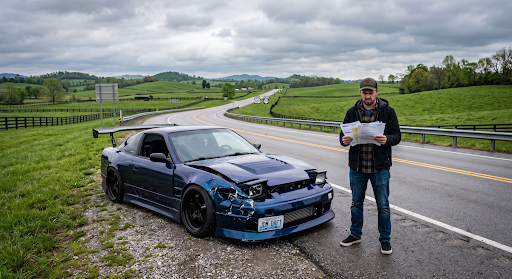
 Kentucky has one of the most dedicated custom car communities in the South. From Louisville to Lexington, and across the Bluegrass communities in between, including the build shops and Saturday car meets near Elizabethtown, enthusiasts pour serious time, money, and craftsmanship into their builds. Walk any regional show, and you’ll find everything from immaculate restorations to wild one-offs that never saw an OEM part list.
But the moment one of those builds gets caught in a collision, the situation changes fast. The legal and financial fallout of a modified vehicle accident is rarely as straightforward as a standard insurance claim, and most builders aren’t prepared for what comes next. If you drive a modified vehicle in Kentucky or anywhere in the country, here’s what you need to understand before something goes wrong.
When you swap a motor, drop the suspension, or add custom bodywork, you’re doing more than building a statement piece; you’re potentially changing how your vehicle is classified under Kentucky law. The Kentucky Transportation Cabinet enforces state equipment and safety standards, and modifications that don’t meet those standards can affect your registration, your ability to drive legally on public roads, and critically, your ability to file a valid insurance claim after an accident.
At the federal level, the National Highway Traffic Safety Administration (NHTSA) sets baseline motor vehicle safety standards that apply to every vehicle on public roads. Modifications that undermine those standards create real legal exposure if you’re ever involved in a crash; opposing counsel will look for exactly this kind of leverage.
This is where most builders take a financial hit they never anticipated. Standard auto insurance policies are written for stock vehicles. Aftermarket parts, regardless of cost or how professionally they were installed, are typically excluded from standard policies unless you’ve added a specialty endorsement or carry a dedicated collector or custom vehicle policy.
If your build has $12,000 in custom suspension components, a bespoke interior, and a hand-ported engine, your insurer will want to pay out at stock ACV (actual cash value) unless your policy explicitly says otherwise. The gap between that number and what your build is actually worth can be devastating.
Before your build rolls off the trailer and onto public roads, call your insurer and ask directly whether your modifications are covered. Get that answer in writing. If they’re not covered, specialty insurers exist who understand custom builds and will write a policy designed to actually make you whole after a loss. Don’t find this out the hard way.
If your modified vehicle is involved in an accident that injures another person, expect every modification to face scrutiny. Defense attorneys and insurance adjusters will look for ways to argue that a modification, not the other driver’s error, caused or contributed to the crash. This can happen even when the modification in question had nothing to do with the accident.
Everything from lift kits and performance tunes to aesthetic modifications can be scrutinized in Kentucky accident litigation as alleged contributing factors. If you find yourself in this position, you need more than generic legal counsel; you need guidance for accident victims in Elizabethtown who understand how modifications intersect with Kentucky’s liability framework and can push back against overreaching arguments.
Kentucky operates under a pure comparative fault system. Even if you bear some responsibility for an accident, you can still recover damages reduced by your share of fault. But if opposing counsel can credibly link a modification to the cause of the crash, they’ll work to inflate your fault percentage and reduce your payout accordingly.
Documentation is your most powerful defense. Keep a detailed record of every modification: part numbers, installation dates, the shop or technician who performed the work, and any inspections that followed. A thorough paper trail makes it much harder to assign fault to a modification that performed exactly as designed.
If you believe your insurer is undervaluing your claim or acting in bad faith, the Kentucky Department of Insurance has a formal consumer complaint process that can apply meaningful pressure during negotiations.
The same level of care that goes into a quality build should go into protecting it legally and financially. Know what your policy actually covers, document every modification, and if an accident happens, don’t handle it alone. Modified vehicle cases involve intersecting questions of insurance, state law, and vehicle liability that require attorneys who’ve worked these cases in Kentucky before.
The post Modified and Custom Vehicle Accidents in Kentucky: What Drivers Need to Know When a Built Car Gets Totaled appeared first on Gauge Magazine.