

Mitsubishi Motors is making it increasingly clear that it has no intention of fading into the background of the U.S. auto market. The company has updated its Momentum 2030 strategy with a stronger emphasis on new products, dealer growth and a broader American footprint, setting the stage for one of the most significant lineup overhauls Mitsubishi has attempted here in years. Following a private meeting with U.S. dealers, Mitsubishi says its plans now include a fresh battery-electric SUV, a more capable version of the Outlander and, perhaps most interestingly, an eventual return to the pickup truck segment through its ongoing collaboration with Nissan.
The first major piece of that product push arrives this fall with the all-new 2027 Mitsubishi Eclipse Sportback. Despite carrying a name that longtime enthusiasts will associate with Mitsubishi’s sporty past, the new Eclipse Sportback is a compact electric crossover related to the latest Nissan Leaf. It is expected to offer roughly 282 miles of driving range and will give Mitsubishi a much more competitive battery-electric entry than its long-departed i-MiEV. The Eclipse Sportback also represents an important first step in Mitsubishi’s broader electrification strategy, which will continue to include a mix of conventional gasoline vehicles, hybrids, plug-in hybrids and EVs rather than relying on a single powertrain approach.
Mitsubishi is also leaning harder into the rugged image that once helped define the brand. During the first quarter of 2027, the company plans to introduce a new off-road-focused Outlander variant, with its official name still to come. Mitsubishi has not released complete specifications, but the vehicle is expected to go beyond the appearance-oriented treatment typically associated with adventure-themed trim packages. That move could give the Outlander a more distinct personality in a crowded compact SUV market, particularly as buyers continue to gravitate toward vehicles that look and feel capable of handling trails, camping trips and rougher terrain. Mitsubishi’s decision to revive the Pajero name globally adds even more intrigue, although there is currently no confirmation that the legendary SUV, previously known as the Montero in the U.S., will return to American showrooms.
Then there is the pickup truck. Mitsubishi says it intends to re-enter the North American truck market through its alliance with Nissan, potentially giving the brand access to one of the most fiercely competitive and profitable segments in the country. Details remain limited, but Mitsubishi and Nissan have already been working closely on future vehicles, and a truck could allow Mitsubishi to capitalize on Nissan’s next-generation body-on-frame architecture without developing an entirely new platform on its own. For enthusiasts who remember Mitsubishi pickups such as the Mighty Max and Raider, the prospect of another truck wearing the three-diamond badge is significant. More importantly, it would give today’s Mitsubishi dealers something they have been requesting for years: a product capable of attracting buyers outside the brand’s current crossover-heavy customer base.
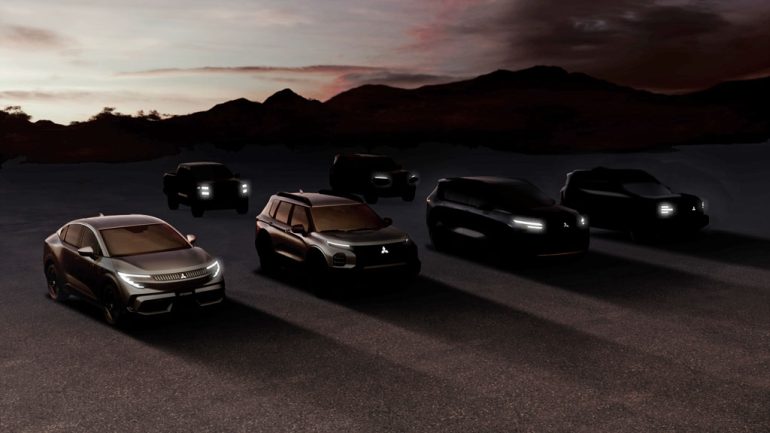
By 2027, Mitsubishi expects its U.S. lineup to grow from four vehicles to six, including the Outlander Sport, Eclipse Cross, Eclipse Sportback EV, Outlander, Outlander Plug-in Hybrid and the upcoming rugged Outlander variant. Momentum 2030 also calls for an updated retail model, a larger dealer network and sustainable sales growth, but the vehicles will ultimately determine whether the strategy succeeds. Mitsubishi has spent much of the past decade competing with a relatively small lineup in a market packed with well-funded rivals. Now it is preparing to take a bigger swing. If the Eclipse Sportback, more adventurous Outlander models and a future pickup can bring new shoppers through dealership doors, Momentum 2030 could mark the beginning of a much-needed second act for Mitsubishi in America.