


Rhode Island can expose weaknesses in a vehicle faster than many drivers expect. A move into the state may involve a loaded car, unfamiliar roads, changing visibility, and abrupt shifts between highway traffic and coastal conditions.
The arrival trip is only the beginning. Once unpacking starts, the same car must manage bridges, short urban journeys, wet pavement, winter road treatments, and the first full New England season, often with little adjustment time.
That makes preparation less about predicting a single storm and more about ensuring the vehicle can handle the state’s recurring demands. Understanding what Rhode Island roads ask of tires, brakes, visibility systems, and corrosion protection provides the natural starting point.
Rhode Island’s driving conditions set four vehicle-prep priorities: reliable traction on black ice, adequate short-notice stopping distance, corrosion resistance, and clear visibility in rain, fog, and blowing snow. Traction and braking deserve attention before the move because both require time and money to correct.
Short trips around Providence create another strain. Engines may not fully warm, leaving batteries undercharged and moisture trapped longer, while a single journey can combine highway congestion, exposed bridges, fog, and coastal air.
Those priorities reflect how Rhode Island compresses several driving environments into a small area. A route can move from sheltered streets to I-95, cross exposed water, and finish near the coast, placing different demands on the same vehicle.
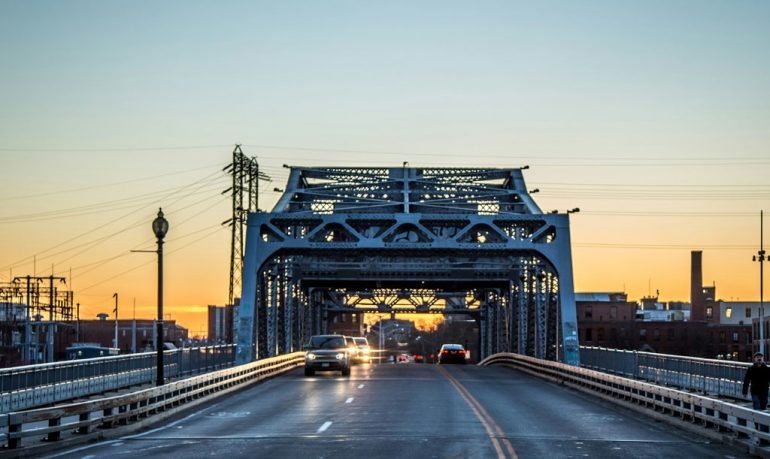
Because bridges and overpasses freeze first, their surfaces can become slippery while nearby pavement still looks merely wet. They lose heat from above and below, which is a recurring issue on the state’s bridge-heavy routes.
Black ice is especially difficult to spot at dawn, at dusk, and on shaded curves. Those conditions overlap with busy commuter traffic, leaving less room for a driver to recognize reduced grip before braking.
Forecasts from the National Weather Service can identify freezing conditions, but the car still needs tires and brakes capable of responding. Weather awareness does not compensate for worn tread or an aging braking system.
RIDOT, the Rhode Island Department of Transportation, uses brine and rock salt to keep roads passable. The residue remains on undercarriages, brake lines, fuel lines, wheel wells, and paint seams after the pavement dries.
Winter treatments are not the only source of corrosion. Coastal humidity and airborne salt can expose vehicles from dry inland climates to persistent moisture, with early rust often appearing around rocker panels and wheel wells.
Heavy rain and sea fog along Route 1 and Narragansett Bay regularly test wipers, washer fluid, lights, and window defogging. Poor visibility can become the dominant problem even when snow is not present.
Frequent short trips create quieter mechanical problems. The battery may not recover the energy used during startup, while limited warm-up time allows condensation to remain in the exhaust and other components.
Meanwhile, I-95 and Providence traffic produce repeated braking rather than steady highway travel. Tires and brakes that seemed adequate for open roads can show their weaknesses quickly in close, stop-and-go traffic.
A vehicle behaves differently when it carries moving-day cargo. Added weight increases stopping distance and changes how the suspension settles during braking, particularly on wet, icy, or chemically treated pavement.
The door-jamb label lists the vehicle’s load capacity and recommended tire pressures. Exceeding that rating affects handling, braking, and tire heat, even if every box physically fits inside the cabin or cargo area.
Cargo stacked to the roofline can block the rear window and limit side-mirror visibility. Boxes pressed against windows should be moved before departure, and loose items need restraint so they do not shift during hard braking.
How the household load travels is therefore a safety decision: some people ship the vehicle and fly, some rent a truck and tow, and some give the bulk to Rhode Island movers while keeping essentials in the car.
Reducing the in-car load protects sightlines and keeps emergency supplies accessible. An emergency kit buried beneath luggage will not help, so the ice scraper, blanket, jumper cables, flashlight, and traction aid need reachable storage.
Rhode Island law under R.I.G.L. § 31-23-16 requires drivers to clear snow and ice from the vehicle. A roof box or packed cabin can complicate access, but it does not remove that responsibility.
The practical rule is simple: clear snow and ice from your vehicle before driving, including the roof, hood, lights, and windows. Packing should leave enough room to do that safely after an overnight storm.

This inspection is easier before departure, while the driver still knows the local mechanic and the vehicle’s history. It also leaves time to replace parts rather than discovering a problem during the first cold week.
RIDOT’s winter driving guidance recommends checking tires, brakes, batteries, lights, and antifreeze while carrying winter emergency supplies. Those checks provide a useful baseline, but Rhode Island conditions require several specific decisions.
Winter tires remain more pliable below roughly 45 degrees Fahrenheit, while all-season rubber begins stiffening. The decision should depend on how many cold months the car will experience, not how much snowfall appears in an average forecast.
Tire pressure and tread both matter. Tread below 4/32 of an inch loses much of its ability to channel water and slush, well before the tire reaches its minimum legal wear point.
Cold air also reduces tire pressure by roughly 1 PSI for every 10-degree temperature drop. Pressure set before leaving a warm climate should be checked again after the car adjusts to Rhode Island temperatures.
Four-wheel drive helps a vehicle begin moving, but it does not shorten braking distance or improve cornering grip. The resulting false sense of security can become especially dangerous on black ice and downhill approaches.
Anti-lock brakes, or ABS, require firm, continuous pedal pressure during an emergency stop. Pumping the brake interferes with the system’s operation, so drivers accustomed to older vehicles should understand the difference before encountering ice.
Federal Highway Administration route classifications do not alter this tire decision. Whether the car is on an interstate or local street, rubber compound, tread depth, pavement temperature, and driver input determine available grip.
A battery load test can expose a marginal battery that starts reliably in mild weather but struggles after temperatures fall. Testing before departure provides time for replacement without disrupting moving-day travel.
Winter-rated washer fluid, fresh wiper blades, working lights, and checked antifreeze concentration address visibility and cold protection. These inexpensive items are easier to correct before luggage fills the vehicle and unfamiliar roads demand attention.
The underbody deserves a separate inspection. A mechanic can examine brake lines, rocker panels, fasteners, paint seams, and protective coatings for existing damage that brine could enter and worsen.
After arrival, regular undercarriage rinsing removes treatment residue before it accumulates. Washing is most useful after salted roads have dried, with particular attention given to wheel wells and areas where slush collects.
Keeping the fuel tank above half limits empty space where condensation can form. It also preserves enough fuel for heat if congestion, a collision, or winter road treatment delays the trip.
Rhode Island’s prep list should follow actual conditions rather than the calendar. Ice, treated pavement, coastal salt, fog, and dense short-distance traffic determine what the vehicle needs before and after arrival.
Traction and corrosion protection deserve the earliest decisions because they are harder to correct once the loaded car is already in the state. Everything else builds on those two foundations.