

 Garmin’s emergency coordination center logged more than 3,000 inReach SOS incidents in a single year, and after hiking and backpacking, the activity that triggered the most alerts was driving and motorcycling.
That second-place finish says something uncomfortable about how most groups roll out. Rigs get built for articulation, tire clearance, and recovery points, while the comms plan amounts to a group text fired off in the staging lot before the bars disappear.
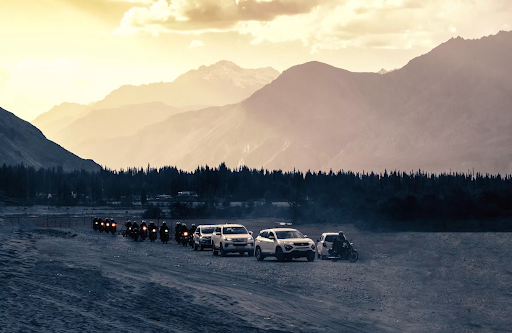
The problems start small and stack fast. Five vehicles can stretch half a mile down a dusty two-track, and the tail rig loses sight of the lead inside of a minute. Someone takes a wrong spur. A hub grenades. The one person who knows the route sits three switchbacks ahead with the only paper map.
Add terrain that kills line of sight, phone batteries drained by a day of trail apps, and a trailhead well outside any tower’s reach, and a two-hour delay can become an overnight.
Gear solves most of it. A radio in every cab, a satellite link, and a shared plan belong in your car emergency kit right next to the tow strap. Let’s get to it.
Carrier coverage maps get drawn for highways and towns, not for the bottom of a canyon. Terrain blocks signal long before distance does, so a ridge showing four bars can go dead 200 feet down the shelf road. A phone displaying LTE can still fail to push a call through if the uplink cannot reach back to the tower.
The stakes are real. In August 2026, the National Park Service reported a visitor died in Death Valley after his vehicle became stranded on a remote road and the pair started walking across the salt flats toward the highway.
Park officials keep repeating the same guidance: bring a way to call for help where cell service may not reach, and if your vehicle becomes disabled, stay with it, because a truck is far easier for search teams to spot than a person on foot.
 Source: Peak PTT
Most convoy trouble traces back to a delay in information. The lead spots a washout and cannot warn the truck behind it. A rig stops for a flat and the group keeps rolling for another mile. Cell phones handle none of this well, since dialing takes both hands and coverage can vanish at the worst possible moment.
Push-to-talk closes that gap by turning voice into a reflex, and GMRS adoption reflects it, with 45,772 licenses issued in 2026.
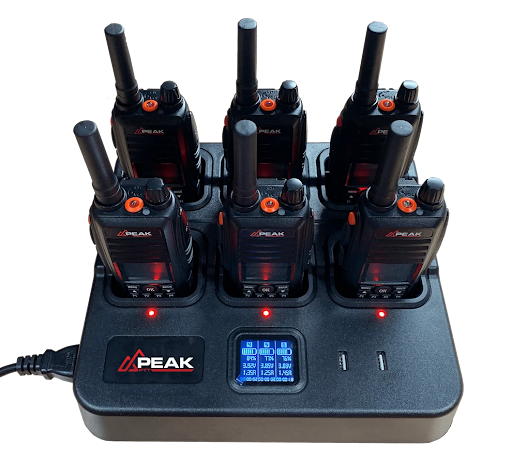
Handhelds keep a group talking inside a mile or two, mounted radios stretch that considerably, and Peak PTT and similar makers offer emergency devices for communication that can reach past the ridge once line of sight disappears.
Radios connect your group. Satellites connect your group to the outside world, and those are separate jobs. A two-way messenger can send texts, share tracking, pull weather, and open a conversation with a 24/7 response center, which matters when the problem is a broken axle rather than a broken leg.
Rough breakdown of the options:
One device per convoy is thin. Two, carried in different vehicles, can cover a group that splits.
Wattage gets the marketing copy, but height beats power almost every time. A 5-watt handheld on a roof-mounted antenna can outperform a 50-watt mobile feeding a mag mount stuck low on a fender.
A few things worth checking before the trip:
Fold-over mounts save antennas on tight tree tunnels. If your build already runs a light bar and a roof rack, plan antenna placement around them so nothing shadows the signal.
Comms gear draws steady current, and a long day of winching, lights, and fridge duty can leave you with a radio and a dead battery. A dual-battery setup or a decent lithium power station can keep the important stuff alive even if the starting battery sags.
Practical habits that help:
Cold weather cuts battery capacity, so winter runs deserve a bigger buffer. Anyone who has flat-towed a F-150 Raptor off a snowy forest road already knows how fast electronics fade.
What happens when the lead rig drops into a wash and the tail truck loses sight of it? Live tracking answers that question without anyone keying a mic. Most satellite messengers can broadcast breadcrumbs at set intervals, and a shared map link lets a contact at home watch the group move.
Redundancy still earns its space:
Digital tools fail in predictable ways. Paper fails only if it gets wet, which is a solvable problem.
Electronics die. Analog signaling weighs almost nothing and keeps working when the batteries quit. A whistle carries farther than a shout and costs nothing in effort, which matters if someone is injured or hypothermic.
Worth stashing in every rig:
Headlight and horn codes work too, if the group agrees on them in advance. Two flashes for stop, three for trouble. Simple beats clever when people are tired.
Gear without a plan creates chatter, and chatter drowns out the message that matters. Assign roles before the first spur. The lead calls obstacles and turns. The sweep vehicle confirms every rig is accounted for at each junction. Middle trucks relay when terrain blocks a direct shot.
A workable set of ground rules:
Anyone considering their first trail-ready off-road vehicle should budget for a radio in the same breath as tires.
When did your group last run a full radio check in the staging area? That single habit catches dead batteries, wrong channels, bad coax, and the guy who forgot his handheld on the kitchen counter, all while a gas station and cell signal are still within reach.
Build the check into your airing-down routine. Everyone keys up, confirms the primary and backup channels, and the sweep confirms tracking is live. Two minutes, done. Combine that with solid camping trip essentials and a group that knows the plan, and a bad day on the trail can stay a story instead of becoming a rescue.
The post The Communication Gear Every Off-Road Convoy Should Carry Before Leaving Pavement appeared first on Gauge Magazine.