

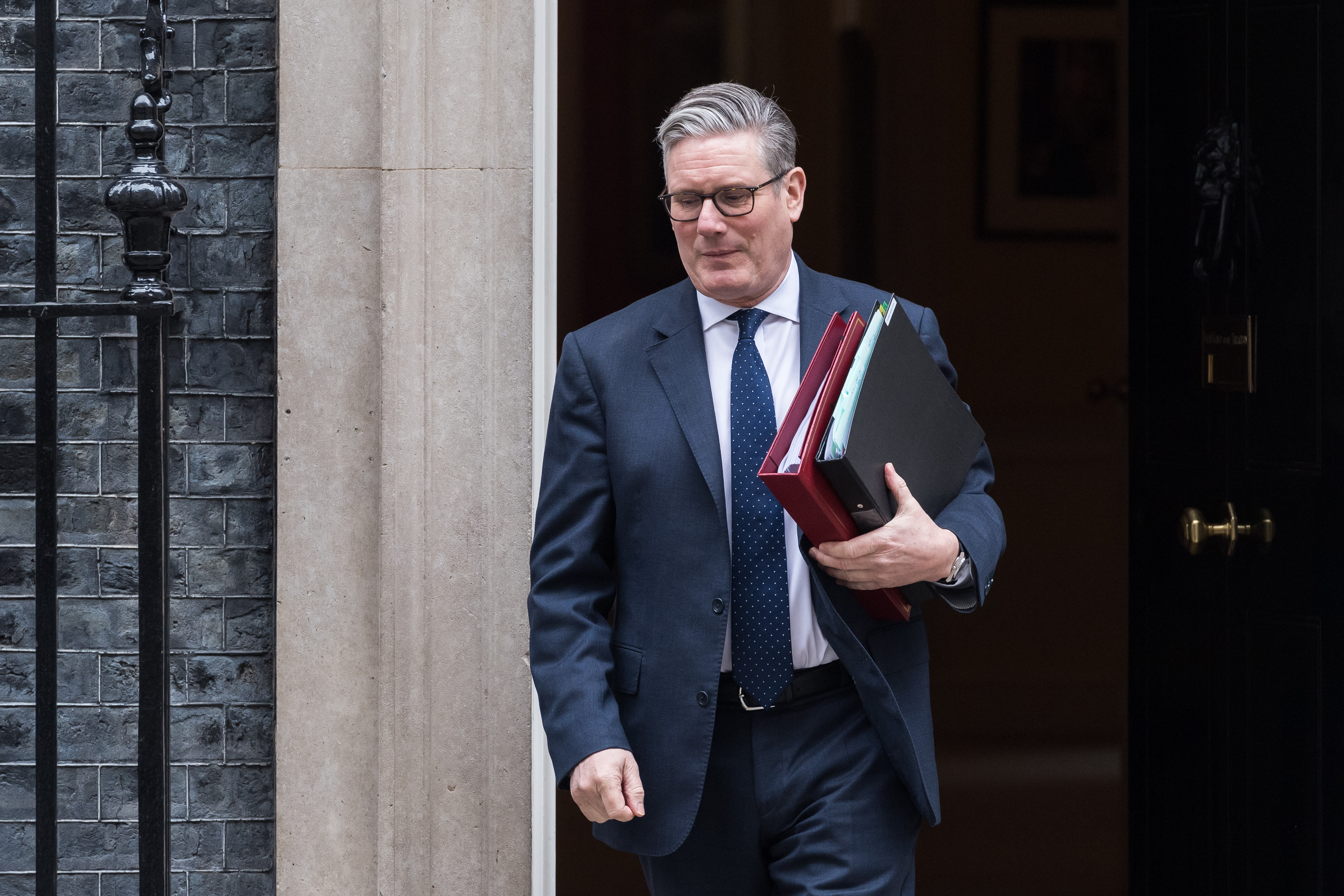
Keir Starmer, who resigned as Britain's Prime Minister in June, announced Tuesday he will also be stepping down from Parliament to focus on international affairs.
Speaking to Camden New Journal, Starmer—who led the Labour Party to a landslide victory in 2024—said it had “been a huge honor and privilege” to serve as the Member of Parliament (MP) for Holborn and St. Pancras in North London for the past 11 years.
Shortly after the news broke, Starmer shared a statement via social media, further explaining the reasons behind his departure.
“Over the summer, I have had time to reflect and consider my future. I have decided that now is the right time to step down as MP for Holborn and St Pancras and hand the baton over to a successor," he said. "It is now time to step aside and focus on other issues: international affairs including defense, security, trade and technology in a fast changing world. I will also continue working with others as I have done over many decades to tackle violence against women and girls."
Prime Minister Andy Burnham paid tribute to Starmer during an address to parliament, crediting his predecessor for securing one of Labour's "best victories" and creating a "platform to change this country for the better."
Read More: Why the U.K. Has Had Seven Prime Ministers in 10 Years
Starmer's resignation has triggered a by-election to determine his successor in the London constituency. The by-election—the details of which have yet to be confirmed—is set to be a test for Burnham, who is a little over a month into his Downing Street tenure.
When Starmer was re-elected by the constituency during the 2024 General Election, he faced a challenge from an independent lawmaker and a member of the Green Party of England and Wales
This time, it appears the Greens' leader Zack Polanski could pose the biggest threat to Labour, as a spokesperson for the party told media on Tuesday: “Zack (Polanski) has always made it clear he would like to be a London MP. London has been his home for over 20 years.”
Starmer, in his resignation note, vowed that "whoever is lucky enough to become the Labour candidate" for the by-election will have his full support and backing.
Read More: Andy Burnham Calls for 'New Politics' in U.K. in First Speech as Labour Leader
Starmer announced his resignation as Prime Minister and head of the Labour Party in June following months of scrutiny over his leadership.
The one-time lawyer initially fought against calls from within his own party to step down over his handling of the appointment of Peter Mandelson, the former British ambassador to the U.S. who maintained a yearslong correspondence with the late convicted sex offender Jeffrey Epstein.
After it was revealed in April that Mandelson had failed the security vetting in January 2025, only for his appointment as ambassador to go ahead the following month anyway on account of the Foreign Office overruling the decision, Starmer faced tough questions in parliament. Starmer denied having prior knowledge of the failed vetting process, telling parliament that “a deliberate decision was taken to withhold that material” from him.
Starmer weathered the storm, but faced renewed calls to step down in May, after Labour's poor performance in local polls.
Amid a flurry of ministerial resignations from his Cabinet, speculation grew as to who could might potentially challenge and replace Starmer. After Burnham—who had been open about his desire to launch a leadership challenge—cleared his own path back to Westminster through winning the Makerfield by-election, Starmer announced his departure.
Read More: How the Iran War Splintered U.K.-U.S Relations as Trump Turned on Starmer
Soon after Trump returned to the White House in early 2025, Starmer paid a visit to Washington, D.C., and presented the U.S. President with an invitation from King Charles III for an unprecedented second state visit to the U.K.
Downing Street later secured one of the first international agreements with Washington following Trump’s “Liberation Day” tariffs, marking the early success of the relationship between the two world leaders.
Trump and Starmer’s partnership was further strengthened when the President traveled to the U.K. in September, as the pair went on to sign a "groundbreaking" billion-dollar U.K.-U.S. Tech Prosperity Deal.
But cracks started to appear earlier this year, as Starmer was among the European leaders to staunchly oppose Trump’s threats to annex Greenland. Another disagreement occurred when Trump downplayed NATO’s contributions in the war in Afghanistan, prompting a public rebuke from Starmer.
Relations further splintered when Trump repeatedly lambasted Starmer for refusing to actively involve the U.K. in the Iran war.
“He ruins relationships. We are very surprised. This is not Winston Churchill that we're dealing with,” Trump said of Starmer in March.
Weeks later, the British Prime Minister admitted he was “fed up” with the President’s war in Iran and the detrimental financial impact it was having on the U.K.