


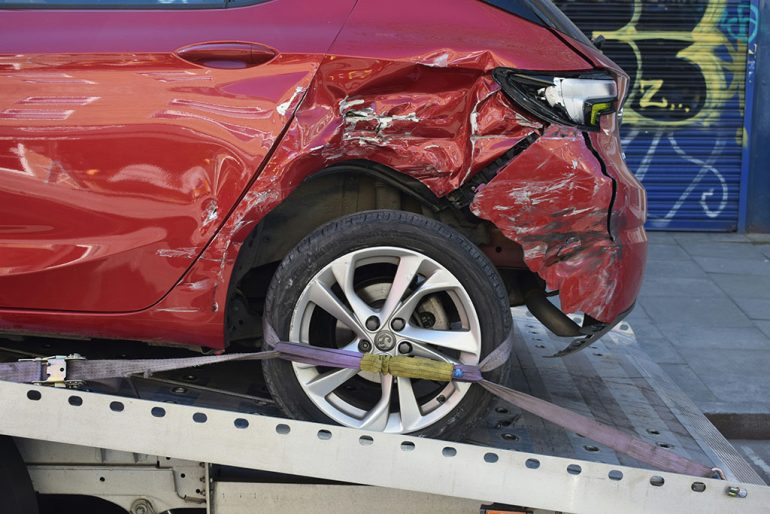
Picture standing on the shoulder of the road right after a fender bender, adrenaline still running high, phone in hand, and genuinely unsure what to actually photograph or document before the tow trucks show up and the scene disappears for good. It’s a moment nearly every driver eventually faces, and what gets captured, or missed, in those first few minutes can end up shaping the entire outcome of an insurance claim months later.
Knowing exactly which pieces of evidence actually matter, rather than trying to document everything in a panic, is what separates a driver who protects their claim from one who unknowingly lets crucial proof slip away.
It helps to understand just how quickly evidence can disappear. Surveillance footage gets overwritten, vehicles get repaired or towed before damage can be properly documented, and witnesses who saw exactly what happened become far harder to track down as days pass. That window closing quickly is exactly why acting promptly, once everyone’s safety is confirmed, makes such a meaningful difference in how strong a claim ultimately turns out to be.
A handful of specific things are worth documenting immediately, before the scene changes:
None of this requires special equipment, just a phone camera and the presence of mind to capture what’s actually there before it’s gone.
This is really the middle of what many drivers don’t realize plays a role in modern accident cases. Most vehicles built in recent years contain an event data recorder, often called a “black box,” that captures technical details in the seconds surrounding a crash, including speed, braking, and steering inputs.
According to the National Highway Traffic Safety Administration’s own final rule, an estimated 99.5% of model year 2021 passenger vehicles already came equipped with a compliant event data recorder. NHTSA’s research also found that the older 5-second pre-crash recording window often failed to capture the start of evasive steering. This was especially an issue in the rear-end, intersection, and road-departure crashes studied. As a result, NHTSA’s final rule requires a longer 20-second recording window going forward.
That kind of objective, vehicle-generated data can matter considerably in a disputed-fault case, since it doesn’t rely on memory or interpretation the way witness accounts sometimes do. Understanding that this data exists, and that it’s often recoverable, is exactly the kind of detail an auto accident attorney knows to pursue early, before a vehicle gets repaired or the data becomes harder to access.
GLS Injury Law, for example, routinely works to preserve this kind of technical evidence alongside more traditional documentation, since a comprehensive case often depends on combining several types of proof rather than relying on just one.
Seeking medical attention promptly after an accident, even when injuries feel minor at first, serves two purposes: it protects your health, and it creates a documented timeline connecting the crash to any injuries that show up later. A few things matter here:
Gaps in treatment or delayed medical visits are often exactly what insurance companies point to when trying to argue an injury wasn’t genuinely caused by the crash.
Witnesses who saw a crash happen often have one of the clearest and most objective views of what actually occurred, but their memories and availability can decline quickly. Details such as vehicle speed, traffic signals, lane position, or who moved first may become less certain as time passes.
People can also change phone numbers, move away, or simply become difficult to reach later. Getting a witness’s name and phone number at the scene, even if you only have a brief conversation, can be crucial to preserving that independent perspective before it becomes difficult or impossible to recover.
The evidence that ends up mattering most after a car accident isn’t usually one single thing, it’s the combination of scene photos, vehicle data, medical documentation, and witness accounts working together to build a complete, credible picture of what happened. Acting promptly to preserve each of these pieces, rather than assuming they’ll still be available later, is one of the most effective things a driver can do to protect a future claim.
Given how quickly evidence can disappear and how much is often riding on getting the full picture right, treating those first hours and days after an accident with real care is time well spent for anyone hoping to see a fair outcome.