

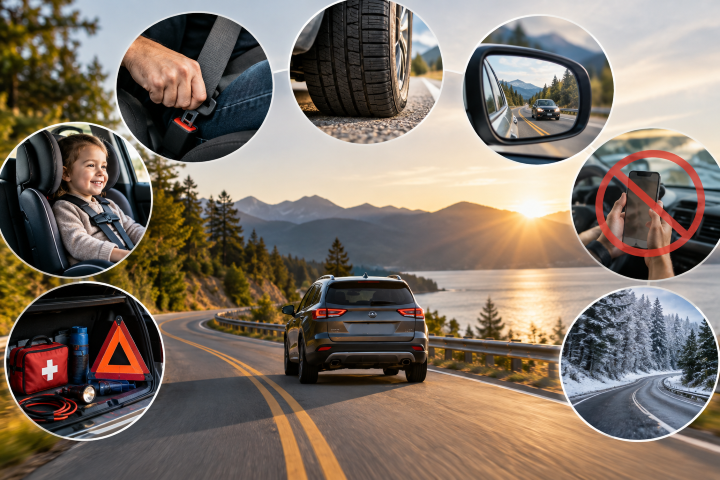
Driving is a routine part of everyday life, but even familiar journeys can become dangerous when drivers overlook basic safety precautions. Traffic, changing weather, mechanical problems, poor visibility, and unexpected actions from other road users can all create risks. Fortunately, many common hazards can be reduced by preparing your vehicle properly and developing safer driving habits. Before starting your next trip, consider these seven practical car safety tips to help protect yourself, your passengers, and other people on the road.
A safe vehicle needs more than careful driving. Routine vehicle maintenance can help detect potential issues before they develop into major problems. Follow the manufacturer’s recommended service schedule and pay attention to warning lights, unusual sounds, vibrations, or changes in vehicle performance.
Check important components such as brakes, tires, lights, fluids, the battery, and windshield wipers. If your car begins behaving differently, do not ignore the warning signs. A small mechanical issue can become much more expensive—or dangerous—if left unresolved.
Regular maintenance also gives drivers greater confidence because they know their vehicle is being properly cared for.
A dash cam can be a useful addition to your vehicle, helping you record what happens on the road. It can be especially helpful during busy traffic, unfamiliar routes, or unexpected incidents because recorded footage may provide a clearer account of what occurred.
When choosing a camera, consider factors such as video quality, viewing angles, low-light performance, storage capacity, heat tolerance, and ease of installation. Gauge Magazine’s guide to capturing clear dash cam footage explains how camera placement, windshield condition, lighting, and recording settings can affect the final video.
The Wolfbox dash cam range includes mirror-mounted and conventional camera systems with features such as high-resolution recording, wide viewing angles, and low-light or night-vision capabilities. Depending on the model, these cameras may also offer GPS and rear-camera coverage.
A mirror-mounted system with a rear-camera display may provide an additional rear view, but a dash cam should complement safe driving habits rather than replace mirrors, direct observation, or careful attention. Install the camera where it does not obstruct the driver’s view and confirm the windshield-mounting rules that apply where you drive.
Tires are among the most important safety components of any vehicle because they are the only parts of the car that directly contact the road. Incorrect tire pressure can affect handling, braking, fuel efficiency, and overall stability. Underinflated or overinflated tires may also wear unevenly and become more vulnerable to damage.
Before a long trip, check the tires when they are cold and compare the pressure with the manufacturer’s recommended level on the driver-side door placard or in the owner’s manual. Do not use the maximum pressure molded into the tire’s sidewall as the vehicle’s recommended setting. The NHTSA TireWise safety guide also recommends regular pressure, tread, and damage checks.
Inspect the tread for excessive wear, cracks, cuts, bulges, nails, or other visible damage. Make sure to inspect the spare tire as well if your vehicle is equipped with one. A few minutes of inspection can help prevent an inconvenient or dangerous breakdown.
Distracted driving can happen in seconds. Looking at a phone, adjusting complicated controls, searching for something inside the vehicle, or eating while driving can take your attention away from traffic.
Prepare as much as possible before leaving. Set your navigation route, adjust the temperature, secure loose items, and choose your music before moving. If you need to make a phone call or deal with an important message, find a safe place to stop rather than attempting to handle it while driving.
Keeping your attention focused on the road gives you more time to recognize hazards and react appropriately.
Following another vehicle too closely reduces the amount of time available to react if traffic suddenly slows or stops. Even if the driver ahead appears predictable, unexpected situations can occur at any moment.
Maintain a reasonable following distance and increase it when driving in rain, snow, fog, darkness, or heavy traffic. Wet roads can increase stopping distances, while poor visibility can make hazards harder to recognize. Creating extra space also gives you more flexibility if another driver makes an unexpected maneuver.
Remember that safe following distance is not just about preventing collisions with the vehicle directly ahead. It also gives you additional time to assess changing traffic conditions.
Road conditions can change significantly during a single journey. Rain may make surfaces slippery, fog can reduce visibility, and strong winds can affect the stability of certain vehicles. Drivers should adapt their speed and driving style whenever conditions become more challenging.
Check the weather before starting a long trip and consider whether your planned route may be affected by storms, flooding, snow, ice, or other hazards. When conditions deteriorate, reduce your speed, increase your following distance, and use your headlights appropriately.
Avoid assuming that the posted speed limit is always the safest speed. Your speed should also reflect visibility, traffic, road quality, and weather conditions.
Good visibility is essential for safe driving, particularly at night, during rain, or when facing bright sunlight. Dirt, dust, fingerprints, and moisture on the windshield can create glare and make it harder to identify pedestrians, road signs, cyclists, and other vehicles.
Clean your windshield regularly and replace worn windshield wipers when they begin leaving streaks. Your side mirrors and rearview mirror should also remain clean and properly adjusted. Before pulling away, take a moment to make sure you have a clear view of the surrounding traffic.
Car safety starts before the engine is turned on. Checking your tires, maintaining good visibility, avoiding distractions, keeping a safe following distance, and adapting to road conditions can improve everyday driving. Technology such as a dash camera can provide another layer of documentation, while regular maintenance helps keep the vehicle dependable.
A dash cam may help document an incident, but it does not replace knowing what to do immediately after a car accident. Getting to safety, checking for injuries, contacting emergency services when necessary, and preserving information should remain the priorities.
The safest drivers are not necessarily the fastest or most experienced. They are the ones who prepare for the journey, remain attentive, and make responsible decisions when conditions change. By turning these seven habits into part of your normal routine, you can make every trip safer and more controlled.
The post 7 Car Safety Tips Every Driver Should Know Before Hitting the Road appeared first on Gauge Magazine.