

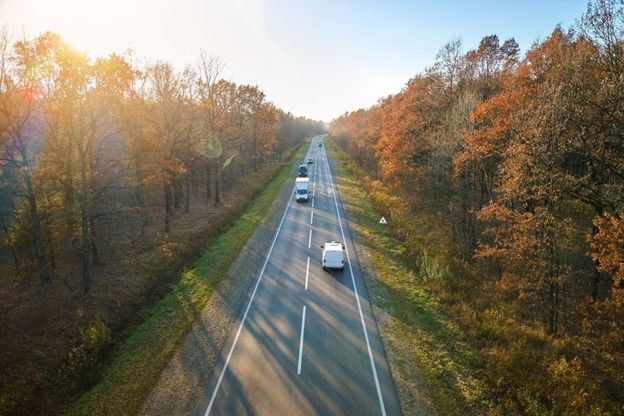
Lake City sits near the junction of Interstate 75 and Interstate 10, bringing a considerable amount of interstate traffic through the surrounding Columbia County area. Once drivers move from the interstates onto local rural routes, the road environment can change quickly. Narrow two-lane highways cut through farmland and timberland, posted speeds may remain relatively high, and some drivers travel faster than the limit or too fast for conditions.
This combination of rural roads, limited sightlines, and higher travel speeds can make Lake City car accidents especially serious. If a crash like this injured you or someone you love, it may help to contact a car accident lawyer in Lake City who understands the local roads and the evidence that may be needed to establish fault.
Florida Statute 316.183 establishes a maximum speed of 30 miles per hour in business or residential districts and 55 miles per hour in other locations unless another speed has been lawfully established and posted.
Many county roads and highways around Lake City travel through farmland, timberland, and open areas with relatively few homes or businesses. Florida Statute 316.187 also permits maximum limits of up to 70 miles per hour on limited-access highways such as I-75 and I-10.
These rules mean drivers moving through Columbia County may travel at substantially higher speeds than they would on streets inside the city. However, a posted speed limit is a maximum, not a guarantee that the posted speed is safe under every condition.
Florida law requires drivers to use a reasonable and prudent speed based on actual and potential hazards. A driver may need to slow below the posted limit for a curve, hill crest, narrow roadway, heavy rain, poor visibility, stopped traffic, or another hazard.
Speed changes how a car accident unfolds. The faster a vehicle travels, the less time its driver has to react to a stalled car, animal, farm vehicle, sharp curve, or sudden stop ahead.
Stopping distance also increases as speed rises. A driver traveling at 65 miles per hour needs considerably more room to perceive a hazard, react, and bring the vehicle to a stop than someone traveling at 35 miles per hour. On a rural road with limited sight distance, that additional space may not be available.
Collision energy increases rapidly with speed, which can make high-speed crashes more destructive. Research from the Federal Highway Administration explains that higher operating speeds generally produce more severe crash outcomes.
This is one reason crashes on rural highways can cause severe injuries or fatalities even when the initial hazard appears ordinary. A stopped vehicle, unexpected curve, or animal in the roadway becomes much harder to avoid when vehicles are moving at highway speeds.
Rural roads present hazards that drivers may not encounter as frequently on city streets. Sharp curves, limited lighting, changing pavement conditions, and narrow shoulders require additional caution even when the posted limit appears appropriate.
Florida Statute 316.185 requires drivers to decrease their speed when approaching curves, hill crests, narrow or winding roads, and other special hazards. The duty applies even when the vehicle is already traveling below the posted limit.
A driver who fails to operate carefully under the width, grade, curves, traffic, and other surrounding circumstances may also receive a careless-driving citation under Florida Statute 316.1925. Whether a citation is appropriate depends on the specific evidence and circumstances of the crash.
Common hazards around Lake City may include:
A crash on a rural road may occur farther from emergency services or in an area with inconsistent cellular coverage. Knowing what to do immediately afterward can help protect your safety and preserve important evidence.
Gauge Magazine’s guide explaining what to do immediately after a car accident provides additional steps for protecting yourself and documenting the scene.
Photographs, witness information, medical records, vehicle data, and the crash report may later help establish how the collision occurred. These are also among the factors that can help build a stronger car accident claim.
The roads around Lake City can present very different driving conditions depending on the route. Inside town, lower speeds, intersections, pedestrians, and frequent traffic changes keep drivers alert. On county roads and highways, long open stretches can create a false sense of security until a curve, animal, slow-moving vehicle, or stopped car appears with little warning.
Drivers should treat the posted speed as a maximum and adjust for visibility, traffic, weather, road design, and other hazards. More following distance, careful nighttime driving, and reduced speed before curves can provide valuable reaction time.
Every crash has its own circumstances, including vehicle speeds, sight distance, road conditions, driver behavior, and the exact hazard involved. Understanding how rural roads and higher speeds interact can provide a clearer picture of how a Lake City crash happened and why evidence about the roadway may matter as much as evidence about the drivers.
This article provides general information and is not legal advice. Liability and legal rights depend on the facts of each crash and the law applicable at the time.
The post Lake City Car Accidents: How Rural Roads and Higher Speeds Affect Crashes appeared first on Gauge Magazine.