
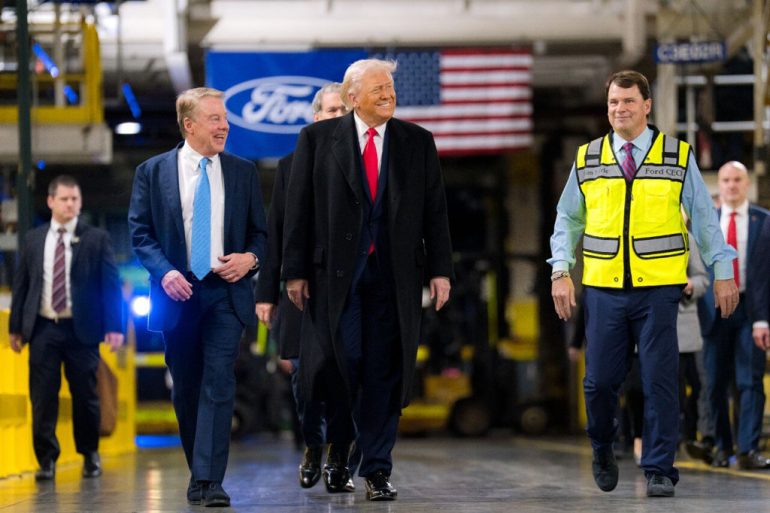
Ford is facing new pressure from the Trump administration over its business relationships with several major Chinese companies, adding another layer of uncertainty to an auto industry already navigating tariffs, technology restrictions, and an increasingly complicated relationship between the United States and China. Reuters reports that U.S. Transportation Secretary Sean Duffy sent a letter to Ford CEO Jim Farley raising national security concerns about the automaker’s dealings with battery giant CATL as well as Chinese automakers Geely and BYD. Duffy urged Ford to reduce its dependence on Chinese companies and technology.
A major point of contention is Ford’s BlueOval Battery Park Michigan facility in Marshall, where the automaker is using licensed lithium-iron phosphate battery technology from CATL. The arrangement has attracted political scrutiny because CATL has been identified by the U.S. government as having alleged ties to China’s military, an assertion that has been disputed by the company. Ford has consistently emphasized that the Michigan factory is owned and operated by Ford, with an American workforce. The company says the plant represents an effort to bring battery production to the United States rather than continuing to depend on imported Chinese-made batteries.
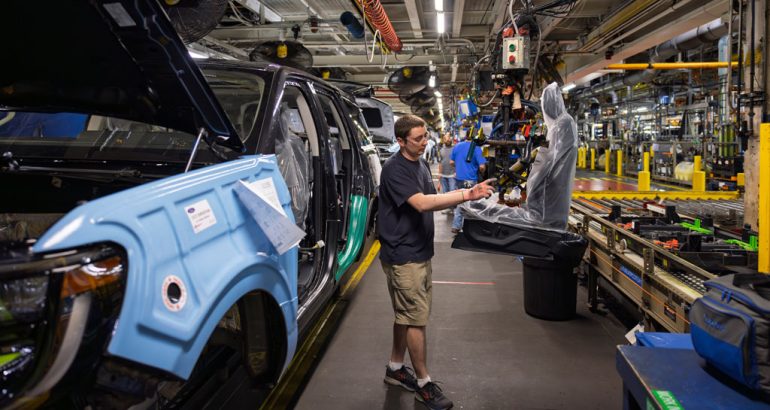
Ford pushed back strongly against Duffy’s criticism. In a statement reported by Reuters, the automaker called the letter “wrongheaded” and argued that its strategy is helping establish domestic battery manufacturing. Ford said it owns the Michigan facility, controls its operations, and employs the workers there. The plant is expected to produce lithium-iron phosphate batteries for Ford vehicles, including products based on the company’s newer affordable EV architecture. Ford has already been hiring workers at the facility as it moves toward large-scale battery production.
The administration is also questioning Ford’s broader dealings with Chinese automakers. Duffy criticized the company’s relationship with Geely and raised concerns about Ford continuing to manufacture the Lincoln Nautilus in China, with U.S. production not expected to replace that arrangement until around 2030. The dispute comes as lawmakers are considering tighter restrictions on Chinese vehicles, technology, and automotive companies operating in or selling products to the United States. Major automakers have also urged Congress to create clearer long-term restrictions on Chinese-made vehicles entering the American market.
For Ford, the situation highlights how difficult global automaking has become when technology, manufacturing costs, trade policy, and national security concerns intersect. Chinese companies have developed considerable expertise and scale in areas such as battery manufacturing, making partnerships attractive to Western automakers trying to lower EV costs. At the same time, Washington is increasingly scrutinizing those relationships as it seeks to build a more independent U.S. automotive supply chain. Ford appears determined to defend its approach as a way to manufacture advanced batteries domestically, while the Trump administration is signaling that even licensed Chinese technology could face greater examination going forward.