

Volkswagen is giving its IQ.DRIVE driver-assistance suite a meaningful technology upgrade for 2027, bringing several new capabilities to the Atlas family, Golf family, ID. Buzz, and Tiguan. Among the biggest additions are expanded driver-initiated lane changes through Travel Assist, an upgraded Predictive Adaptive Cruise Control system, and Emergency Assist Plus, which can potentially guide a vehicle toward the shoulder and bring it to a stop if the driver becomes unresponsive. Volkswagen already makes a broad collection of assistance features standard across its U.S. lineup, including Travel Assist, Front Assist, Active Blind Spot Monitor, Rear Traffic Alert, Adaptive Cruise Control, Lane Assist, and Emergency Assist, but the latest improvements push some of those systems noticeably further.
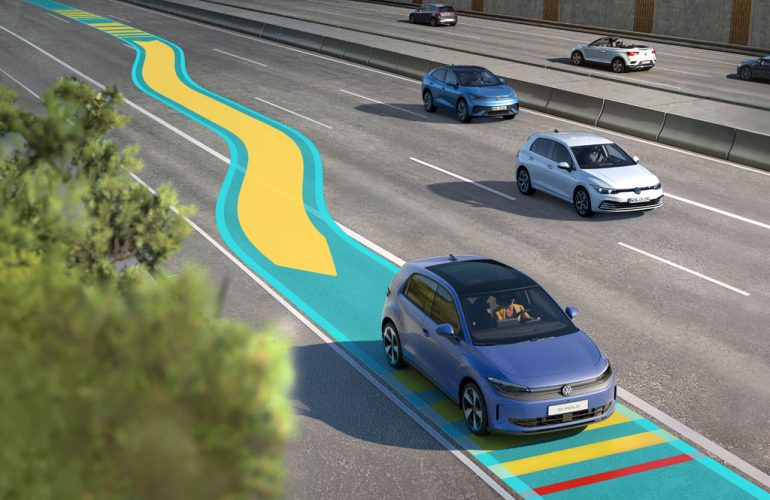
The assisted lane-changing feature is one of the more useful everyday upgrades. When Travel Assist is active and the vehicle is traveling above 45 mph, the driver can partially press the turn signal to request a lane change. Rear radar sensors monitor the adjacent lane, and the vehicle can carry out the maneuver when conditions allow. If another vehicle is blocking the desired lane, the system can wait for up to 12 seconds for an opening before proceeding. Predictive Adaptive Cruise Control is also getting smarter, with the ability to better respond to changing speed limits and even assist with slowing for highway exits using navigation information or a turn-signal input. Drivers are still given the opportunity to accept or reject automatic speed adjustments.
Emergency Assist Plus is arguably the most significant new feature. If the system determines the driver is no longer responding while Travel Assist or Lane Assist is operating, it can issue visual and audible warnings and take additional steps to get the driver’s attention. Depending on the situation, the system can sound the horn, briefly apply the brakes several times, and tighten the seatbelt before attempting to move the vehicle toward the right side of the road. If the front camera determines there is enough space, the Volkswagen can guide itself onto the shoulder. Otherwise, it will attempt to reach the far-right lane. Once stopped, the system can select Park, activate the hazard lights, unlock the doors, turn on the exterior lights, sound the horn, and initiate an emergency call. Volkswagen notes that these systems remain driver-assistance technologies and are not substitutes for an attentive driver.
There are other safety improvements arriving for 2027 as well. Certain Atlas, ID. Buzz, and Tiguan models receive an enhanced rearview camera capable of detecting pedestrians while reversing between 1 and 6 mph and automatically applying the brakes when necessary. The ID. Buzz also gains Volkswagen’s cloud-based Road Experience Management data through its In-Vehicle Premium subscription service. That technology gathers real-world information about lane markings, signs, lighting, and traffic patterns to improve mapping and potentially help driver-assistance systems perform when visible road markings are less than ideal. A one-year In-Vehicle Premium trial will be included with the 2027 ID. Buzz. Taken together, the changes show Volkswagen focusing less on flashy autonomous-driving promises and more on expanding the situations where its existing assistance technology can provide useful support.