

Source: Unsplash
Today, cars are essentially supercomputers on wheels. While fully driverless privately owned vehicles might still be a few years away, the cars we own now have moved on from the days when an electrical system was solely wired to work headlights and radio knobs.
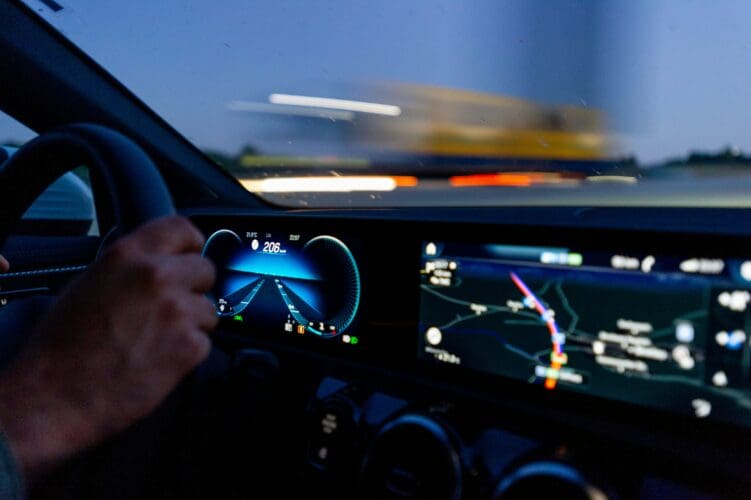
Indeed, hundreds of individual microcomputers are at work in the modern vehicle. These Electronic Control Units, or ECUs for short, are constantly communicating over internal networks to support everything from anti-lock braking and airbag deployment to lane assistance, climate control and system diagnostics. Add to that GPS navigation, Wi-Fi hotspots, and smartphone integration. It means our driveways are home to fully connected network devices.
However, the convenience that comes with keyless entry, voice-activating the quickest route to a destination, and instantly playing favorites from a Spotify playlist presents a new challenge around network security. Just like how our computers are protected against online threats, today’s cars need a strong digital defense to safeguard both critical driving controls and private location data.
The Invisible Algorithm Working Behind the Scenes
Source: Unsplash
At the heart of in-car digital security is a technology you may never have heard of, but is actually at work in activities you might do every single day. It is known as a Cryptographically Secure Pseudorandom Number Generator, or CSPRNG, and is an algorithm that creates sequences of numbers so complex and unpredictable that even high-powered computers cannot guess them.
It’s used to establish one-time passcodes in apps like Google Authenticator, provide secure encryption while browsing the web, and even randomly generate the symbols of casino slot machines online like those in Big Bass Splash and Piggies and Diamonds. In modern vehicles, CSPRNGs are responsible for the single-use security keys that encrypt over-the-air firmware updates to things like batteries in EVs, regenerative braking systems, and driver-assistance radars.
Elsewhere, on internal networks, the algorithm supplies unique verification tags to confirm commands like braking and acceleration originate from legitimate onboard modules rather than unauthorized hardware. They even protect navigation systems by continually scrambling temporary broadcast identifiers so third parties cannot track driving routes.
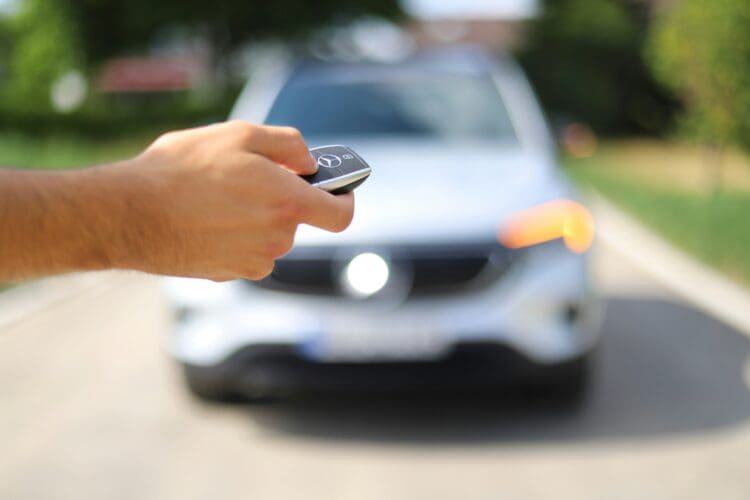
Perhaps the clearest example of CSPRNGs in action is in keyless entry systems. When you approach your car and touch the door handle, the vehicle and key fob execute a cryptographic handshake. The algorithm applies a random, single-use code known as a “nonce”, sending this challenge string to the key fob, which cryptographically signs the number using a pre-shared secret key before sending it back.
CSPRNGs guarantee mathematically unpredictable randomness, and because of this, they eliminate older vulnerabilities like rolling code exploits that thieves used to predict future unlock signals. The algorithm ensures every single handshake is bound to the exact millisecond it is used, making it impossible to guess or reuse.
Modern Vehicle Security
Modern vehicles don’t just get us from A to B. They’re essentially digital hubs where security can’t be an afterthought. CSPRNGs are one of the ways car manufacturers can give drivers peace of mind that in-car technology is secure, that personal information like routing is kept private, and that the vehicles themselves can’t be accessed by a rogue key fob.
The post Supercomputers on Wheels: How Invisible Randomness Protects Your Car appeared first on My Car Heaven.