

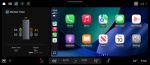
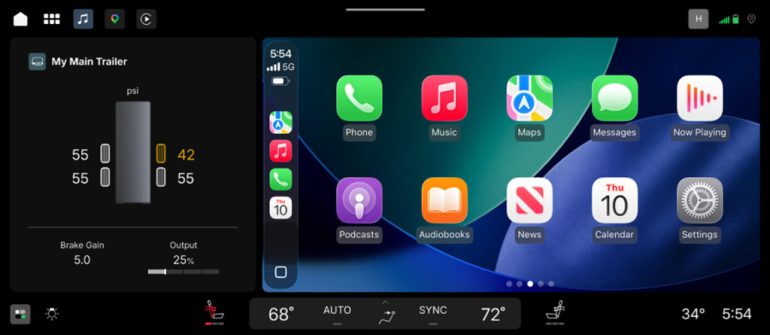
General Motors appears to have found a compromise in its long-running debate over Apple CarPlay and Android Auto. After spending the past few years moving toward a future centered on its own built-in software, GM has revealed a redesigned infotainment experience for the 2027 Chevrolet Silverado 1500 and 2027 GMC Sierra 1500 that once again puts smartphone projection front and center. More importantly, GM says the new interface will eventually expand across its broader vehicle portfolio, suggesting the company has softened its stance on forcing customers entirely into its native software environment.
The reversal is notable because GM began phasing Apple CarPlay and Android Auto out of newer EVs in 2023, then signaled in 2025 that future gasoline-powered vehicles would eventually follow the same path as its software platform evolved. The company argued that a unified in-house system could deliver better integration with navigation, charging, driver-assistance technology, and vehicle functions. That strategy also gave GM more control over the in-car digital experience. The problem was that plenty of buyers simply did not want to give up CarPlay or Android Auto, two systems many drivers already understand and use every day.
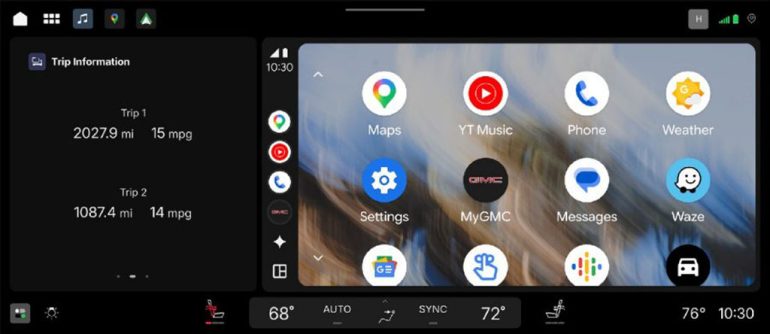
For the 2027 Silverado and Sierra, GM has taken a different approach. Rather than allowing CarPlay or Android Auto to completely take over the center screen, the phone-based interface can appear in a large section of the display while GM’s native software remains visible around it. That means drivers can still access familiar apps such as Apple Maps, Google Maps, music services, and messaging while keeping vehicle-specific information, climate controls, trailering data, and other truck functions immediately accessible. It is a cleaner solution to one of GM’s earlier complaints about drivers constantly jumping back and forth between two separate software environments.
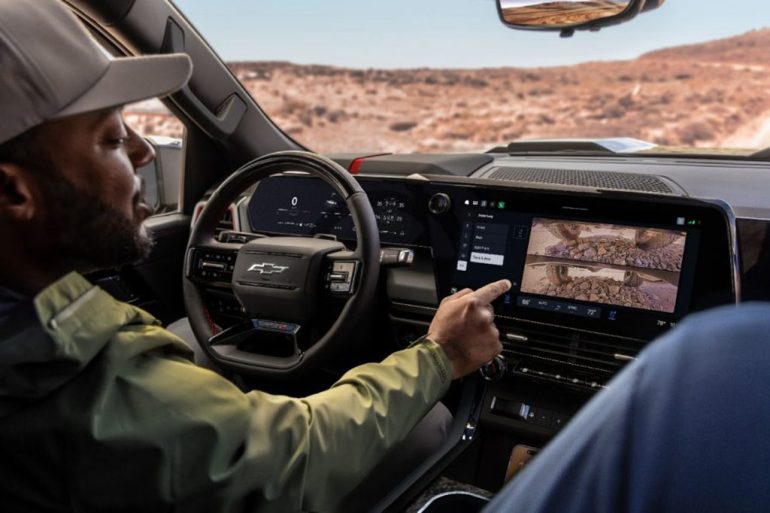
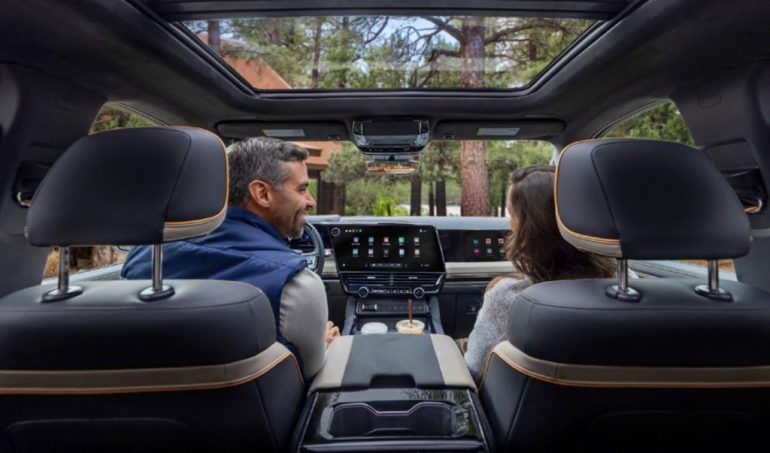
The new interface is arriving alongside significantly more display real estate in GM’s next-generation full-size pickups. The 2027 Silverado and Sierra can offer more than 60 inches of combined digital display area in certain configurations, including a large center touchscreen, digital instrument cluster, head-up display, and available passenger-side screen. GM says it focused heavily on cleaner layouts, larger touch targets, easier-to-reach shortcuts, and stronger visual contrast. Thankfully, the company has not gone completely touchscreen-only either, with physical controls remaining for frequently used functions.
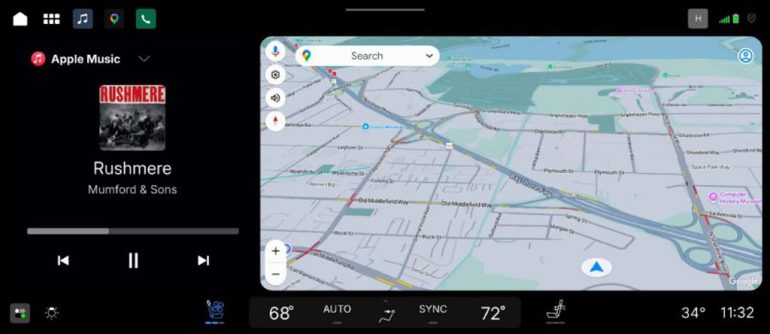
GM is also using the new interface to improve how Super Cruise and other advanced vehicle systems are presented to the driver. Updated graphics can provide a three-dimensional representation of surrounding traffic while Super Cruise is active, helping make it easier to understand what the truck is detecting around it. Trailering tools, cameras, vehicle status information, and other features that matter to truck owners are being pulled closer to the surface instead of being buried several menus deep. Over-the-air update capability means GM can continue modifying and improving the software after the truck leaves the dealership.
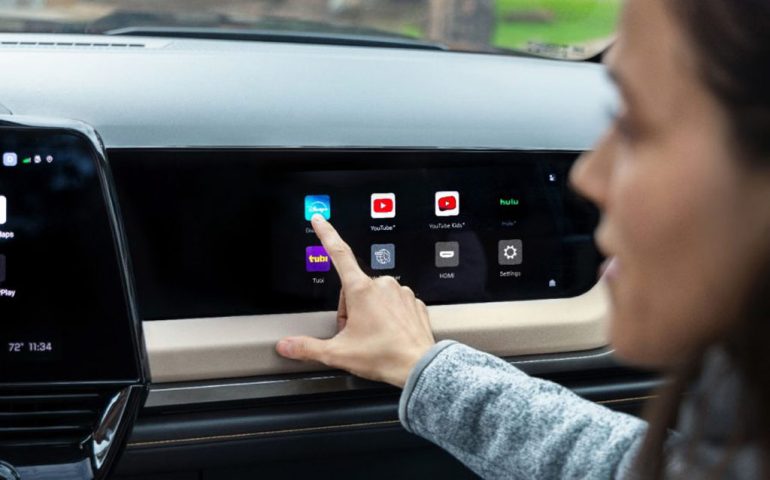
None of this means GM is abandoning its own software ambitions. Built-in Google services remain a major part of the system, allowing owners to use apps such as Google Maps without connecting a phone. GM is also continuing its push toward deeper vehicle integration, connected services, and more sophisticated voice assistance. What has changed is the apparent recognition that smartphone projection and native vehicle software do not necessarily have to compete for the same space. They can coexist, and that may ultimately be a better experience than asking customers to choose one or the other.
For GM, bringing CarPlay and Android Auto into the new Silverado and Sierra interface is probably the most customer-friendly answer it could have landed on. Automakers increasingly want control over the software inside their vehicles, but buyers also want the familiarity and convenience of the phones they already carry. The new 2027 truck interface gives GM room to develop its own digital ecosystem while leaving the door open for Apple and Android users. If this same approach truly spreads across Chevrolet, GMC, Cadillac, and Buick as GM suggests, the debate over CarPlay may finally be moving toward a solution that works for both the automaker and its customers.