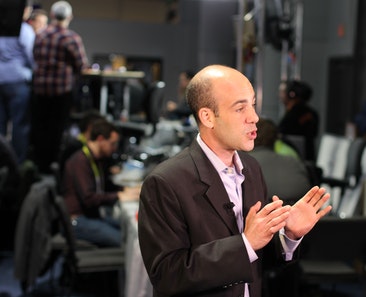

On Sept. 14, Air Force Secretary Troy Meink said the quiet part out loud. Speaking at the Air, Space, and Cyber Conference in National Harbor, Md., Meink openly conceded something U.S. policymakers have been avoiding acknowledging for years—that the American military intends to weaponize space, and indeed, that it already has hostile hardware in Earth orbit.
“We are increasing readiness against existing threats,” Meink said. “[T]he United States has on orbit space control weapons capable of defending the Joint Force against hostile adversary action.”
The announcement was headline-making both for what it said about the escalation of weapons development to off-planet domains, and for Meink’s surprising candor. Weaponization of space has been officially forbidden under international law since Jan. 27, 1967, when the Treaty on Principles Governing the Activities of States in the Exploration and Use of Outer Space, including the Moon and Other Celestial Bodies—better known simply as the Outer Space Treaty—was signed and ratified by the U.S., the U.K., and the old U.S.S.R. Since then, 112 other countries have joined the pact. China, which was not remotely a global power at the time the treaty was adopted, signed on to it in 1983.
Read more: The Looming Risk of Too Many Satellites and Debris in Space
But the agreement has been honored as much in the breach as in the observance—at least by the U.S., China, and modern-day Russia. As long ago as 1985, the U.S. Air Force shot down a defunct American weather satellite with a missile launched by a military jet flying at 31,500 ft., a first test of a technology that could just as easily be used against the space assets of enemy nations. The Soviet Union experimented with similar R&D beginning in 1983, but did not succeed at it until 2021, when it famously destroyed a Soviet-era satellite with a ground-based missile. Beijing beat Moscow to the punch 14 years earlier, skeet-shooting a Feng Yun-1C weather satellite out of the sky with a projectile fired by a ground-launched ballistic missile, scoring a hit more than 500 miles up.
The U.S. has—officially at least—disavowed and condemned this kind of cosmic escalation. At the time of the Chinese action, senior members of the George W. Bush administration criticized the move as “very troubling,” “very worrisome,” “destabilizing,” and “quite unpleasant.” A senior Air Force spokesperson told the media flatly, “We don’t want to do that.” But what America ostensibly wants to do and what it has actually been doing are two different things.
In 1983, then-President Ronald Reagan announced plans for a tactical umbrella known as the Strategic Defense Initiative (SDI), which aimed to use missiles that could reach orbital and suborbital space to knock down nuclear and conventional ordnance launched by the Soviet Union and other foes. The program did not quite run afoul of the Outer Space Treaty since it was nominally defensive rather than offensive, though the Kremlin decidedly did not see things that way. The SDI ran for a decade—until the presidency of Bill Clinton—and produced no technology of note, while burning through an inflation-adjusted $70 billion. Presidents since then have continued to invest in space-based missile defense—though at lower funding levels—with President George W. Bush going so far as to withdraw from the 1972 U.S.-U.S.S.R Anti-Ballistic Missile (ABM) treaty, to pursue the technology without officially breaking America’s diplomatic word.
In his two terms in the Oval Office, President Donald Trump has escalated the Pentagon’s push into space. During his first term, in 2019 Trump created the Space Force, a sixth branch of the armed services, with particular focus on the orbital domain. The new branch is small compared to the rest of the military, with just 10,000 uniformed service members (compared to 450,000 for the Army), and a $71 billion budget for fiscal year 2027 (against the Army’s $253 billion). What’s more, most of the work the Space Force has been doing was already being performed by the U.S. Air Force’s Space Command, meaning that the establishment of the new branch represented less an increase in the Pentagon’s off-Earth activities than a mere shift in the shingle under which the jobs were getting done.
But upon his return to the White House in 2025, Trump stepped up the militarization of space—and did so fast. On Jan. 27—the 58th birthday of the Outer Space Treaty and just a week after his inauguration—Trump issued Executive Order 14186, establishing the so-called Iron Dome (later renamed Golden Dome), a space-defense system that the Congressional Budget Office has estimated could cost $1.2 trillion over 20 years, with a down payment of $25 billion, or about the same as NASA’s annual budget, spent in its first fiscal year alone. Among other things, Golden Dome calls for space-based missile interceptors and a global constellation of satellites to monitor hostile nations’ space activities—both pillars of Reagan’s SDI.
Golden Dome has been moving at a sprint since the Executive Order was signed. In the past 18 months, the program has advanced from the contract phase to actual flight-ready hardware. Beta-tests of both interceptors and surveillance systems are set for launch before the end of the year. Indeed, said Meink in his remarks, “We start launching our Air Moving Target Indicator constellation this month,” referring to the monitoring satellites.
It’s not just defensive weapons that are in play as the arms race in space accelerates. And it’s not just missiles that will be the agents of that combat. Lasers and microwave technology—flashed and pulsed by armed satellites—are widely believed to be in development, and could be used to fry the brains and blind the optical systems of opposing countries’ satellites. Meantime, Foreign Policy magazine reports that China is developing military satellites with robotic arms that could literally yank opposing satellites out of their intended orbits. In the wake of Meink’s announcement, Bleddyn Bowen, an associate fellow in military sciences at the Royal United Services Institute and associate professor in astropolitics at England’s Durham University, told the BBC that the U.S. could be developing similar technology as well. “[S]ome sort of close inspection and grappling satellite would be [a] possibility,” he said.
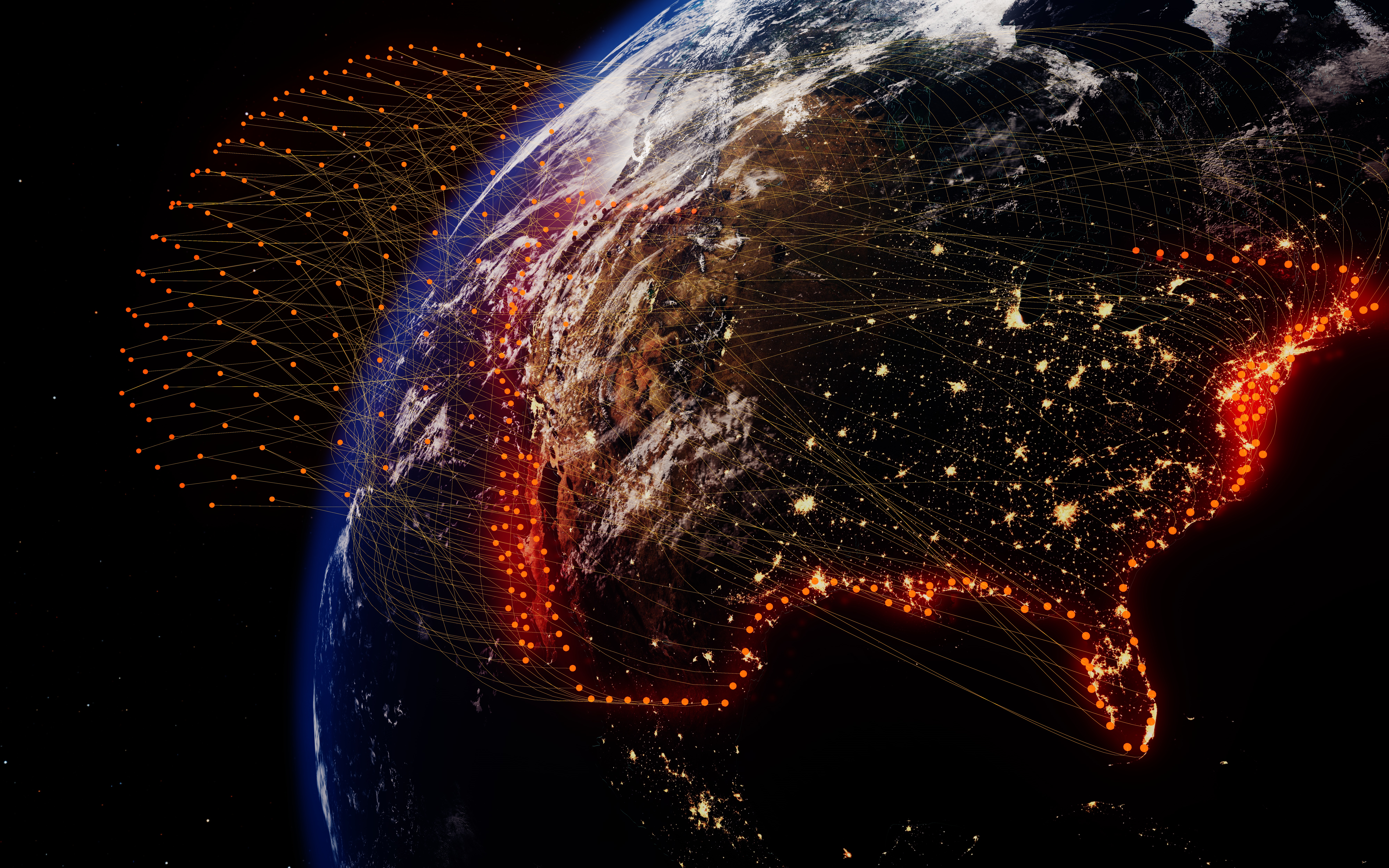
The biggest danger, however, comes from missiles and orbital projectiles that would effectively blow satellites up, since that kind of kinetic attack produces a swirling cloud of orbital debris that would fan out from the site of the strike, threatening other satellites with unplanned destruction. Accidental collisions with space junk already worry both the commercial and military sectors. There are currently nearly 15,000 operational satellites in Earth orbit, and up to 10,000 defunct ones, making for a lot of celestial traffic. Just as troubling, according to NASA’s Orbital Debris Program Office, there are an additional 500,000 objects measuring 1 to 10 cm (.39 in. and 3.9 in.), and 100 million in the 1-mm range. Such tiny bits of mass matter. Traveling at 4.85 miles per second, even a fleck of paint could do significant damage to a satellite, or, worse, a crewed spacecraft.
What truly keeps space planners up at night is something known as the Kessler Effect—a slow-motion chain reaction in which the flotsam produced by a collision with even a single piece of space debris could strike other satellites, producing more debris still, and more collisions still, ultimately leading to the loss of all spacecraft in that orbital band. A runaway Kessler effect was the premise of the 2013 film Gravity, and while the screenwriters took liberties with the science (the collisions all played out within hours when in fact they could take months or even years), the eventual results would be the same. China’s 2007 satellite-destruction exercise was estimated to have produced more than 3,000 pieces of debris—which could have taken out the country’s own spacecraft as readily as those of rivals. Russia’s similar duck-hunting in 2021 is estimated by the Pentagon to have produced 1,500 fragments. It was luck more than anything else that prevented either move from setting a Kessler cascade in motion.
For now, Meink is not saying anything about just what kind of assets the Pentagon has recently placed in space—only that they’re up there, they’re operating, and they’ll be followed by more. “Today, we continue to ensure we remain ready to meet the challenges of evolving threats wherever they exist,” he said. “We face a mix of rapidly changing technologies [and] adversaries moving aggressively to employ them. We must…innovate faster than anyone else.”