

Buyers who love classic cars, such as Lotus models, want to drive them and are increasingly aware that careful modifications to cure a car’s inherent weak points, or simply to make it more comfortable and easier to use, make perfect sense. It’s a movement that has been building since the early 1980s.
An early example was Tony Hart’s company, Hart Racing Services, which offered various modifications to improve Triumph Stags. The Vicarage Jaguar Mk2 elevated the “restore and improve” concept, adding modern luxuries and even creating a convertible version Jaguar never produced. Eagle E-types proved demand existed for carefully improved examples at far higher prices than many initially believed sustainable.
A positive Top Gear review in 1999, followed by glowing magazine coverage, helped cement the idea within the classic car world’s consciousness.
Singer Vehicle Design has cut through that world to the mainstream with its exquisite, ‘reimagined’ air-cooled Porsche 911s. Founder Rob Dickinson, who is originally from Norfolk but is based in California, already had some notoriety as a singer-songwriter in the band Catherine Wheel, which possibly helped his media profile when he founded Singer in 2009. A trained car designer, his creations are magnificent to look at and to drive. Singer has several high-profile customers, including three-time Indy 500 winner Dario Franchitti, a man who, unarguably, knows how to set up a car and adores his Singer.
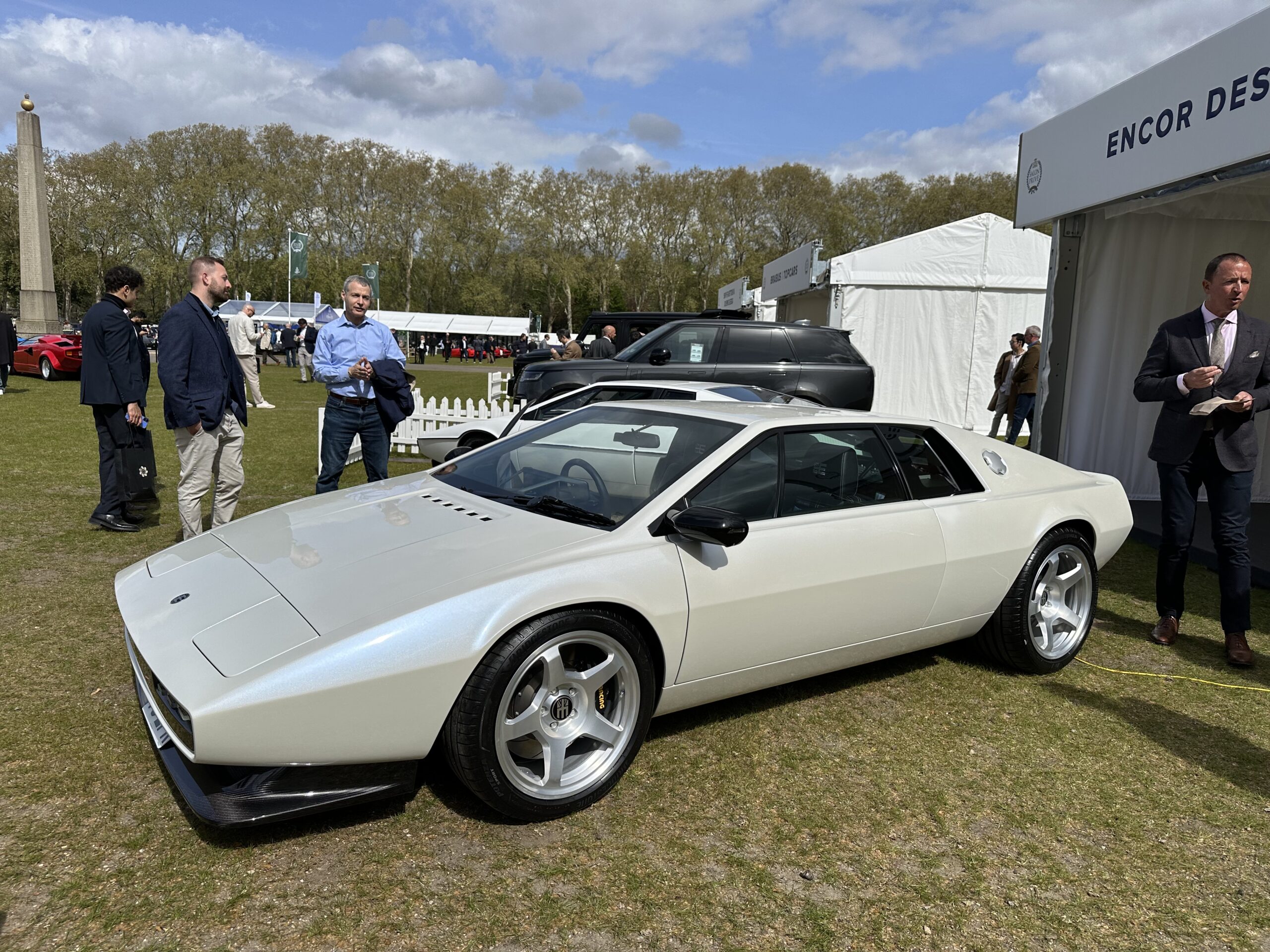
If you’ve always wanted a classic Lotus Esprit, but feared reliability issues, Encor Design may have the answer. Even without submarine ambitions, concerns were often justified. Their Encor Series 1 blends the iconic 1976 design with modern technology. Each car, including the Salon Privé London 2026 example, starts as a Lotus Esprit V8.
Lotus produced this model from 1996 until it ended all Esprit production in early 2004. Encor fully rebuilds and refines the flat-plane crank, twin-turbo 3.5-litre V8. The upgrades improve both power and drivability. Originally, Lotus detuned the V8 to 350bhp to protect transmissions. That leaves significant headroom in such a lightweight car.
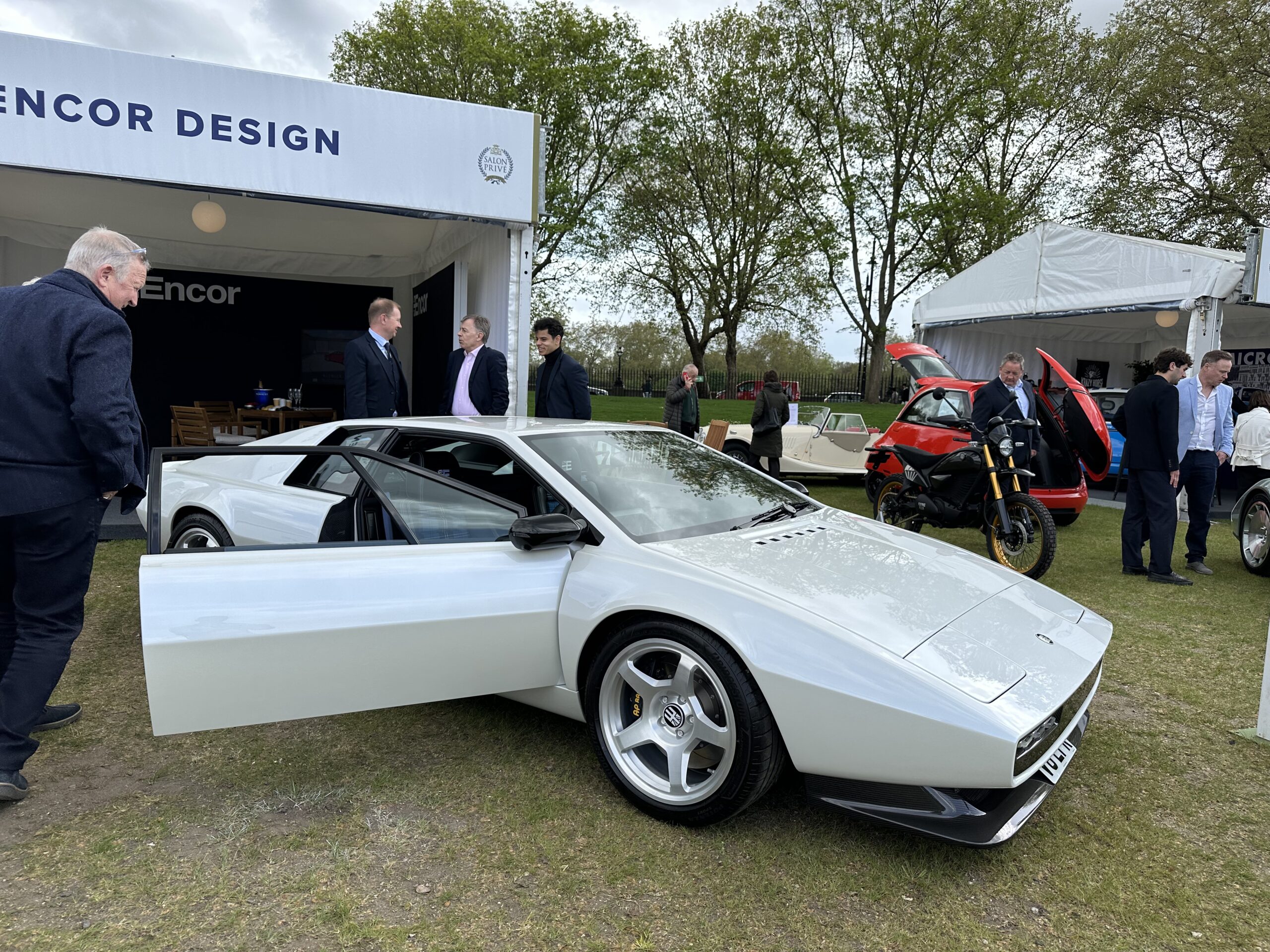
Encor retains the original backbone chassis but fits a new carbon fibre body. It mirrors the Series 1 shape but is stronger, more rigid, and more precise. Surfaces are CAD-refined and aerodynamically enhanced. Even the pop-up headlights are reimagined as low-profile LED projectors.
Each car is bespoke, tailored to the owner’s taste. The design stays true to the Series 1 spirit while introducing modern comfort. The interior blends retro styling with contemporary usability. Encor’s team brings experience from Lotus, Aston Martin, Pagani, and other leading manufacturers.
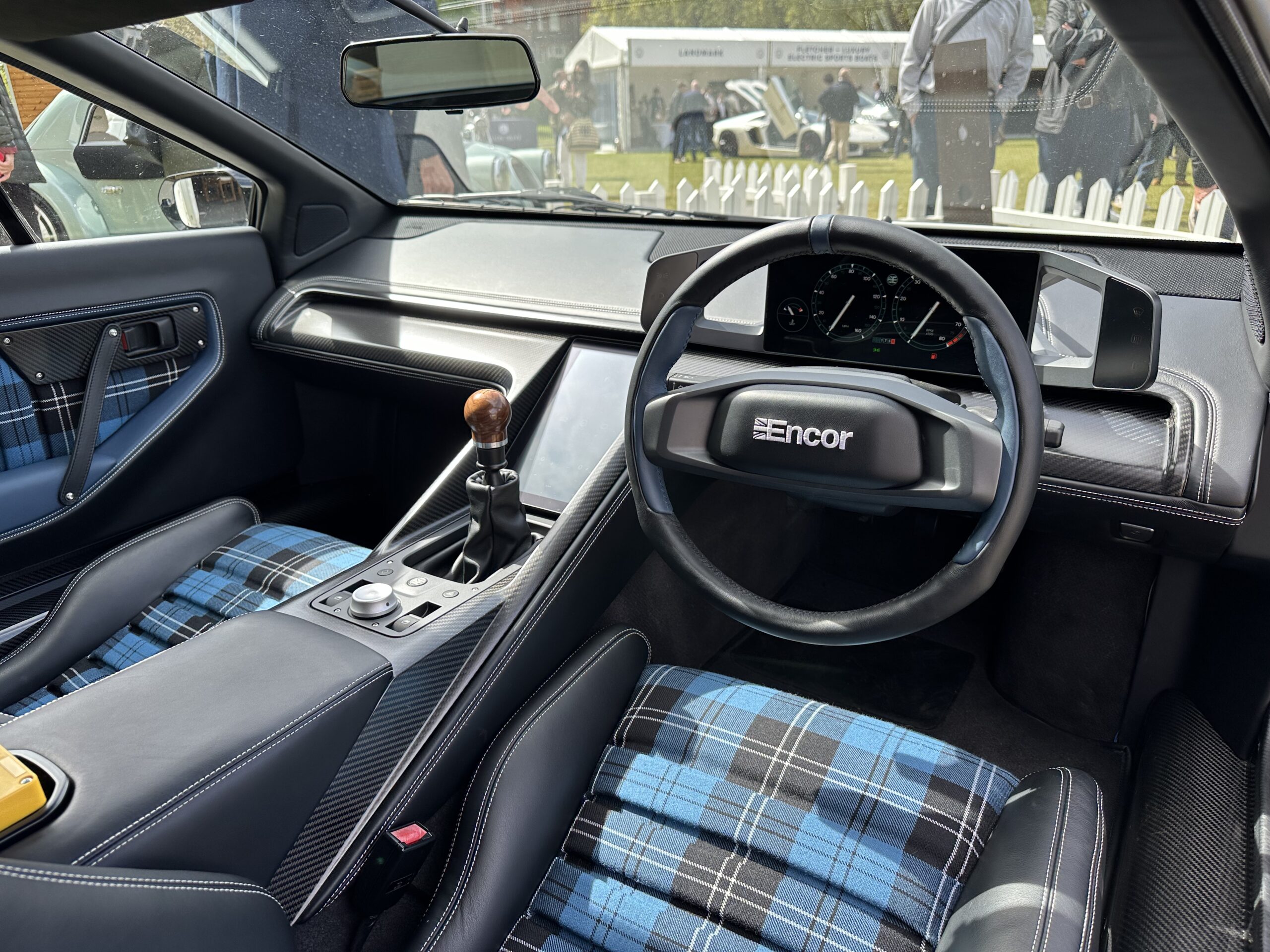
Prices start at around €430,000, plus a donor car costing roughly €50,000. Buyers can customise extensively, making specification choices part of the appeal.
Here’s our video from Salon Privé London 2026 with Encor Design, discussing the car and its philosophy.
Enthusiasts who fancy a later Lotus can look at West Sussex-based Analogue Automotive’s Elise SuperSport. The company starts with a donor S1 Elise aluminium tub chassis, strips it bare, and treats it to guarantee it for a further five years.
Analogue strengthens the steel rear subframe and powder-coats it for longevity, then fits all-new aluminium wishbones at all four corners, which widen the track, improving the stance and driving dynamics. Adjustable Nitron coilover struts are fitted with new, firmer bushings and rose joints. A quicker steering rack and Quaife LSD improve the responsiveness still further and match the tuned, rev-hungry MG/Rover K-series, which has been massaged to produce 210bhp reliably. In a car that can weigh as little as 680kg if all the carbon fibre options are ticked, that is ample power.
If that’s not extreme enough, Analogue recently announced the VHPK, a central driving-position single-seater Elise built to celebrate the model’s 30th birthday last year. Analogue Automotive will launch this incredible car during Salon Privé London. It features full carbon bodywork, weighs just 600kg, and uses an extreme, increased-displacement K-series producing 250bhp, revving to 8500rpm. It’s not cheap at £350k, but considerably less than a McLaren F1 if you really want that centre-steer sports car feeling. Just 35 will be built, so you’re unlikely to see another at your track day.
Magazine road tests have heaped praise on the SuperSport as a driver’s car, so the omens are good. Analogue offers all sorts of bespoke Elise permutations, but perhaps the most unlikely is the Terra, the off-road version, which sits 60mm higher and has Kevlar underbody protection in case drivers use up all 200mm of ground clearance. It sounds bizarre, but it’s sure to be great fun as an off-road track-day tool.
Here’s our video that we took at Salon Privé London 2026 with the team at Analogue Automotive talking about their car and the philosophy behind it.
The restomod scene encompasses cars as diverse as the fearsome TWR Supercat and the Tolman Edition Peugeot 205 GTI. The Jaguar XJS-based Supercat uses a 6.6-litre supercharged Jaguar V12, giving 660bhp and 730Nm of torque. Its wild design is the work of computer game designer Khyzyl Saleem’s LTO (Live to Offend) studio and is his first complete real car.
The project is the brainchild of Fergus Walkinshaw, son of the late Tom Walkinshaw. His father’s company helped return Jaguar to winning ways in the 1980s. Former Ralliart mechanic Chris Tolman honed his skills on Mitsubishi’s works rally cars. His company, Tolman Engineering, is now known for exquisite restomod Peugeot 205 GTIs.
Like many restomod projects, his work stems from genuine affection for the 205 GTI. He aims to preserve its agility while improving performance and reliability. His cars have received rave reviews.
It’s not just a British and American phenomenon either. French transaxle Porsche enthusiast Thierry Nardone created a staggering Porsche 928-based restomod. Although the 928 won ECOTY in 1978 and led its time, enthusiasts took years to recognise it as a classic and still overlook it in favour of rear-engined models.
Kimera in Italy has reinvented the Lancia 037 Group B rally car as a modern supercar, while their countrymen at Automobili Amos offer a Lancia Delta Integrale as the two-door Lancia should have, but didn’t, make.
The restomod concept is sure to remain a growing and ever more accepted part of the classic car world because it does, quite literally, offer the best of both worlds. Whether you like restomods or not, they are here to stay. As long as these cars can stay on the road, it’s all good either way. As they say, each to their own. What do you think? Let us know in the comments below.

The post Two Lotus Cars That Have Been Reimagined for Today’s World appeared first on My Car Heaven.