

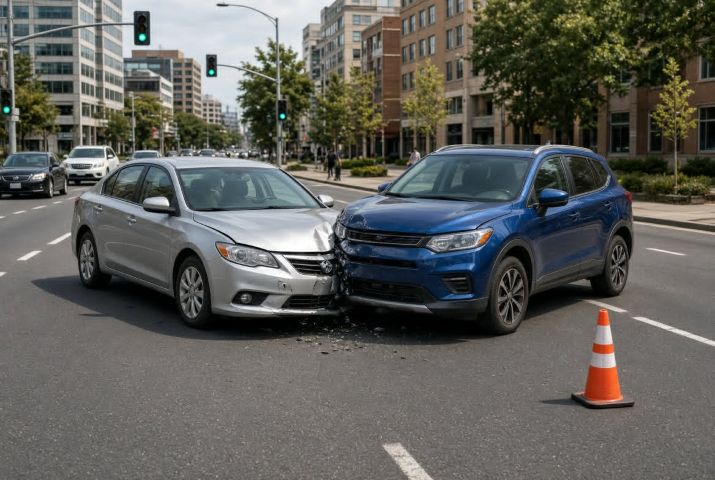
Houston car accident costs extend far beyond a dented panel or cracked bumper. To anyone who loves their vehicle, a collision damages something built with time, money, and pride. It can also create hidden mechanical problems, lost market value, transportation expenses and, when someone is hurt, medical bills and missed income.
Reviewing Houston car accident costs as a complete picture can help an owner protect both the vehicle and their personal recovery. The visible body damage may be only the first part of the loss.
Even a moderate collision can cause damage beyond the crumpled sheet metal visible from outside. Modern unibody vehicles are engineered to manage impact forces, which means frame rails, crumple zones, mounting points, and other structural components can deform in ways that only a thorough inspection reveals.
Suspension, steering, cooling, electrical, and safety systems can also be affected. A vehicle may look repairable while pulling to one side, displaying warning lights, leaking fluid, or operating with a damaged sensor. A careful post-crash inspection matters just as much for a daily driver as it does for a show build.
Photograph the vehicle before repairs begin, retain the initial estimate, and ask the repair facility to document additional damage discovered during disassembly. Gauge Magazine’s explanation of what to do immediately after a car accident provides more steps for preserving information after a collision.
After a crash, an insurer generally compares the expected repair expense and other relevant costs with the vehicle’s actual cash value. The decision is not necessarily controlled by one universal percentage that applies to every Texas claim.
Actual cash value is usually based on factors such as the vehicle’s age, mileage, condition, equipment, prior damage, and comparable vehicles in the market. Owners should review the valuation report carefully and confirm that the correct trim, options, mileage, and condition have been recorded.
Older, rare, or heavily modified vehicles can be especially difficult to value. The amount invested in a build does not automatically increase its insurance value dollar for dollar, but receipts, photographs, appraisals, comparable listings, and agreed-value or stated-value coverage may provide important evidence.
Diminished value is the difference between what a vehicle was worth before a collision and what it is worth after a complete repair. A professionally repaired vehicle can still be less attractive to future buyers once the accident appears in its history.
When another driver caused the crash, a Texas owner may be able to pursue a third-party diminished-value claim if the loss can be established. That does not make payment automatic. The owner may need evidence of the vehicle’s pre-crash value, the quality and extent of the repairs, its post-repair value, and the market effect of the accident history.
Coverage for diminished value under the owner’s own policy depends on the policy language and circumstances. Before signing a property-damage release, determine whether it resolves only the repair expense or also affects a potential diminished-value claim.
Today’s vehicles contain cameras, radar units, ultrasonic sensors, and driver-assistance technology. A bumper, windshield, mirror, suspension, or alignment repair may require inspection or calibration of systems such as forward-collision warning, automatic emergency braking, blind-spot monitoring, or lane assistance.
Correct calibration should follow the vehicle manufacturer’s repair procedures. A dashboard without a warning light does not necessarily prove that every sensor is aimed or operating correctly. The National Highway Traffic Safety Administration provides consumer information about vehicle safety technologies, recalls, and crash protection.
Ask the repair facility which calibrations are required, who will perform them, and whether the final documentation will show that the work was completed successfully.
Custom and modified vehicles complicate a claim because aftermarket parts, specialty paint, fabrication, and tuning may not appear in a standard valuation. An insurer may initially evaluate the vehicle as a stock model unless the owner provides evidence supporting a different value.
Receipts, dated build photographs, appraisals, parts lists, and installation records can help demonstrate what was on the vehicle before the crash. Owners should also review whether their policy includes aftermarket-equipment coverage or limits reimbursement for modifications.
Understanding how much a vehicle can say about its owner is part of the appeal of the hobby. That personal value, however, is different from the market value an insurer is contractually or legally required to consider.
When a vehicle is in the shop, its owner still needs transportation. Rental charges, rideshare expenses, public transportation, or the reasonable value of being without the vehicle can become part of the financial loss.
Whether loss-of-use expenses are recoverable depends on liability, available coverage, the evidence, and the reasonable period needed to repair or replace the vehicle. Save rental agreements, receipts, repair updates, back-order notices, and communications showing why the vehicle remained unavailable.
Specialty vehicles can create additional complications when parts must be fabricated or sourced from distant suppliers. Those delays should be documented rather than treated as an open-ended entitlement to reimbursement.
Houston’s large freeway network, complex interchanges, heavy traffic, and mixture of passenger vehicles and commercial trucks create many opportunities for serious collisions. Higher-speed roads can also increase the amount of energy involved when a crash occurs.
Whether the vehicle is a daily commuter, a weekend cruiser, or one of the rugged vehicles built for adventure and mountain driving, no build is immune to another driver’s mistake.
The Texas Department of Transportation publishes traffic-safety information and crash data for drivers who want to understand the risks on roads across the state.
The most serious damage in a crash may be difficult to identify at the scene. Adrenaline and stress can temporarily mask pain, while symptoms associated with concussions, whiplash, and other injuries may become more noticeable later.
Seek appropriate medical attention when symptoms appear or when the impact creates a reasonable concern about injury. Medical records can document the timing of symptoms, the examination performed, treatment recommendations, and the effect of the injury over time.
An injury claim may include supported losses such as emergency care, follow-up treatment, rehabilitation, prescriptions, lost income, reduced earning ability, and pain or limitations affecting everyday life. Future losses generally require medical, employment, or expert evidence rather than estimates based only on the initial bills.
Texas uses a modified comparative-responsibility system. Under Chapter 33 of the Texas Civil Practice and Remedies Code, a claimant generally cannot recover damages when that person’s percentage of responsibility is greater than 50%. When recovery is permitted, the damages are reduced by the claimant’s assigned percentage of responsibility.
Texas law also generally provides two years to file a lawsuit involving personal injury or property damage. That period is established in Chapter 16 of the Texas Civil Practice and Remedies Code. It should not be confused with an insurance-reporting deadline, and exceptions or shorter notice requirements may apply in some matters, including claims involving government entities.
Because video can be overwritten, vehicles can be repaired, and witnesses become harder to locate, waiting until the limitations deadline approaches can make an otherwise valid claim more difficult to prove.
A complete claim may require several different categories of evidence:
Gauge Magazine’s guide to the factors that can help build a strong car accident claim explains why consistent documentation matters.
Reviewing examples of past injury case outcomes may illustrate the kinds of losses involved in serious cases. Those results depend on their individual facts and should not be treated as a prediction or guarantee for another claim.
Minor property-damage claims without injuries may sometimes be handled directly with an insurer. A more complicated collision may justify legal review when injuries are serious, responsibility is disputed, several policies may apply, or the insurer challenges the vehicle’s value or the relationship between the crash and the claimed losses.
Before accepting a settlement, confirm which claims the release resolves. A final payment may end the right to request additional compensation even if repair problems, medical expenses, or other losses emerge later.
Houston car accident costs can involve the vehicle, its diminished value, substitute transportation, medical care, income, and long-term limitations. Documenting each category separately provides a more accurate picture of what the collision actually cost.
The best preparation begins before a crash: photograph the vehicle, retain modification and maintenance records, and understand the insurance coverage in place. After a collision, prioritize safety and medical needs, preserve the available evidence, and avoid signing a final release until the full scope of the damage is understood.
This article provides general information and is not legal advice. Insurance coverage, liability, available damages, and filing requirements depend on the policy, evidence, and circumstances of each case.
The post The True Cost of a Car Accident in Houston: Beyond the Body Damage appeared first on Gauge Magazine.