

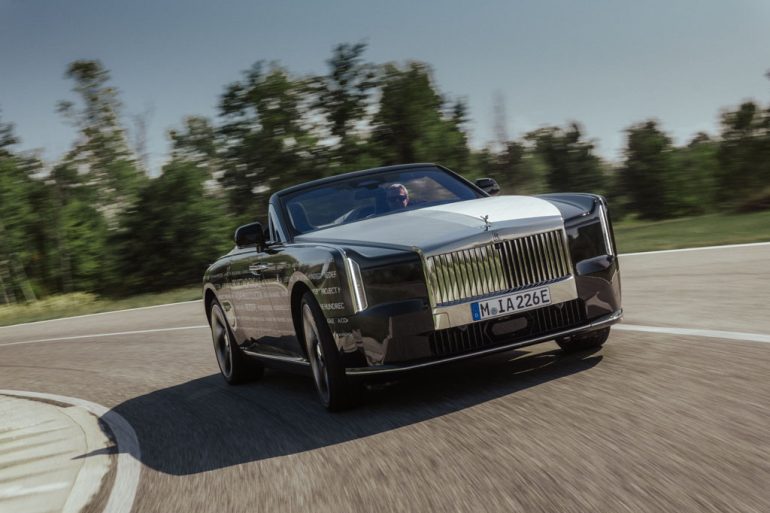
Rolls-Royce is taking Project Nightingale out of the design studio and into the real world, beginning an ambitious global testing program for what is shaping up to be one of the company’s most extraordinary modern creations. Revealed earlier this year as the first model in a new Coachbuild Collection, Project Nightingale is an all-electric, two-seat convertible limited to just 100 client cars. These are not destined to spend their lives quietly parked under climate-controlled covers, either. Rolls-Royce says the customers commissioning them intend to drive them around the world, which means the company now has to prove that its spectacular coachbuilt EV can live up to those expectations.
That process will consume a collective 350 weeks of testing and take prototypes through dramatically different environments, from Mediterranean roads to the Arctic Circle and the deserts of the Arabian Peninsula. Engineers will expose the car to temperature extremes while climbing to elevations of up to 2,750 meters. The journey begins in Southern Europe, a fitting starting point considering the importance the region played in Rolls-Royce development more than a century ago. Project Nightingale itself takes its name from Le Rossignol, meaning “the nightingale” in French, the house Henry Royce established near his winter home on the French Riviera for designers and engineers working on future Rolls-Royce automobiles.
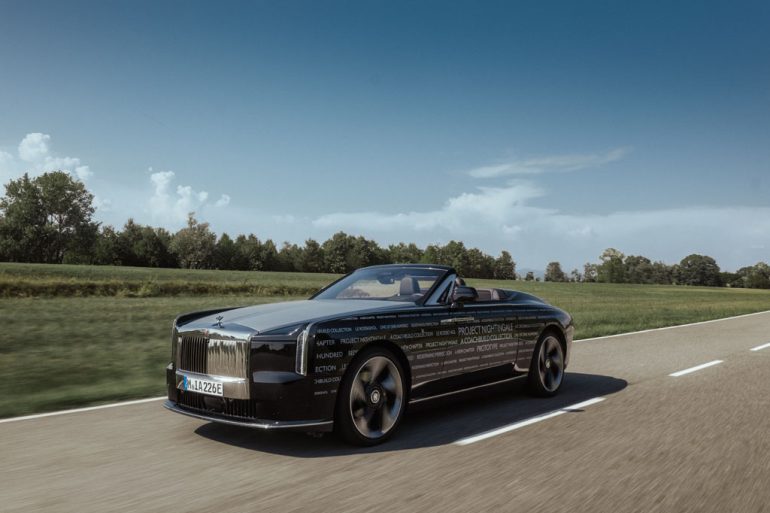
Long before these prototypes reached public roads, Rolls-Royce had already invested heavily in understanding how Project Nightingale would behave at speed. Static development cars have gone through more than 1,430 hours of aerodynamic modeling, combining digital simulation with traditional wind-tunnel work. Engineers will now validate that work at a private high-speed facility, where prototypes are expected to reach speeds as high as 155 mph. Top speed is hardly the only priority, though. Rolls-Royce is spending considerable effort managing airflow and wind noise, particularly important in an open-top electric car where the absence of a combustion engine leaves fewer mechanical sounds to mask unwanted turbulence.
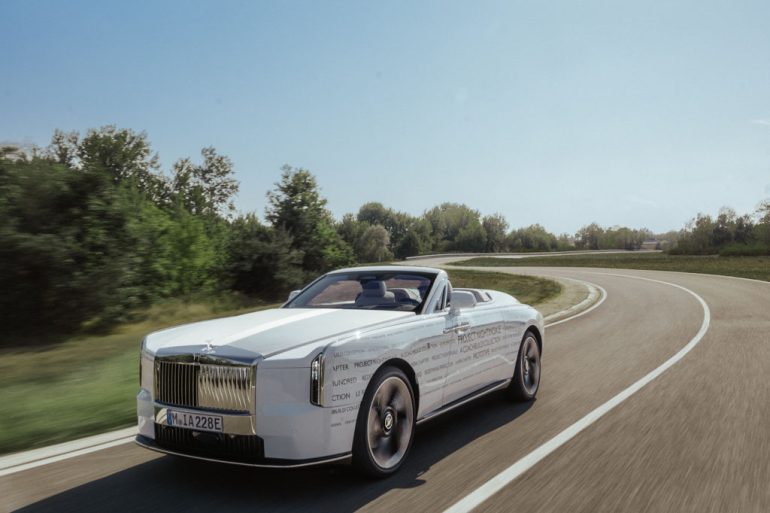
That obsession with controlling airflow extends to a newly developed electric wind deflector designed specifically for Project Nightingale. Its job is to keep high-pressure air from curling back into the passenger compartment when the roof is down, helping maintain the calm cabin environment expected of a Rolls-Royce even at speed. Engineers will test the system across a wide range of conditions, including colder climates where reducing cabin turbulence can also help occupants stay comfortable. It is the kind of detail that illustrates what separates a true coachbuilt automobile from something simply wearing a special paint color and limited-edition badge.
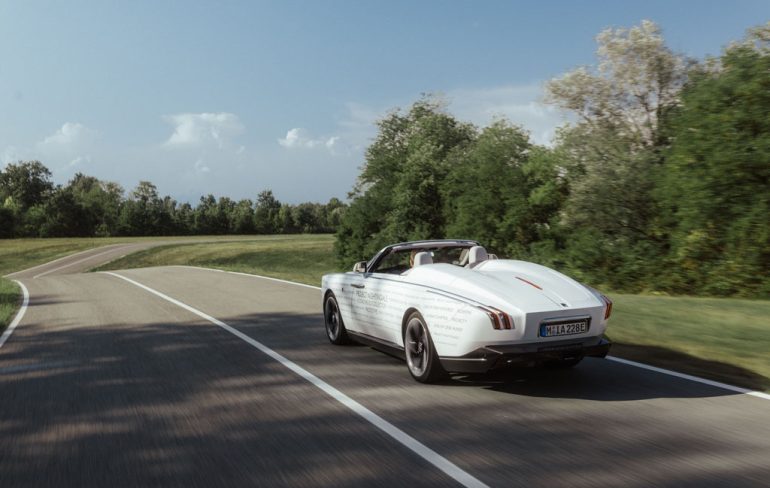
Even the folding roof is receiving an extraordinary level of scrutiny. Rolls-Royce has developed unique sound insulation using cashmere, fabric, and advanced composite materials to make the soft top as quiet as possible when raised. The complete roof system will undergo 10 different tests covering the fabric, operating mechanism, and its ability to function in temperatures reaching 80 degrees Celsius, or 176 degrees Fahrenheit. That extreme heat testing makes sense for a car whose owners could conceivably drive from the French Riviera to the Middle East without giving much thought to seasonal conditions.
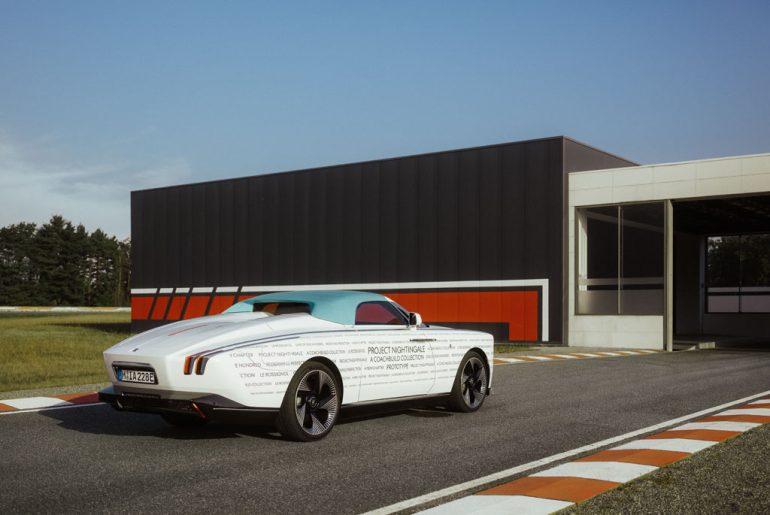
Then there is the Piano Boot, perhaps one of Project Nightingale’s most theatrical features. Rather than opening like a conventional trunk lid, the rear compartment swings sideways on a cantilever in a movement inspired by the lid of a grand piano. Rolls-Royce plans to put the mechanism through as many as 15,000 opening and closing cycles before client cars are delivered. That might sound excessive for a feature most owners will use only occasionally, but durability testing at this level is aimed at making sure the movement feels just as smooth years from now as it does when the car leaves Goodwood.
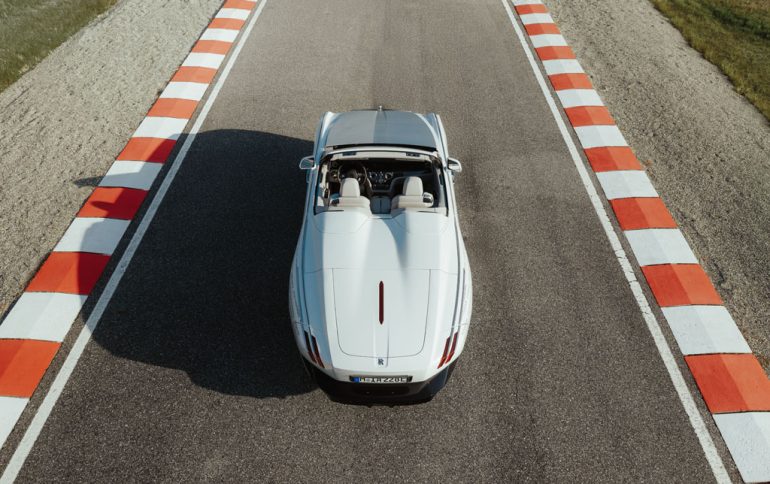
default
Ultimately, Project Nightingale represents an interesting collision between old-school Rolls-Royce coachbuilding and the company’s electric future. There are computer simulations, wind tunnels, sensors, and mountains of engineering data involved, but Rolls-Royce still places considerable value on the judgment of experienced test drivers and engineers who decide whether the finished product actually feels right. With only 100 examples planned, the company could easily have treated Nightingale as little more than rolling artwork. Instead, it is being developed as a genuine automobile meant to cover real miles in some of the harshest environments its wealthy owners might encounter. For something this rare and extravagant, that commitment to actually driving it may be one of the most compelling details of all.