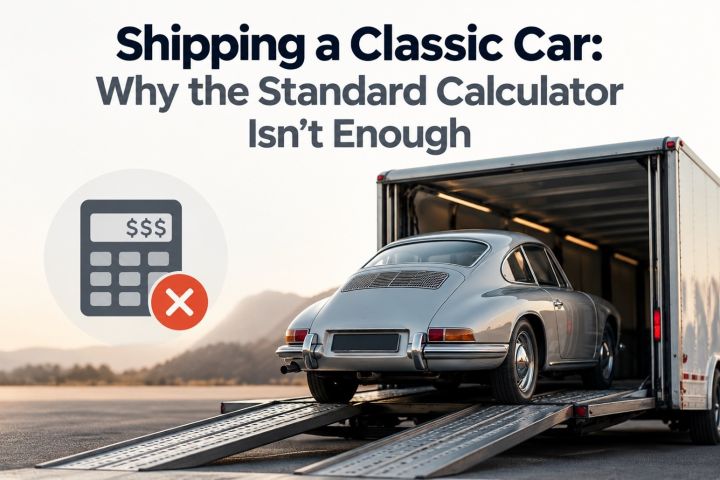
Shipping a classic car takes more than entering its year, make, model, and route into an online calculator. Two 1967 Mustangs can share a model name while requiring very different transport arrangements. One may start reliably and sit at factory height. The other may have lowered suspension, delicate side exhausts, and a starting procedure that requires a handwritten explanation.
A calculator cannot infer those differences from a model year. It can establish an initial budget, but the final arrangement needs to account for the individual car, especially after decades of restoration, repairs, or modifications.
Use Navi’s classic car shipping calculator for an initial estimate, then request a review of any unusual handling requirements. Route and vehicle information start the conversation; photographs, measurements, operating instructions, and a written handling plan help complete it.
A classic that starts in your garage may still have a weak parking brake, an intermittent clutch problem, questionable tires, or a battery that loses charge. Describe what works and what does not instead of relying on a single “running” condition checkbox.
Ask how the transport company defines an operable vehicle. Some carriers may expect the car to start, steer, brake, and move under its own power. If any of those functions are unreliable, disclose the problem before a truck is assigned so the company can determine whether winching or other equipment will be needed.
Send a short operating note covering the ignition sequence, choke, fuel shutoff, battery disconnect, transmission, parking brake, and any unusual controls. If the car is leaving a restoration shop, have someone confirm its actual condition before setting the pickup window.
The lowest point on a classic may be an exhaust component, air dam, suspension bracket, or front spoiler rather than the body itself. Supply measurements and photographs showing the vulnerable areas. Wheelbase, overall width, tire width, and front and rear overhang may also affect loading.
Ask the carrier to explain the proposed loading method. Enclosed transport does not automatically mean hydraulic-liftgate loading, and a liftgate still needs adequate dimensions and capacity for the vehicle. Ramp angle matters particularly when a car has lowered suspension or long body overhangs.
Identify loose trim, removable accessories, and components that should not be used as attachment points. Have the carrier explain how the vehicle will be secured and confirm that the proposed method is appropriate for the car.
Navi’s current published comparison places enclosed transport approximately 40–60% above open service on the same route. Using an illustrative $1,200 open quote, that would equal roughly $1,680–$1,920 for enclosed transport before any separately assessed handling requirements.
Those figures illustrate a possible price difference; they are not a guaranteed classic-car rate. Carrier availability, pickup location, season, vehicle size, operability, schedule flexibility, and special loading requirements can all change the final amount.
A restoration project with weathered paint presents different priorities from a freshly finished show car. Consider the finish, rarity, value, and your tolerance for weather and road exposure when choosing between open and enclosed equipment.
Gauge Magazine’s guide to long-distance car buying explains why transport arrangements have become an increasingly important part of purchasing vehicles outside the buyer’s local market.
The business arranging the shipment may be a broker rather than the motor carrier that physically loads and transports the car. That distinction is not necessarily a problem, but it should be clear before pickup.
Ask for the legal name and USDOT information of the broker and the assigned carrier. Confirm which company will issue the bill of lading, which company is responsible for the vehicle while it is in transit, and whom you should contact if the truck, schedule, or price changes.
The Federal Motor Carrier Safety Administration’s Motus information page explains how public users can search registration records for motor carriers and brokers. Match the names and numbers in the federal record with those shown on the quote and transport paperwork.
Do not rely on a general statement that transport is “fully insured.” Request the assigned motor carrier’s proof of cargo insurance and ask how the policy applies to your particular vehicle.
Questions worth asking include:
Before shipping a classic car, contact your collector-car insurer as well. Your own policy may have separate terms for transportation, and its agreed or stated value may not match the carrier’s coverage. Obtain the answer in writing instead of assuming the policies work the same way.
A useful final quote should address more than the route and model name. Before accepting it, confirm that the paperwork covers:
Clean the exterior enough that existing blemishes can be seen. Photograph the body, glass, wheels, interior, odometer, and accessible low-mounted components before collection. Include close-ups of existing chips, scratches, trim damage, and repaired areas.
Review the pickup condition report and bill of lading before signing. Make sure existing damage is recorded accurately, retain a copy, and avoid leaving the paperwork entirely to the person collecting the vehicle.
Detailed records are especially important when transporting a restored or modified vehicle. Gauge Magazine’s article on documentation that protects a custom vehicle’s value explains why receipts, photographs, and professional records matter when a standard valuation does not reflect the work completed.
Get written approval before placing spare parts, tools, or boxes of restoration records inside the vehicle. Personal property may be restricted or excluded from coverage. Keep titles, irreplaceable receipts, historical documents, and original photographs with you.
Whenever possible, arrange delivery during daylight and leave enough time to inspect the vehicle before signing the final paperwork. Compare its condition with the pickup photographs and condition report.
If you discover new damage, photograph it and record it on the delivery paperwork before the driver leaves. Follow the company’s claim-notification procedure promptly and preserve every related document.
Avoid scheduling delivery immediately before an auction, show, or mechanical appointment. Pickup and delivery windows can change with traffic, weather, equipment problems, and earlier stops on the route. A schedule buffer gives you time to deal with a delay without turning it into a larger problem.
A classic-car calculator provides a starting figure. A useful final quote also explains how your particular vehicle will be loaded, secured, covered, transported, and delivered.
Shipping a classic car successfully comes down to supplying the details that make it different before choosing the truck that will carry it. The lowest initial estimate matters far less than a written plan that protects the car from pickup through final inspection.
The post Shipping a Classic Car: Why the Standard Calculator Isn’t Enough appeared first on Gauge Magazine.