Photo by Mike Bird from Pexels.
Car window tint looks simple from the outside. Pick a shade, book an installation, and drive away. The reality is more technical. Film construction, heat-rejection ratings, the vehicle’s existing glass, and state law all affect which product actually works for your car. This guide breaks down what matters before you spend money on tint.
Most shoppers start with VLT, or Visible Light Transmission. A film rated at 35% VLT allows approximately 35% of visible light to pass through under its stated testing conditions. Lower numbers mean darker film. That is useful for judging appearance and privacy, but VLT alone tells you relatively little about heat control.
The film’s advertised VLT may also differ from the completed window’s net VLT because automotive glass can already contain some tint. Ask the installer how the film will combine with the vehicle’s existing glass.
Two films can carry the same VLT rating and perform differently in the sun. A basic dyed film at 20% VLT may still let in more solar energy than a lighter high-performance film. Darkness and heat rejection are separate properties, and treating them as the same thing is one of the most common mistakes buyers make.
The same general solar-control principles behind automotive tint also appear in commercial window tints, where buildings need daylight control without excessive solar heat. Automotive and architectural films are designed for different types of glass and should not be treated as interchangeable products.
Automotive tint is commonly marketed in four general categories. Each uses a different approach to managing visible light and solar energy, although product construction and performance can vary by manufacturer.
For daily drivers in hot climates, a high-performing ceramic film can be worth the additional cost because of its comfort, solar-control performance, and nonmetal construction. Buyers should still compare the specifications and warranty of the exact product being offered.
Two specifications matter more than VLT when heat is the main concern: Total Solar Energy Rejected, or TSER, and Infrared Rejection, commonly shown as IRR or another manufacturer-specific infrared measurement.
TSER addresses the overall amount of solar energy rejected by the tested glass-and-film combination. Infrared rejection measures performance within a specified infrared wavelength range. A film can advertise a high IR number while delivering a more modest TSER because infrared represents only part of the solar spectrum.
Infrared percentages also are not always measured across the same wavelength range. That means an IR rating from one manufacturer may not be directly comparable with a figure from another manufacturer unless the testing method is the same.
For example, 3M’s Ceramic IR Series is rated to reject up to 66% of total solar energy and up to 95% of infrared energy, according to 3M’s published product specifications. The company explains that its 95% IRR figure is measured across the 900–1,000 nanometer range, while its broader IRER+ figure is listed at up to 67%.
That gap between the figures is why an infrared percentage should not be evaluated by itself. When comparing films, ask installers for TSER, VLT, the infrared measurement, and the wavelength range used for that measurement.
Tint law varies by state, vehicle type, and window position. Most states establish a minimum VLT for front side windows, separate requirements for rear windows, and rules governing windshield tint strips. Some states also restrict reflective or colored film.
Legal limits may apply to the completed glass-and-film combination rather than the film by itself. Before choosing a percentage, confirm the current front, rear, and windshield requirements through your state’s responsible agency or a qualified local installer. Do not rely only on what a shop in a neighboring state is permitted to sell.
Illegal tint can result in a citation or a requirement to correct or remove the film, depending on the state and circumstances.
Hot, sunny climates benefit most from films with strong TSER performance, even when the chosen film has a lighter VLT that remains street legal. Drivers in colder climates may place greater emphasis on UV protection, glare reduction, and appearance rather than maximum heat rejection.
Vehicles that sit outside all day, such as work trucks or fleet vehicles, can benefit from stronger solar control because interior heat buildup and UV exposure occur whenever the vehicle is parked in the sun.
Window tint can also be part of a broader plan for protecting a car interior from sun damage and fading.
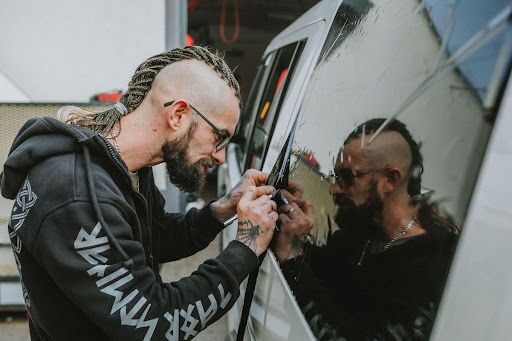
Photo by Helena Jankovičová Kováčová from Pexels.
Film quality is half the equation. Installation quality is the other half. A skilled installer helps avoid contamination, bubbling, edge lifting, and uneven appearance. Cheap film with a poor installation may fail sooner than a mid-grade film installed correctly.
Expect to pay more for ceramic film and professional labor, but compare the exact product specifications rather than paying more for the ceramic label alone.
Some manufacturers and installers offer limited lifetime warranties against problems such as bubbling, peeling, cracking, adhesive failure, or color change. Coverage varies, so request the written warranty and confirm whether it includes labor, is transferable, and requires installation by an authorized dealer.
Gauge Magazine’s guide to choosing an auto styling shop you can trust provides additional questions to ask about products, installation practices, and written warranty coverage.
Skip the shade card and start with the specifications. Check TSER and the testing details behind any infrared rating, then consider VLT. Confirm the legal limits for your state and remember that the final VLT may reflect both the film and the vehicle’s original glass.
Match the film type to your climate and how much time your car spends in the sun. That order helps you choose car window tint that actually performs, not just one that looks dark in the driveway.
The post How to Choose the Right Car Window Tint appeared first on Gauge Magazine.