

Image source: Unsplash
A scuffed bumper after a rear-end collision can seem impossible to reconcile with neck pain, headaches, or limited movement the next morning. At the other extreme, a crumpled hood can make a vehicle look beyond repair while its occupants leave the scene with few immediate complaints. These apparent contradictions often shape how a collision is understood.
Vehicle damage and personal injury after a crash are difficult to compare because the visible evidence appears objective, while physical symptoms can emerge gradually. Repair bills, photographs, and medical notes also rely on different measurements, timelines, and professional standards.
That gap matters when drivers, insurance adjusters, repair specialists, and clinicians review the same event. Understanding what each record captures, and what it leaves out, begins with recognizing that vehicle damage and personal injury are measured differently.
A repair estimate measures the cost of restoring materials, components, and sensors. It does not directly measure how much force reached the occupants or establish the severity of an injury.
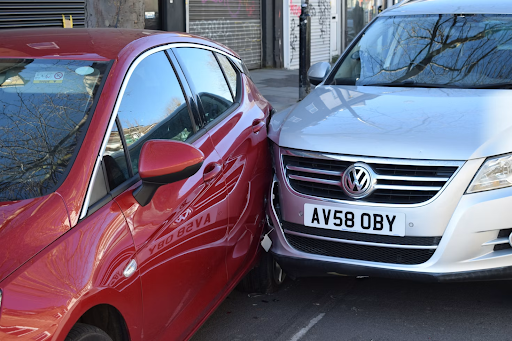
For example, replacing a bumper cover and headlight assembly can cost thousands after an impact that barely moved the chassis. Conversely, a low-speed rear impact can move an occupant’s torso and neck while leaving relatively little visible bumper damage. Expensive parts can increase the estimate without necessarily increasing crash severity, while a comparatively modest repair bill does not establish that an occupant could not have been injured.
Emergency-medicine research illustrates why crash photographs must be interpreted carefully. In one study, emergency physicians and EMS personnel generally agreed about crashes that appeared either minor or severe, but their estimates varied more when photographs showed crashes of moderate apparent severity. The researchers did not know the actual medical outcomes of the people involved, so the study did not establish a direct relationship between visible damage and injury. It did show the limits of drawing conclusions from crash photographs alone. Readers can review the motor vehicle crash-severity study for its complete methods and findings.
Put plainly, the repair estimate for the car is not a medical measurement of what happened to the body.
Collision energy can deform vehicle structures, produce heat and sound, and change the motion of the occupants. How the vehicle responds helps determine what it looks like afterward, but appearance alone does not directly measure the movement or physical effects experienced by each person inside.
A bumper system often combines a flexible cover with an energy absorber designed to compress during a low-speed collision. Depending on the vehicles, direction of impact, and other circumstances, a rear impact may leave limited visible exterior damage even though the seat moves the occupant’s torso forward while the head briefly lags behind.
Rigid contact can change that equation. A tow hitch, truck frame, or concrete post may deform differently from a conventional bumper system. Relatively few exterior parts may require replacement, yet occupants can still experience abrupt movement.
A crumple zone works in the opposite direction. Rather than preserving the vehicle’s exterior, it deforms progressively to help manage collision energy before it reaches the passenger compartment. Seat belts, pretensioners, airbags, seats, and head restraints also help control occupant movement.
Accordingly, a vehicle can look severely damaged after a frontal or side impact while its occupants escape serious injury. Outcomes also vary according to seat position, head-restraint position, seat belt use and geometry, direction of impact, age, body size, and pre-existing medical conditions. Two people in the same vehicle can therefore experience different injuries.
A collision produces two separate paper trails: insurance adjusters and repair estimators document the vehicle, while treating clinicians document symptoms, examination findings, diagnoses, and treatment. Personal injury attorneys may review both records when evaluating how the collision occurred and what losses followed. Each party examines the event for a different purpose.
A repair estimate is primarily a parts-and-labor document. It may list panel replacement, structural measurements, paint blending, sensor calibration, and wheel alignment, then apply prices based on the vehicle model and local labor rates. Rental days and parts availability can also affect the property-damage claim without describing bodily injury.
Vehicle technology makes the dollar figure particularly easy to misread. The same type of impact might crack an inexpensive bumper on a ten-year-old sedan but damage radar equipment, cameras, parking sensors, and a costly headlight assembly on a newer SUV. The second estimate could reach thousands of dollars without proving that its occupants experienced a more severe injury.
Medical records follow a timeline rather than reducing an event to one price. They document reported symptoms, examination findings, diagnostic imaging, diagnoses, treatment, and changes noted during follow-up care. That sequence includes information no repair shop would collect.
These records also play a different role in how insurance companies calculate car accident payouts. An insurance adjuster does not simply convert the property-damage estimate into a medical value because the two files contain different information.
A low repair estimate does not by itself disprove an injury, just as an expensive property-damage claim does not prove one. One file describes the vehicle’s restoration needs, while the other describes the occupant’s condition.

Image source: Pexels
Some symptoms may not be obvious at the scene. Someone who declines roadside treatment because movement feels normal might notice neck pain, headaches, or limited movement later, making delayed symptoms appear disconnected from the collision.
Whiplash involves rapid neck movement that can affect muscles, ligaments, discs, nerves, and other structures. Symptoms may begin within days of the injury and can include stiffness, reduced range of motion, tenderness, dizziness, and headaches that often start near the base of the skull.
A concussion does not always involve a direct head strike or loss of consciousness. Depending on the injury, symptoms such as light sensitivity, nausea, headaches, poor concentration, irritability, and disturbed sleep may appear immediately or develop over the following hours or days.
Soft-tissue injuries and disc-related back pain present another documentation issue. Conventional X-rays are especially useful for evaluating bones and alignment, but they do not show every injury involving muscles, ligaments, nerves, or spinal discs. A normal X-ray therefore does not necessarily rule out every possible injury. The appropriate evaluation and imaging depend on the symptoms and a healthcare professional’s clinical judgment.
An emergency department evaluation or another prompt clinical assessment can create a dated baseline. It records reported symptoms, examination findings, and any symptoms that were not present at that stage. Later notes can then show whether pain resolved, persisted, worsened, or appeared after the first visit.
Consistent reporting matters because clinicians build the medical timeline from each encounter. New headaches, sleep problems, numbness, or restricted movement cannot become part of that record unless they are reported during medical care.
Scene evidence provides a separate time marker. Photographs, vehicle positions, contact points, and notes about what drivers should document at the scene of a car accident preserve the physical circumstances without replacing medical findings.
Long gaps in treatment and undocumented symptoms can make the relationship between the collision and later complaints harder to evaluate because the available records may not clearly show when symptoms began or changed. A delay does not automatically disprove an injury, but complete and timely documentation can provide a clearer timeline.
Vehicle damage describes what happened to materials, components, and safety systems. Symptoms, examination findings, and medical records describe what happened to a person. Neither record independently settles the meaning of the other.
An apparent mismatch between vehicle damage and personal injury is not automatically suspicious. Reading the repair file and medical timeline as separate accounts of the same collision preserves what each can establish without asking either record to answer a question it was not designed to measure.
The post When Vehicle Damage and Personal Injury Tell Different Stories After a Crash appeared first on Gauge Magazine.