

 Source
A factory can add automated equipment and still lose time to missed quality signals, delayed maintenance, and disconnected schedules. Smart manufacturing technology, often associated with Industry 4.0, shifts manufacturing from isolated machines toward connected, data-driven operations.
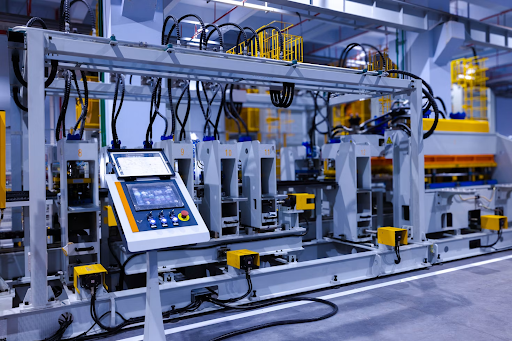
A smart factory connects machines, software, and people around a shared operational picture. When production teams can see changing conditions as they occur, they can respond to quality, maintenance, and scheduling issues with greater coordination.
Manufacturing becomes smarter when machines, software, and people share current data that supports faster decisions about quality, output, and maintenance. Rather than relying on separate reports or delayed updates, teams can see what is happening across production as conditions change.
The difference lies in the feedback loop. A smart factory does not merely automate a repetitive task; it senses what is happening, interprets the information through data analytics, and triggers a useful action through people, workflows, or equipment.
For example, automation may keep a machine running at a consistent speed, while smart manufacturing can help identify whether that speed is contributing to defects, delays, or excess energy use. The system can then connect that finding to the appropriate production response.
Operational efficiency comes less from one breakthrough tool than from linking shop-floor activity with analysis and execution systems. When data moves between equipment, production teams, and planning processes, factories can make decisions based on current conditions rather than outdated assumptions.
Source
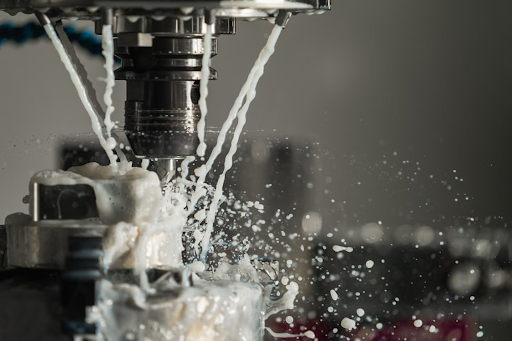
Smart factories depend on systems that collect production information and route it to the people or processes that can act on it. Together, connected equipment and operational software create the foundation for coordinated production decisions.
Sensors provide the physical starting point for connected production. They can record machine status, temperature, vibration, cycle times, energy use, and quality conditions that manual shift reports may miss.
The Industrial Internet of Things (IIoT) connects those sensors, controllers, and machines so information moves beyond an individual workstation. This can provide current data on throughput, idle time, material movement, and process variation.
That visibility matters because production problems rarely stay contained. A machine running outside its expected range can affect quality, maintenance plans, and delivery commitments before anyone recognizes the pattern. Gauge Magazine’s examination of semi gantry cranes in automotive manufacturing shows how material-handling equipment also supports the movement and coordination of heavy components across the factory floor.
A Manufacturing Execution System (MES) gives production data operational context. It links work orders, operator inputs, inspection records, and machine events to manage workflows and preserve traceability from raw material to finished part.
Enterprise resource planning (ERP) extends that view into purchasing, inventory, finance, and order management. When properly integrated, MES and ERP can prevent planning decisions from relying on outdated shop-floor assumptions.
Cloud computing supports shared access to larger data sets, while edge computing processes time-sensitive information close to the machine. These systems become particularly valuable when managing fabrication workflows that require precise control over material processing and quality. For example, businesses evaluating waterjet cutting services with zero heat-affected zone may rely on accurate production data to coordinate material requirements, cutting specifications, quality checks, and delivery schedules.
Clear reporting should serve operating decisions rather than create another dashboard. Manufacturing and business-intelligence programs are most useful when data collection leads to an accountable action.
Artificial intelligence (AI) and machine learning (ML) add an interpretation layer to connected systems. They can examine process data over time and identify relationships that may be difficult to spot during a busy production shift.
For example, a properly developed model may flag a combination of vibration, temperature, and cycle-time changes that has appeared before previous machine failures. Predictive-maintenance programs can use that signal to schedule inspection or intervention before equipment stops unexpectedly.
This approach differs from relying only on calendar-based maintenance. A fixed schedule services equipment at predetermined intervals, whereas condition-based data can help direct attention toward machines showing measurable signs of wear. Many operations use both approaches depending on the equipment, safety requirements, and manufacturer recommendations.
Robotics can improve consistency in tasks such as handling, welding, inspection, and material movement. However, automation produces stronger results when it receives feedback from quality checks, production schedules, and machine performance. Gauge Magazine’s look at smart monitoring in automotive spot welding illustrates how automated production and continuous quality checks can work together.
A robot that repeats the same task faster will not necessarily correct an upstream material issue. A connected cell may be able to adjust its sequence, alert an operator, or pause a defective batch when the surrounding system identifies a problem.
Deloitte survey data from 600 executives at large manufacturers with U.S. headquarters or operations found that 92% of respondents expected smart manufacturing to be a primary competitiveness driver over the following three years. Respondents also reported average improvements of 10% to 20% in production output after implementing smart-manufacturing initiatives. Those figures represent the surveyed organizations rather than a guaranteed result for every factory.
Factories can view their progress through four practical stages:
Many operations stop at the second stage. They may have dashboards full of current data, but supervisors still rely on emails, spreadsheets, or informal judgment to decide what happens next.
A smart factory reaches a higher level of maturity when information changes maintenance timing, quality holds, scheduling priorities, or energy use. At that point, process optimization becomes part of daily operations rather than a periodic improvement project.
Disconnected tools often create a data surplus without improving operational efficiency. A machine-monitoring platform may identify downtime, but the finding has limited value if scheduling, maintenance, and supply-chain teams work from separate records.
Integration connects production events to enterprise resource planning (ERP), inventory availability, quality requirements, and customer commitments. A delayed machine then becomes a shared planning issue, not a problem discovered only after an order misses its delivery date.
This coordination can also support energy efficiency. When production schedules reflect actual machine capacity and material availability, factories may be able to reduce avoidable idling, unnecessary changeovers, and wasteful rework.
Technology alone does not establish that discipline. Teams need agreed ownership for alerts, clear escalation rules, change management, and training that explains why a data signal matters to each person’s role.
Cybersecurity is another necessary guardrail. Connected automation expands the number of systems exchanging operational information, so access controls, network segmentation, managed updates, backups, and incident-response planning should protect both data and production continuity.
Smart manufacturing works when technology improves visibility, response time, and coordination across production. Sensors, analytics, automation, and software each matter, but isolated tools do not create a smart factory.
Industry 4.0 is ultimately a systems approach. The strongest results come from data that reaches the right decision point, supports a clear response, and connects production with the wider operation.
The post The Technology Behind Smarter and More Efficient Manufacturing appeared first on Gauge Magazine.