


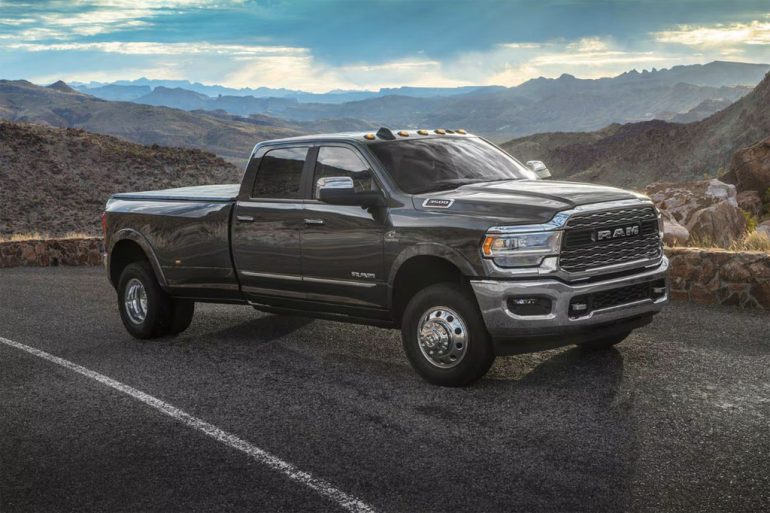
Two trucks can both wear a 6.7 Cummins badge and still need very different modification plans.
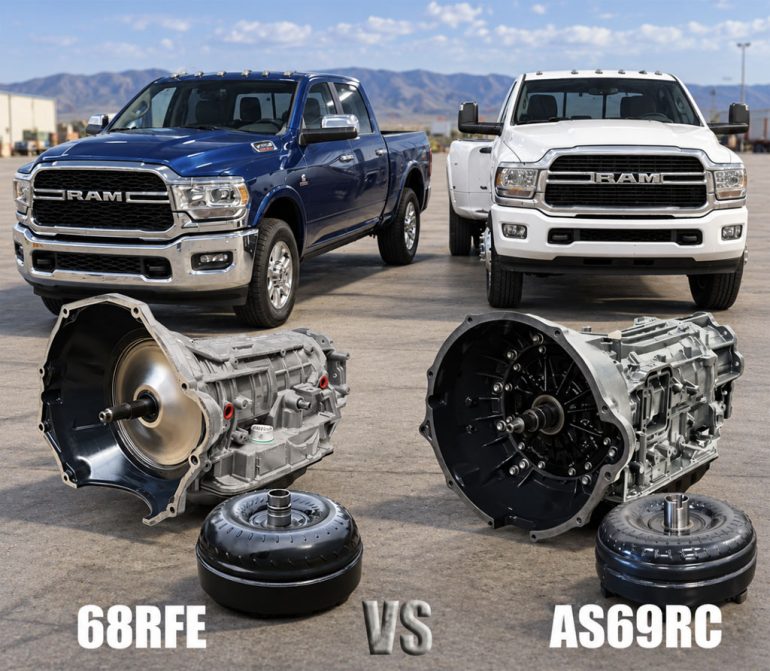
That is especially true for 2022–2024 Ram Heavy Duty trucks. Before choosing a tuner, exhaust diameter, or complete parts package, owners need to know which transmission is behind the engine.
For 2024, Ram rated the standard-output 6.7L Cummins at 370 horsepower and 850 lb-ft of torque with the 68RFE six-speed automatic. The High Output Cummins produced 420 horsepower and 1,075 lb-ft and was paired exclusively with the heavy-duty Aisin AS69RC. Ram specifically says the Aisin was selected to handle the higher output of the HO engine.
That transmission split should influence almost every decision that follows.
Spend enough time in Cummins owner communities and a pattern becomes clear: 68RFE owners often worry less about whether the engine can make more power and more about how much additional torque the transmission should be asked to hold.
That does not mean every 68RFE is fragile. Plenty of owners tow and work their trucks at stock or near-stock output. But once additional horsepower enters the conversation, owners frequently start discussing valve bodies, torque converters, flex plates and transmission tuning alongside the engine tune.
In one recent Cummins discussion, an owner who regularly tows between California, Texas and Utah said he had moved away from constantly switching tunes because he wanted reliability. His view was that the truck already had plenty of usable power with only a small increase, while an upgraded flex plate, torque converter and valve body mattered more if the 68RFE was going to be pushed harder.
The Aisin has a different reputation. It starts from a stronger factory position because it was paired with the 1,075-lb-ft High Output Cummins. But owners do not universally describe it as an unlimited-power transmission.
A Ram Heavy Duty forum discussion involving an Aisin truck running a 150-hp tune raised concerns after transmission problems appeared. Other owners in the discussion pointed out that heavy towing tunes can be much more conservative; one specifically referenced a +40-hp heavy-tow calibration rather than towing on the 150-hp file.
There is another wrinkle for 2022 trucks: Ram HD owners documented enough premature Aisin failures to create a dedicated tracking thread and spreadsheet. That does not mean every 2022 Aisin is problematic, but it is a useful reminder that “Aisin equals bulletproof” is too simple.
A common way to build a diesel truck is to start with the visible hardware: pick an exhaust, remove the restrictive sections, then figure out tuning.
For a 2022–2024 Cummins, reversing that order can create problems.
The better sequence is:
Transmission → ECM strategy → tuning platform → power target → exhaust → supporting hardware.
The reason is that tuning support is not identical between the 68RFE and Aisin.
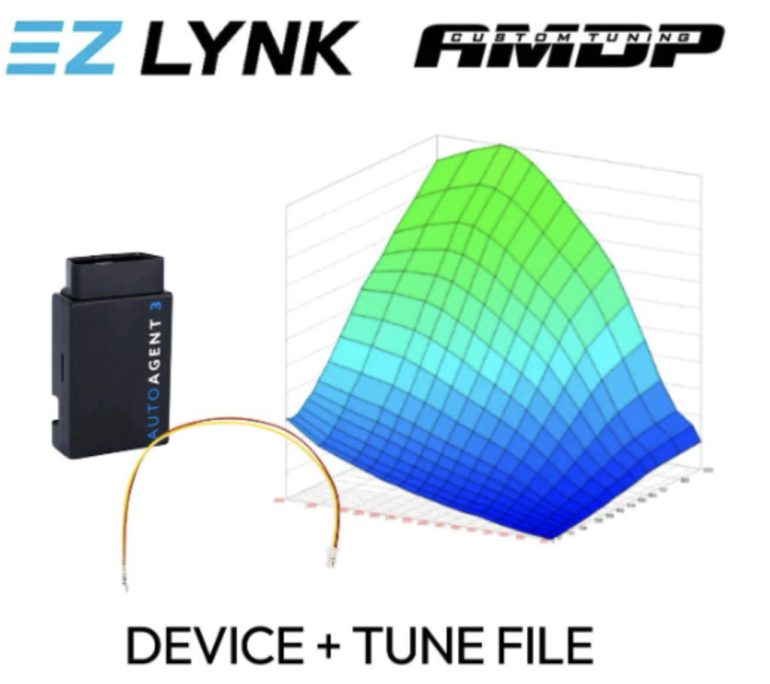
For example, one current AMDP EZ Lynk solution for 2022–2024 trucks flashes through the factory ECM without an ECM swap, but it is specifically for 68RFE-equipped 2500 and 3500 pickups. It is a 0-hp calibration, does not support the Aisin, and requires a different MAP sensor.
That creates a very different build from an owner who wants higher-power SOTF tuning or has an Aisin-equipped High Output truck.
This issue also shows up in owner discussions. One 2023 Ram owner bought a truck that had already been modified but did not know who had tuned it or which platform had been used. Other owners immediately focused on identifying the ECM and tuning platform before discussing adding SOTF.
The lesson is simple: know the electronic side of the build before ordering the mechanical side.
Switch-On-The-Fly tuning sounds simple: install several power levels and turn the knob when more power is wanted.
Owner behavior is usually more conservative.
One 68RFE owner with a five-position tune reported deliberately leaving the truck on Level 1 because he was concerned about transmission life. Responses warned that adding substantially more power without transmission upgrades could shorten 68RFE life.
Another owner choosing between a 0-hp file, a mild tune and a five-stage setup received similar feedback from people who preferred stock or low additional power because the truck was primarily a work and towing vehicle.
That points to a better way of thinking about SOTF.
It is not simply a five-step ladder where Level 5 is automatically the goal. For a stock 68RFE, the useful feature is being able to keep the truck on a lower setting for everyday driving or towing while having other calibrations available when the drivetrain and conditions allow.
If higher output becomes the normal setting rather than the occasional one, transmission hardware quickly becomes part of the build.
A tune that feels reasonable with an empty truck may be a very different proposition with a fifth-wheel attached.
Towing puts sustained load through the engine, torque converter, clutches, cooling system and transmission. That is why owner discussions around both the 68RFE and Aisin tend to become more conservative as trailer weight increases.
The Aisin example mentioned earlier is instructive. Despite the transmission’s stronger factory positioning, forum members questioned the wisdom of towing with a 150-hp calibration and pointed toward a much lower heavy-tow setting instead.
For a truck that spends much of its life towing, the question should therefore be less “What is the highest tune available?” and more “What output can this drivetrain repeatedly use under sustained load?”
Once the tuning direction is established, exhaust diameter becomes easier to choose.
A 4-inch system makes sense for many daily-driven, towing and moderate-power builds. It already provides substantial exhaust capacity without making the exhaust system the defining feature of the truck.
A 5-inch system is commonly chosen for a deeper exhaust note, a more aggressive build and additional flow capacity where future modifications may demand it.
What should be avoided is turning the decision into a rule such as “68RFE needs 4-inch” and “Aisin needs 5-inch.”
The transmission does not know the diameter of the exhaust pipe. What matters to transmission life is the torque actually reaching it, how that torque is delivered, the calibration, load and driving behavior.
Exhaust size should follow the build rather than define it.
The individual-component route works particularly well when a truck already has part of the build completed.
An owner may already have a tuner, intake or aftermarket exhaust section and only need to finish one part of the system. In that situation, replacing everything with a bundled package can mean buying parts twice.
For an off-road or competition-oriented configuration where legally permitted, an individual dpf delete kit can make sense when the tuning strategy is already established and the owner only needs the corresponding exhaust section.
The tradeoff is that the owner becomes responsible for more compatibility decisions.
Before ordering, that means checking the model year, 68RFE versus Aisin, pickup versus chassis-cab application, pipe diameter, connection points and existing tuning solution.
Piece-by-piece is therefore not necessarily the “budget” approach. Its real advantage is control.
Now consider the opposite owner: a mostly stock 2022–2024 Cummins with no tuner, no exhaust hardware and no established build plan.
That owner needs to make several interconnected decisions at once:
For an applicable off-road or competition build, a complete diesel delete kit can reduce the number of separate fitment decisions compared with assembling every component independently.
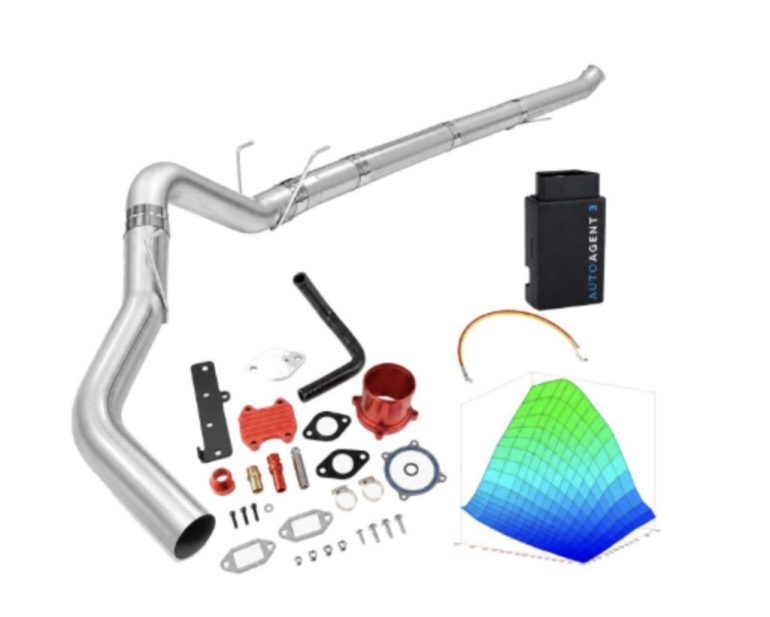
That is the real advantage of a complete package. It does not automatically make more power. It reduces the chances of reaching the middle of the project and discovering that one component does not match the tuning or exhaust configuration chosen earlier.
The answer depends largely on where the truck is starting.
| Owner Situation | Better Starting Point | Why |
| Mostly stock 68RFE truck | Complete or matched system | Fewer compatibility decisions |
| Existing tune and exhaust mods | Piece-by-piece | Avoid replacing existing parts |
| Conservative tow-focused 68RFE | Either | Build can remain relatively simple |
| Built 68RFE performance truck | Piece-by-piece | Greater control over hardware and tuning |
| Aisin-equipped HO truck | Verify tuning first | Tuning route can be more restrictive |
| Highly customized build | Piece-by-piece | Maximum flexibility |
The most important decision is still made before either shopping route begins.
Identify the transmission.
A 2022–2024 Cummins build should start with the drivetrain already in the truck, then work outward through tuning, power level and exhaust requirements. The biggest exhaust and highest tune available are not automatically the best combination.
As Cummins owners repeatedly demonstrate in real-world discussions, the engine is rarely the first component they are worried about. The transmission—and how the owner intends to use it—is usually what determines how aggressive the rest of the build should become.