Friday the 13th is proof that a movie need not be a cinematic masterpiece to become a franchise-fueling horror classic. Sean S. Cunningham’s low-budget 1980 film brought the teen-slasher thrills of Halloween to a summer camp preparing to reopen years after two counselors were murdered there. Its plot was skeletal and its performances workmanlike. The attitude it implied toward sex and drugs was as hysterical as any “Just Say No”-era afterschool special. Yet the movie was also viscerally effective, cycling through the sensations of suspense, titillation, and terror so quickly that, for its hormone-addled young audience in particular, it was impossible to look away. Say what you will about Friday the 13th; it’s not boring.
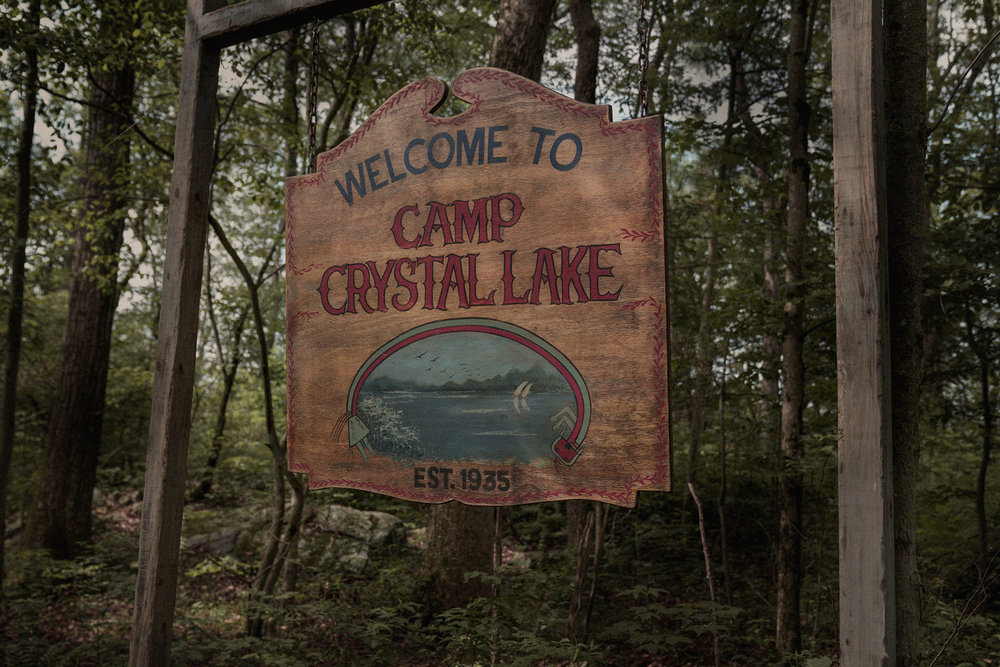
So it’s extra disappointing that Crystal Lake, an eight-episode Peacock horror series that reboots the franchise around the mother of victim turned bogeyman Jason Voorhees, is such a slog. Four years in the making, it emerges from a development morass involving the departure of original showrunner Bryan Fuller (who had previously reinvented The Silence of the Lambs franchise in his stylish cult crime drama Hannibal) over creative differences with production company A24. Brad Caleb Kane, whose credits include quality shows like Lodge 49 and Tokyo Vice along with It: Welcome to Derry, replaced Fuller, who retains a story credit, in 2024. This might help to explain why the series, premiering Oct. 15, turned out to be such a convoluted, dull, incoherent, ultimately pointless mess. Whatever the reason, it epitomizes everything wrong with the TV adaptations of horror touchstones that IP-crazed streamers keep churning out.
Jason’s mom, Pamela, is the villain of the original movie, where she’s played by Betsy Palmer, though at that point in the franchise she’s identified only as “Mrs. Voorhees.” The boy’s death by drowning in 1957, due to the negligence of the same horny counselors who would be killed the following year, unhinged his mother—to the extent that, in the film, she carries on both sides of conversations she imagines she’s having with him, in a reverse-Norman-Bates type scenario. Mrs. Voorhees enters almost 80% of the way through Friday the 13th and is dead a little over 10 minutes later, her head macheted off in lurid slow motion by final girl Alice (Adrienne King).
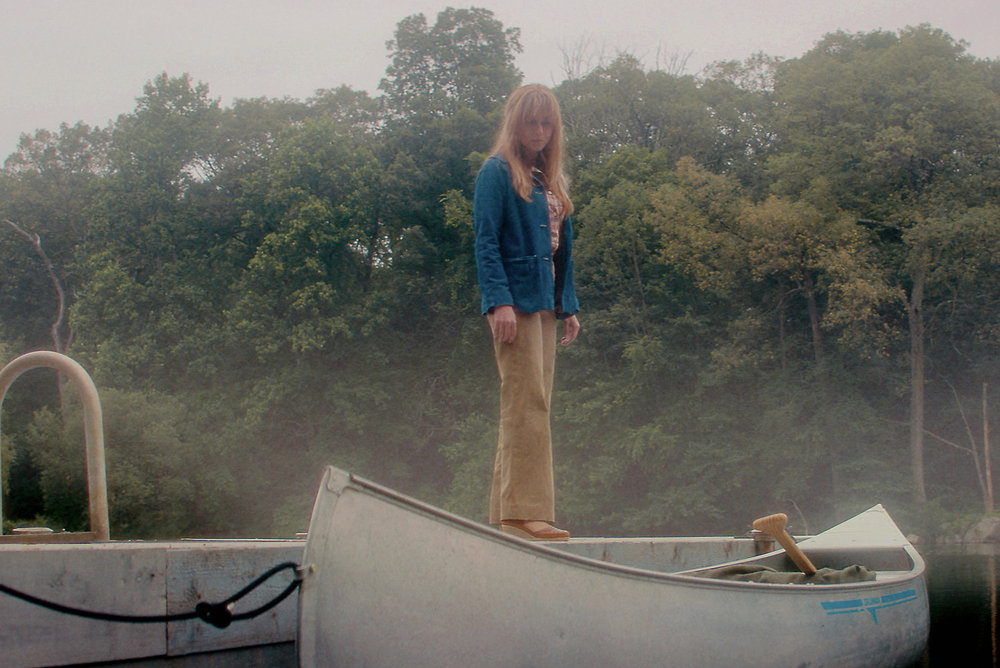
The series’ version of Pam is a single mother in early-’70s Crystal Lake, NJ, the small town where the eponymous camp is located. Played by Linda Cardellini, whose casting as a woman who’s equal parts loving and driven by repressed rage is Crystal Lake’s one stroke of genius, she cooks at the camp and the local school by day and cares for Jason by night. Her boy is a sweet preteen who has physical differences (his head is large, bald, and lumpy) and is prone to seizures. Fiercely protective, she enrolls him in Camp Crystal Lake in order to keep him close by, even though the cruel campers ostracize him. But Pam’s helicopter parenting backfires when he disappears in the lake as the two counselors who are supposed to be supervising, Claudette (Danielle Kotch) and Barry (Phoenix Parnevik), sneak off to snog. Jason’s only friend, an empathetic fellow outcast named Grace (Gwendolyn Sundstrom), stumbles upon the couple and freezes, transfixed. By the time Pam realizes something is wrong, Jason has vanished.
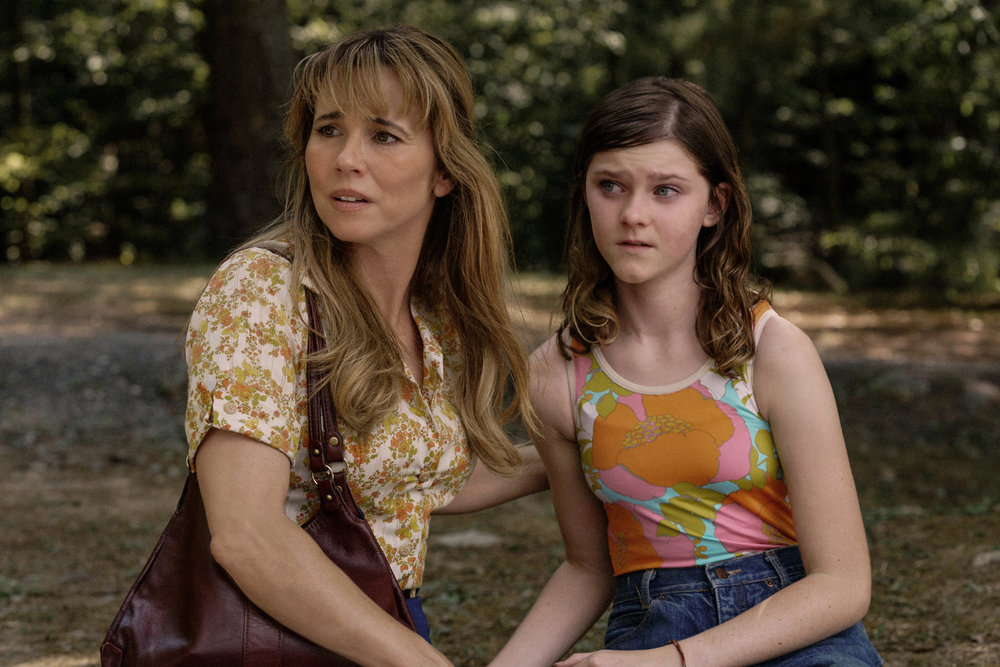
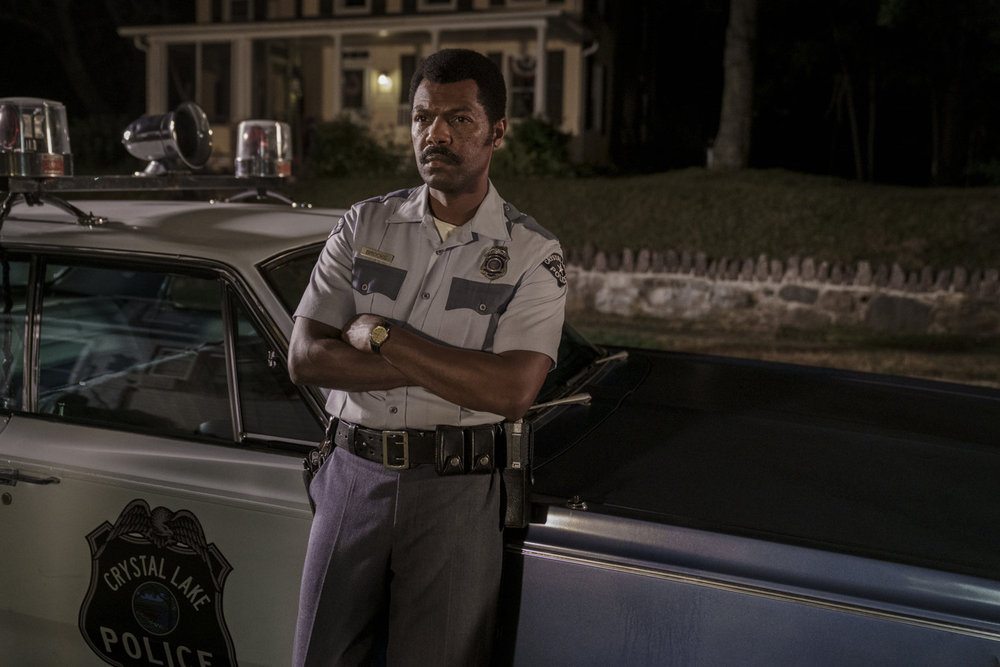
But a body is never found, and so she’s convinced her son isn’t dead. In part because of that apparently irrational belief and in part because she’s hurt to see her neighbors moving on so quickly after the death of a child they treated like a freak, she can’t abide the camp reopening the very next year. This is where the plot gets unwieldy. A pair of thugs disguised as state troopers arrive to drag Pam back to some dark past that is only hinted at throughout the first six episodes of the season. She kills them, kicking off a cat-and-mouse homicide investigation led by the local police chief, Levon, a.k.a. Lee (William Catlett), a Black cop whose race underlines his outsider status in a town full of white yokels, and who carries some unspecified baggage from a past stint in Newark. A tentative romance takes root between Lee and the woman he doesn’t realize is on a mini murder spree. He also, conveniently, has a newspaper-reporter sister (Devin Kessler) to help him investigate what brought the victims to Crystal Lake.
The series plods forward from there, punctuated by some mild scares and semi-inventive kills, generating lots of clutter but negligible momentum. Kane dutifully remixes memorable aspects of the franchise—the snake in the cabin, the sex and drug panic, the trap-door endings. The ‘70s setting is exploited for side plots, from the trendy encounter group to which Pam accompanies liberated diner denizen Rita (a fun but underused Joy Suprano) to an itinerant band of Central Casting hippies, that mostly serve as time wasters. Clichés are nested within clichés; a prototypical penultimate flashback episode takes us back to the ’50s, where every nightmare of suburban womanhood is on display. Crystal Lake invokes various themes, some latent in the movies and some not: small-town racism, fear of difference, corporate cruelty, the strain of sexism that underestimates the anger of a woman like Pam at everyone’s peril. Yet its engagement with these societal ills rarely goes deeper than the acknowledgment that they exist.
Maybe there’s a better show buried under all this. A24 has a reputation for aesthetics, and while this isn’t its most visually inventive work, the retro-VHS flourishes are well done. As she did in Dead to Me, Cardellini makes us feel the love and pain behind Pam’s violence. Grace could’ve been a fascinating character, but she fades away in the final third of the season, before her precociousness and confusion can develop into anything worth exploring. The most intriguing plot twist happens in the flashback episode, yet it’s no sooner introduced than abandoned.
There’s no context in which Crystal Lake would’ve been satisfying. Like too many horror series (Something Very Bad Is Going to Happen, Hemlock Grove), it stretches a feature’s share of plot into a season that feels interminable. And like too many horror series adapted movie franchises (I Know What You Did Last Summer, The Purge, Scream), it tries to extend a premise that was never especially rich in its original incarnation and has since been exhausted by endless sequels. But Crystal Lake suffers especially from its poor timing, premiering just a few months after Jane Schoenbrun’s Teenage Sex and Death at Camp Miasma, a brilliant meditation on how the sex and violence of Friday the 13th and its ilk shoot straight to the subconsciouses of fans who encounter them while still young enough to be figuring out who they are, what turns them on, and what scares them senseless. Schoenbrun understands something crucial that seems to have eluded Kane: It isn’t the characters or the setting or even the creativity of the bludgeonings that make a slasher movie indelible. It’s the way they make us all into Grace, forever changed by a voyeuristic spectacle we may not understand but can never un-see.