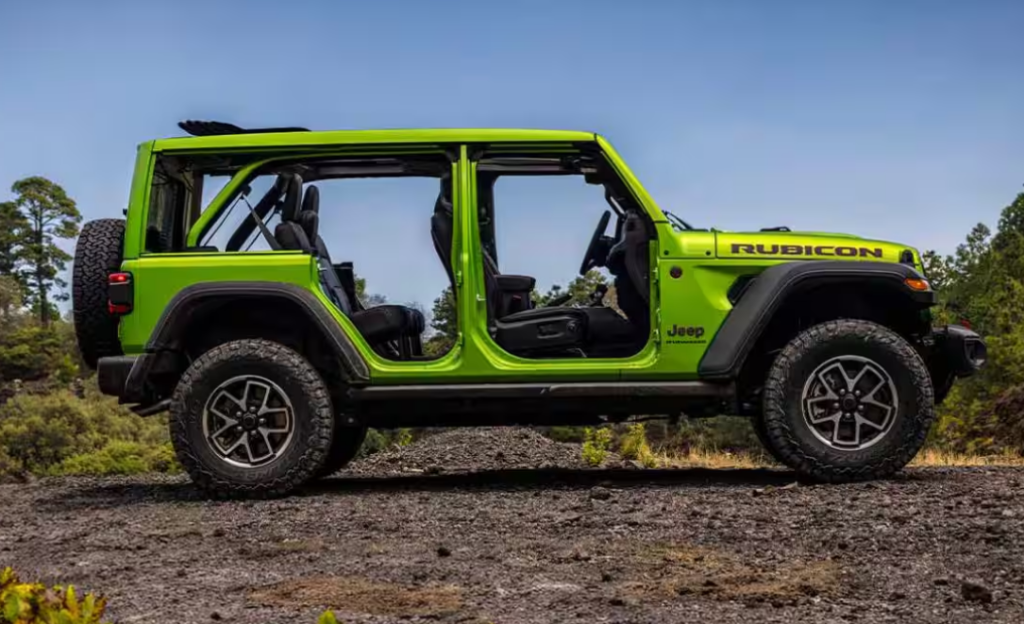
Some vehicles seem to be a perfect fit for commuting but have limited appeal outside that specific task. Other models, such as the Jeep Wrangler, offer the prospect of more fun and driving enjoyment. That is what makes choosing a Wrangler as a daily driver worth a closer look.
If you take a look at new Jeep and Ram vehicles in Webster, for instance, you can easily see the attraction. But what about using one for your daily commute?
Let’s take a look at what to expect when using a Wrangler as a daily driver.
If you are buying into Jeep culture and purchasing a Wrangler, you are doing so with the expectation that you will have some serious fun. However, there are also practical considerations to keep in mind when you own such an iconic vehicle.
For the right driver, the upsides can outweigh the compromises involved in using a Wrangler to get to work. That balance between weekday use and weekend capability is also important when choosing a Jeep for off-roading that still has to spend most of its time on pavement.
One of the most obvious advantages of commuting in a Wrangler is the excellent visibility provided by its elevated driving position. Upright seating, large windows, and a taller seating position than many other vehicles give you a clear view of surrounding traffic and parking spaces.
It is worth matching that commanding driving position to the kind of parking you face every day. Jeep’s published 2025 Wrangler dimensions put the two-door model at 166.8 inches long and the four-door at 188.4 inches. That shorter body could prove useful in crowded lots, whereas the extra doors make more sense if you frequently carry passengers. A quick check of your garage, office parking space, and usual streets can help you choose the version that makes everyday life easier.
It is also fair to say that not every road you encounter will offer a perfect surface. A pothole or abrupt bump can damage the tires, wheels, or suspension of any vehicle. A Wrangler’s ground clearance may help on uneven access roads and rough surfaces, but potholes should still be avoided whenever possible.
That capability also gives you some flexibility when your commute includes uneven pavement, construction zones, or poorly maintained access roads. However, the tires fitted to a Wrangler can make a noticeable difference in how it feels during ordinary driving. Aggressive off-road tires may be great for weekend trails, but they can add noise and affect ride quality on paved streets.
Gauge Magazine’s guide to choosing Jeep Wrangler tires for off-road driving explains why tire selection should reflect both trail use and everyday driving. It is sensible to think about where you will drive most often before choosing a trim or wheel-and-tire setup.
Let’s be honest: commuting is not always the most enjoyable part of the working day, especially when you are sitting bumper-to-bumper in rows of slow-moving traffic.
The good news is that even a challenging commute can feel more enjoyable when you are in a Wrangler. If the weather is good, for instance, you can enjoy the sunshine and even a few envious glances as you transform your commute into something more pleasurable.
The appeal is not limited to driving with the roof open, either. Modern Wranglers offer the kind of connectivity that helps make a weekday journey more convenient. Jeep’s 2025 model information describes a 12.3-inch Uconnect touchscreen with wireless Apple CarPlay and Android Auto. Depending on the model and equipment, you can also find useful comfort and driver-assistance features. Checking the exact specification matters, especially if you spend a long time in traffic and want familiar navigation, music, and hands-free communication close at hand.
Another valid point to consider is that Wranglers have a reputation for holding their value better than many ordinary commuter vehicles. That means you can enjoy a more distinctive commute in a vehicle that may retain a greater portion of its original value.
There is research behind that reputation for value retention. Vehicle-data company iSeeCars estimates that a new Wrangler loses about 34% of its value after five years, compared with approximately 46% for the midsize SUV category in its analysis. Those figures are estimates rather than a promise about any individual vehicle. Mileage, maintenance, condition, and the local used-car market all matter. Still, resale value is worth including in the calculation when you are considering a vehicle for both commuting and leisure.
One of the most obvious potential downsides to driving a Wrangler to work is that you probably will not get the best fuel economy available. Its upright shape, four-wheel-drive hardware, and off-road-focused design can reduce fuel economy. Whether that is an acceptable trade-off depends largely on the length and conditions of your commute.
The fuel figures provide a useful reality check. According to Cars.com’s 2025 Wrangler overview, the four-door model with the 2.0-liter turbocharged engine and eight-speed automatic is rated at an estimated 20 mpg in the city, 22 mpg on the highway, and 21 mpg combined. Actual consumption will depend on traffic, driving habits, tires, modifications, and vehicle configuration.
For anyone evaluating a Wrangler as a daily driver, calculating the likely fuel cost of a normal working week provides a clearer picture than simply comparing fuel-economy figures on paper.
You should also be aware that Wranglers use solid front and rear axles with suspension designed to provide substantial off-road capability. As a result, you may notice more body movement and a firmer response over rough city streets than you would in a crossover designed primarily for pavement. Whether that trade-off feels minor depends on the driver and the roads traveled each day.
Highway comfort deserves a closer look as well. In its 2025 Wrangler road test, Edmunds highlights wind and tire noise at speed, along with steering that can require more frequent corrections than some drivers expect. That does not mean the Wrangler cannot handle a motorway or freeway journey; it means you should determine whether those characteristics suit you. Ideally, test-drive one on the same mixture of faster roads, rough surfaces, and slow traffic that you encounter on the way to work.
Practical details can be just as important as the way the vehicle drives. The step up into the cabin may take some getting used to, particularly if children or less mobile passengers travel with you. Think about where you will put laptops, shopping, and gym bags, and how often you need access to the rear seats.
If you routinely carry valuable equipment, Gauge Magazine’s advice on how to store and secure gear in a Jeep can help you plan around the Wrangler’s removable roof and open-air design.
If you plan to take advantage of the removable roof, remember that changing weather and secure storage for the panels require some planning. These small considerations can make the difference between a Wrangler that feels exciting only on weekends and one that works well throughout the week.
All things considered, choosing a Wrangler as a daily driver is less about whether it can handle a commute and more about whether its particular trade-offs fit your routine. If they do, you may arrive at work with a bigger smile on your face.
The post Daily Driver Dilemma: Can You Comfortably Commute in a Wrangler? appeared first on Gauge Magazine.