People first noticed the black helicopter in the sky.
It was a chilly Sunday afternoon a year ago at La Catedral Arena, a popular track for horse racing outside the Idaho town of Wilder. Hundreds had gathered at the arena for a festival celebrating horse racing and Mexican culture.
As the military-style helicopter hovered above them, attendees from the rural, predominantly Latino community, began to get nervous.
“Something is wrong,” Ivan Popoca, who attended the festival with his two kids, remembers thinking.
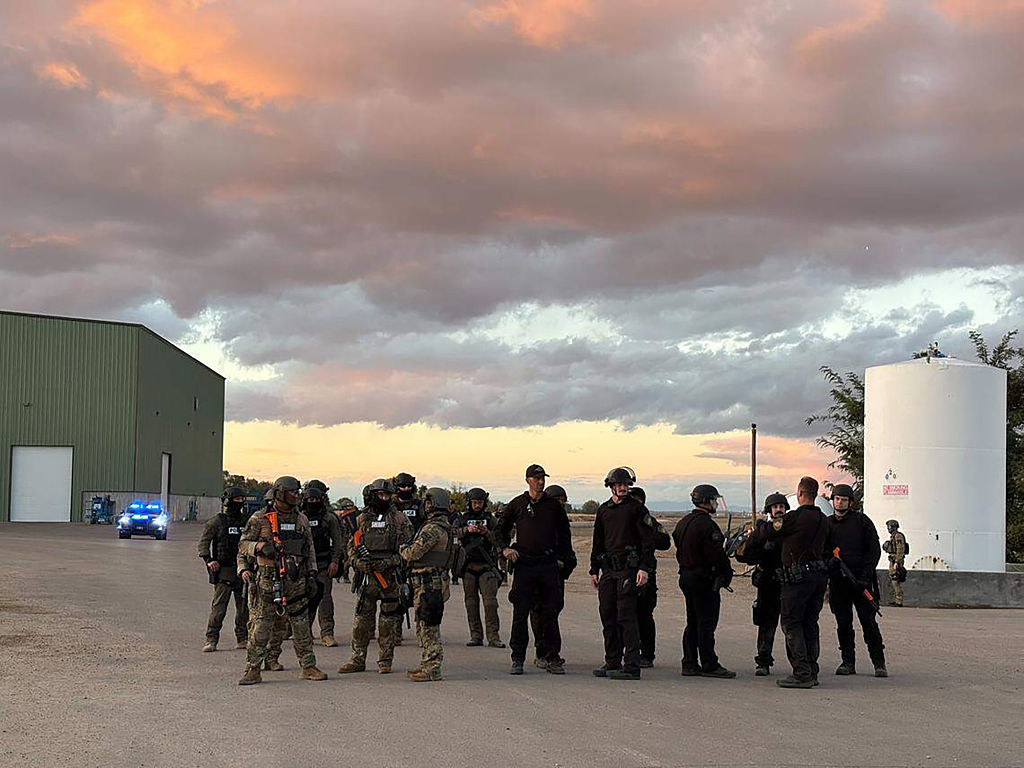
Within minutes, the festival grounds descended into chaos. Backed by armored trucks and snipers, more than 200 members of law enforcement stormed the grounds, some shot rubber bullets into the crowd and hurled flash-bang grenades into vehicles where people had fled to hide. Hundreds of people, including teens as young as 14, were detained and zip-tied.
When it was all over, federal authorities had arrested 105 people for alleged immigration violations. Yet on paper, this wasn’t an immigration raid at all. The only warrant for the Wilder raid was secured by the FBI. Its target: the owner of the track and four others for alleged unlicensed gambling.
Twelve months later, the Wilder raid is at the center of a court fight that could shape ICE operations around the country. Advocates argue that in Idaho, ICE unlawfully piggybacked on an FBI operation, rather than securing their own warrant, as they would be expected to do on this type of operation. A lawsuit brought forth by the ACLU argues that federal authorities violated the Fourth Amendment, which protects against unreasonable searches and seizures, by using an unrelated search warrant as a “cover to go fishing for immigration arrests.”
“That is not what a criminal search warrant execution looks like. That is what a massively violent
immigration raid looks like,” says Jenn Rolnick Borchetta, an ACLU attorney who helped bring the resulting lawsuit.
Trump Administration officials insist that the arrests made that day were lawful. “The facts haven’t changed: ICE helped dismantle an illegal horse-racing, animal fighting, and a gambling enterprise operation out of a property known as La Cathedral Arena in Wilder, Idaho,” a DHS spokesperson told TIME. Idaho Gov. Brad Little also defended the raid, saying in a statement at the time that it is “common practice” to detain others present while processing the scene.
For Wilder residents, the La Catedral raid remains an open wound that refuses to heal. Popoca still recalls with anger how he and his 16-year-old son were zip-tied for hours for no apparent reason.
The ACLU and some of the families involved in the case released a documentary online on Monday called Wild Raids in which they discuss the raid’s impact, and why the legal challenge matters beyond people in Wilder.
“Some community members don't even want to think about this anymore,” says Leo Morales, the executive director of the ACLU Idaho. “But there are also folks who are also realizing how critical it is to be able to push back, to organize and to demand fairness and justice.”
Juana Rodriguez attended the festival with her three-year-old son. Despite both of them being U.S. citizens, they were zip-tied and detained for hours following the raid. Like many others who were detained, she described not being given access to food or water.
“For the longest time, my son begged me for food. He begged me for water,” Rodriguez says. She repeatedly asked the officers she could be untied so that she could feed and console her crying son, she says, but was rebuffed. “I wish I could have done more in the moment, but I couldn't.”
Detainees were eventually taken into a tent and questioned by ICE agents about their immigration status. Among the 105 people who were ultimately arrested, 75 are believed to have been deported to their home countries, according to local media, and 26 were released from ICE custody after their lawyers filed habeas corpus petitions. The whereabouts of the remaining four people are unclear. ICE did not provide an update on their case status.
The day after the raid, the Wilder School District reported absent rates soared, with 20% of students absent, according to The Idaho Statesman. More than half of the district’s student body is Hispanic or Latino.
A year later, Rodriguez says she is still scared to go to Latino cultural and other public events because of what happened at La Catedral. She also has nightmares about ICE officers taking her child away from her.
“I'm from here. My kids are from here,” she says. ”Why should I have to feel that? Like, I shouldn't.”
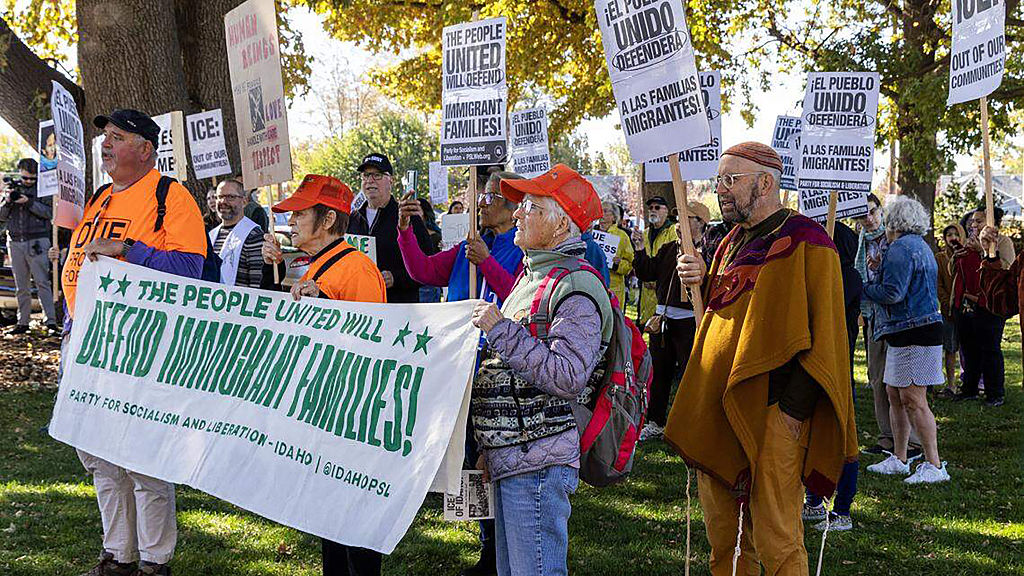
The ACLU filed a class-action complaint in February, charging that a variety of local, state and federal agencies violated the constitutional rights of those at the festival. Both sides are now waiting for a judge to rule on a motion by ICE and other agencies to dismiss, in which it argued that federal and state law enforcement are protected by qualified immunity, a longstanding legal doctrine when executing a federal warrant.
The Wilder case is one of multiple lawsuits the Trump Administration is fighting over its immigration enforcement operations. In Minnesota, none of the federal agents involved in the deaths of Renee Good and Alex Pretti have been criminally charged, but a string of civil lawsuits is beginning to emerge. Earlier this month, the family of Renee Good, who was killed last January by a federal agent during the immigration enforcement surge in Minnesota, filed a pair of civil lawsuits against the federal government, according to their legal representative. Marimar Martinez, a U.S. citizen who was shot by a Border Patrol agent during a confrontation on a Chicago street last year, has also filed a lawsuit against the federal government.
Anyone seeking to hold federal agents accountable must be prepared for a long wait, says Borchetta. A lawsuit against the federal government can’t even be filed unless it’s been six months since a complainant filed a claim for compensation and the issue remains unresolved.
“If a federal employee is driving their car negligently on the job and hits you with their car, you can bring a claim for them for that negligence,” Borchetta says. “It also applies where an ICE agent is mistreating you or causing you harm.”
But the law itself imposes many limitations on suing the federal government. Victims can seek compensatory damages for actual losses, but not punitive damages. And unlike state authorities who can be sued for civil rights violations in state courts, federal law enforcement authorities are generally shielded from such lawsuits based on legal precedents.
But Borchetta says the impact of the lawsuits can be bigger than any verdict. She argues that the ongoing Wilder case has already helped change ICE’s conduct as well as how local governments collaborate with them.
“While we don't yet have a decision from the court, we haven't seen more raids like this in Idaho,” she says. “The lawsuit itself exposes both the state and the federal actors to liability, and that can change behavior itself.”