France’s Interior Minister Laurent Nuñez on Monday admitted that police “lost control” in some cities over the weekend as violent protests erupted across the country, while French President Emmanuel Macron called for a review of the police response to the rioting and looting.
Nuñez said there had been a "lack of anticipation" ahead of the demonstrations on Saturday and acknowledged that policing numbers had fallen short in some areas as hundreds of thousands took to the streets to protest over, what they say are, underfunded public services and rising cost-of-living pressures. The demonstrations followed weeks of student protests that had also seen some violence.
In the wake of the chaotic scenes, Nuñez offered his resignation to Macron because he "felt responsible” for how things unfolded. Macron refused to accept it, due to “the need for a continuous command of the police,” the Élysée Palace told TIME. Instead, Macron has called for the Interior Ministry to “take all necessary steps to ensure transparency over planning and intelligence failures” and to put an end to the barricades and looting.
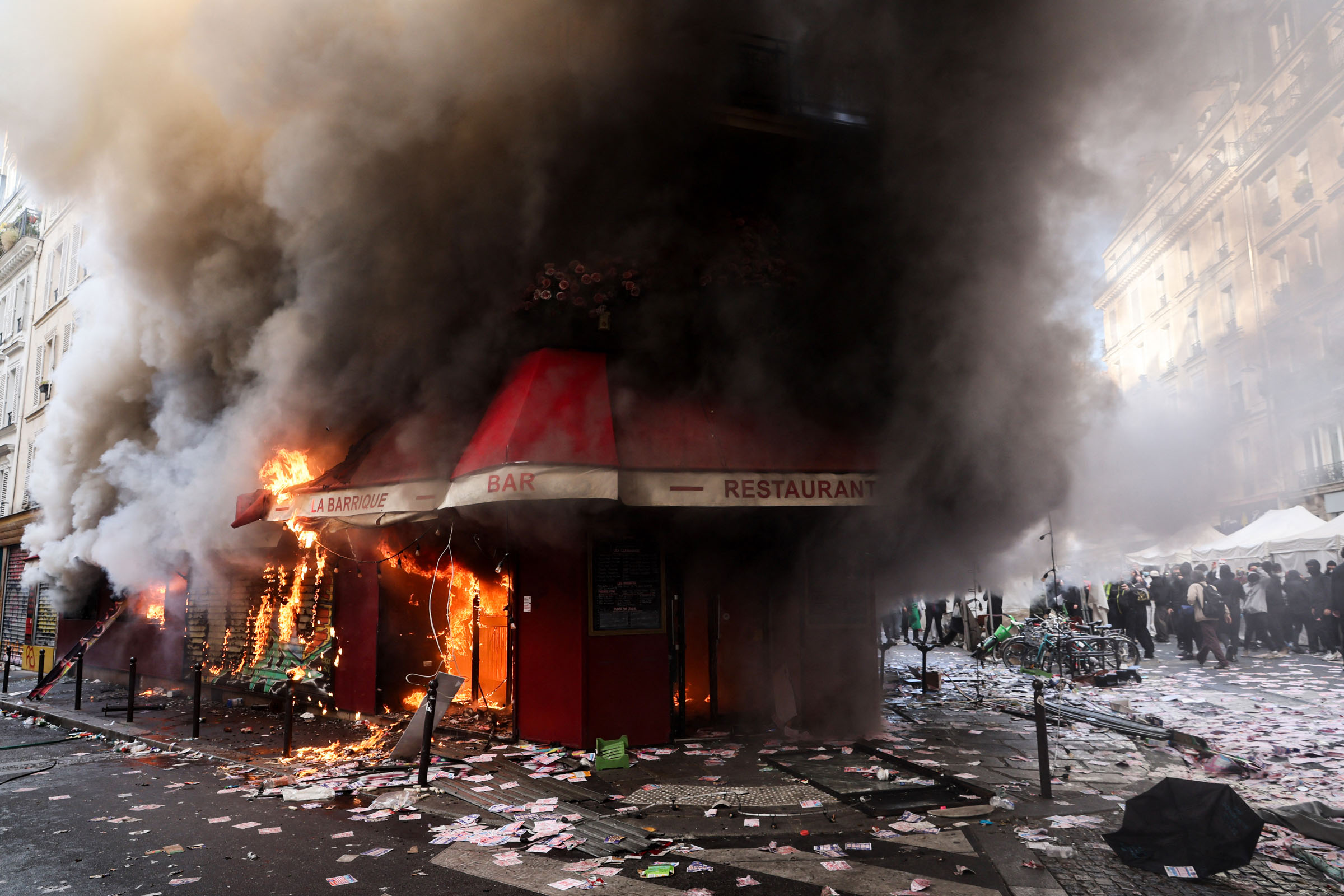
As France aims to regain full control of its streets, French Prime Minister Sébastien Lecornu has extended local mayors the power to enforce “partial curfews,” in an effort to protect businesses and people. "My determination to restore order is absolute," Lecornu told reporters, emphasizing that localized curfews were preferred over a national enforcement at this time. Paris authorities have since issued overnight curfews in two areas of the capital. The Interior Ministry reported that around 550,000 people had taken to the streets on Saturday. A French trade union put the number at over 800,000. Nuñez on Sunday said that more than 2,000 people had been arrested and over 600 police officers and firefighters injured. In Paris, at least 300 businesses were vandalised, Dominique Restino, the head of the Paris chamber of commerce, told BFM television.
Alongside the violence in the capital, what started out as peaceful protests in Marseille and Lyon also turned violent as rioters descended. Authorities in Marseille on Monday imposed a temporary ban on public gatherings and demonstrations. French unions have already called for a new round of strikes and marches on Nov. 5.
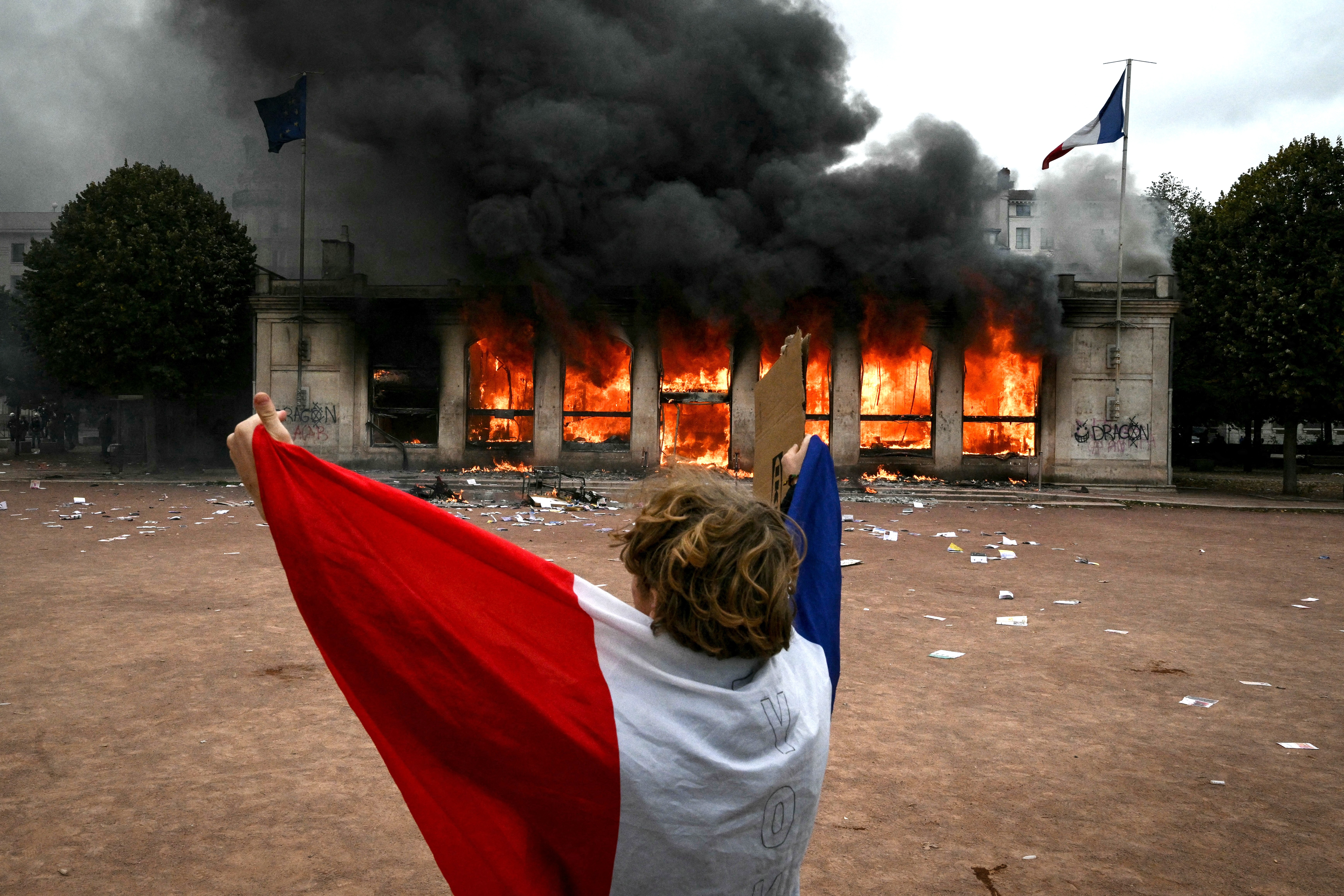
Various buildings and official monuments have been targeted across the country.
A historic town hall in the French city of Limoges was damaged in what appeared to be an arson attack on Saturday. One of the main tourist offices in the city of Lyon was set ablaze. In Bordeaux, the prefect's residence was attacked, according to local authorities.
Macron condemned the "unbridled violence" as he addressed the nation Sunday evening. “Those who looted will have to pay for the damage, and those who sought to bring down the Republic will be held accountable,” he vowed in a televised speech.
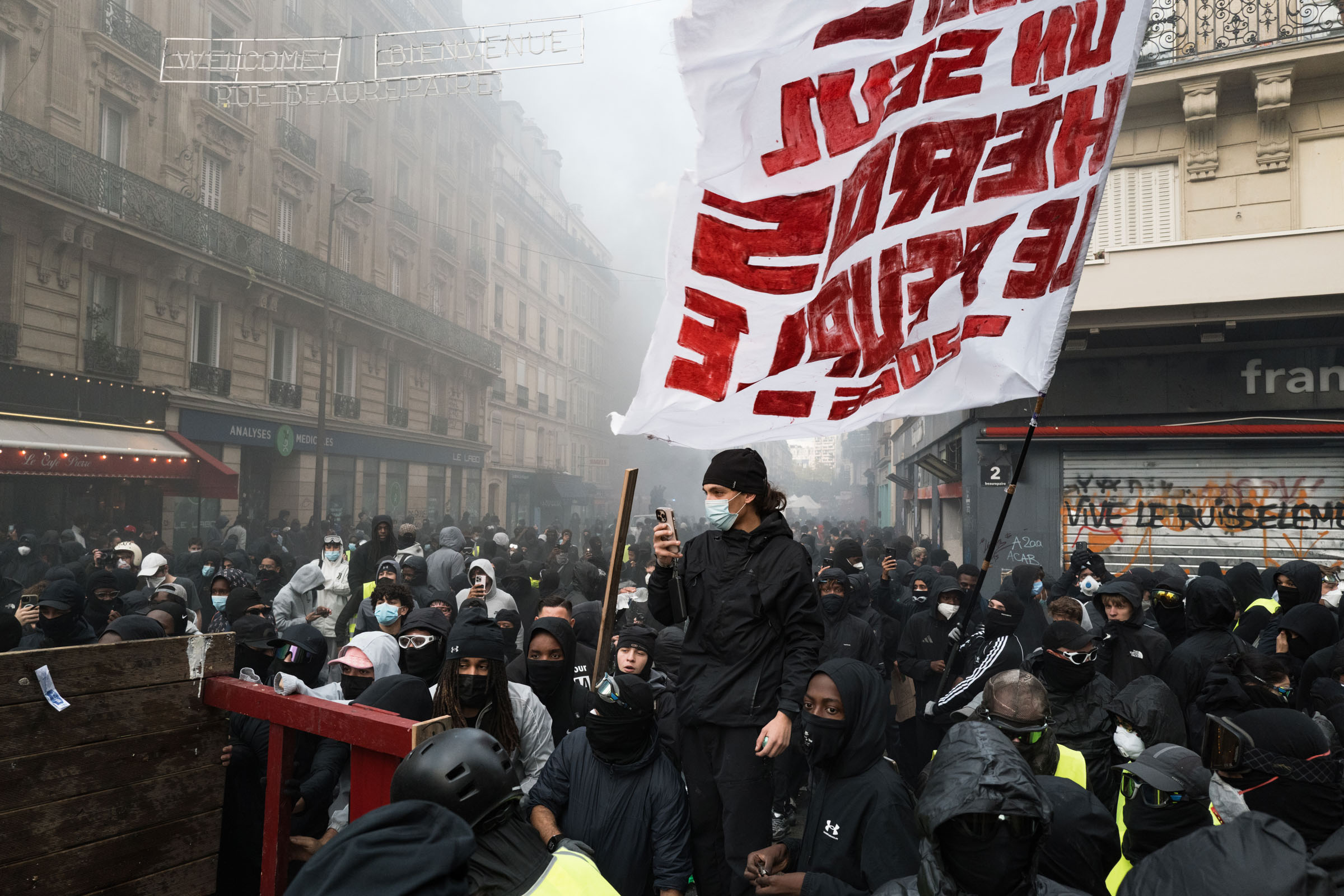
Isa Obradovich, a French-Peruvian American artist living in Paris, has participated in a number of protests since the movement went nationwide in early October. The 22-year-old says the demonstrations have become increasingly charged amid escalating clashes between protesters and police.
“I had to walk through clouds of tear gas to get home and clouds of smoke from fires,” she says of her journey home from the protests this weekend.
Obradovich notes the property damage in her own neighborhood, sharing that some of the stores she regularly visits were impacted by the protests.
“You can also see that there has been more property damage. [Some] grocery stores in my neighborhood were closed yesterday. One of them because they had boarded up the walls, and the other one because the windows of the storefront had been smashed and all the stuff inside had been ruined. I walked past as shop owners and employees were standing there looking at the devastation,” she says.
The Federation of Trade and Retail told TIME that “nearly 3,000 shops and businesses of all sizes across France have been affected by the violence over the weekend.” The French government has said it will create a fund to financially assist shops that were impacted by the riots.
Lecornu has blamed far-left agitators for the unrest. "There is, after all, a far-left movement that wants to cause—we can’t put it any more strongly—profound unrest in the country in the run-up to the presidential election," he said.
Jean-Luc Mélenchon, leader of France’s far-left party, France Unbowed, pushed back against this framing and insisted the protest movement is “the result of ten disastrous years in which President Macron has disorganized the state and public services.” TIME has reached out to Macron’s offices for comment.
The discord between lawmakers and the uncertainty in the government with Nuñez’s resignation attempt hanging over the proceedings comes just six months ahead of France’s next presidential lection, where Mélenchon will no doubt be hoping to beat centrist contenders to the runoff.
France’s public debt has climbed to a record $4 trillion in Macron’s two terms, according to figures shared by France’s National Institute of Statistics and Economic Studies in late June. The fiscal dilemma has heightened scrutiny on government spending and has sparked questions over “Macronisme,” the right-of-center, top-down governing style that Macron emulates. Further adding to the economic pressures, French government bonds dropped after the weekend of unrest.
Antonio Fatas, a professor of economics at Insead, the European business school, has said the political and economic situation is serious. “I am very worried about the economic situation because growth is low and it is difficult to see how the dynamics change. Then you have the debt numbers, which are bad, and the financial markets are thinking the government is not in control,” he told the Guardian.
Throughout September, students across France blockaded schools and demonstrated against, what they say is, a poorly-funded high school system. The protests went nationwide on Oct. 6, when more than 250,000 people took to streets across with teachers, parents, and union activists joining marches.
The demonstrations have drawn comparisons to the May 1968 protests, which were initiated by a student movement and led to millions of workers striking and nearly toppled the government.
In the years since, there have been numerous protest uprisings in Paris, including the Yellow Vest movement of 2018 and the pension reform protests of 2023.
What distinguishes the unrest that unfolded over the weekend is how the pockets of violence dispersed, says Fabien Jobard, a researcher at the French National Centre for Scientific Research. He says that the rioters moved away from the main demonstrations, seemingly catching the police off guard and making it all the more difficult to contain the unrest. That, coupled with the French authorities’ own admittance of failing to anticipate the full scale of the protests, meant that “it was too late to gather enough police forces in different places,” adds Jobard.
On Saturday, as some sought to revive the Yellow Vest movement of 2018, protesters draped a yellow vest over the Marianne statue at the Place de la République.
The group that helped coordinate the action on its website described the mobilization as a convergence of student protests and wider economic grievances, bringing together high school and university students, farmers, firefighters, workers, teachers, healthcare workers, climate activists, residents of working-class neighborhoods, and retirees.
Alongside concerns over school funding and cost-of-living pressures, including concerns over fuel prices, which have significantly increased since the onset of the Iran war after as continued disruption to the Strait of Hormuz sent energy markets spiralling worldwide.
Obradovich describes it as an “intersectional protest movement,” arguing that “the root of all of these problems boils down to this government system taking away funding from public services.”
In his speech addressing the nation, Macron said order must be restored, but also recognized protesters’ concerns. He said his government was working with fuel distributors to ensure a “tangible impact on prices.” Addressing the concerns of students, he said the voices of young people “must be heard” and referenced how the Minister of National Education had set up an online portal to hear concerns. Additionally, he said meetings were being held to develop solutions alongside young people.
France was not alone in dealing with demonstrations over the weekend, as protesters also took to the streets in other European countries.
In Portugal, protesters marched in Lisbon, Porto, and Coimbra as they called for better pensions, improved public services, and affirmative government action to combat rising living costs.
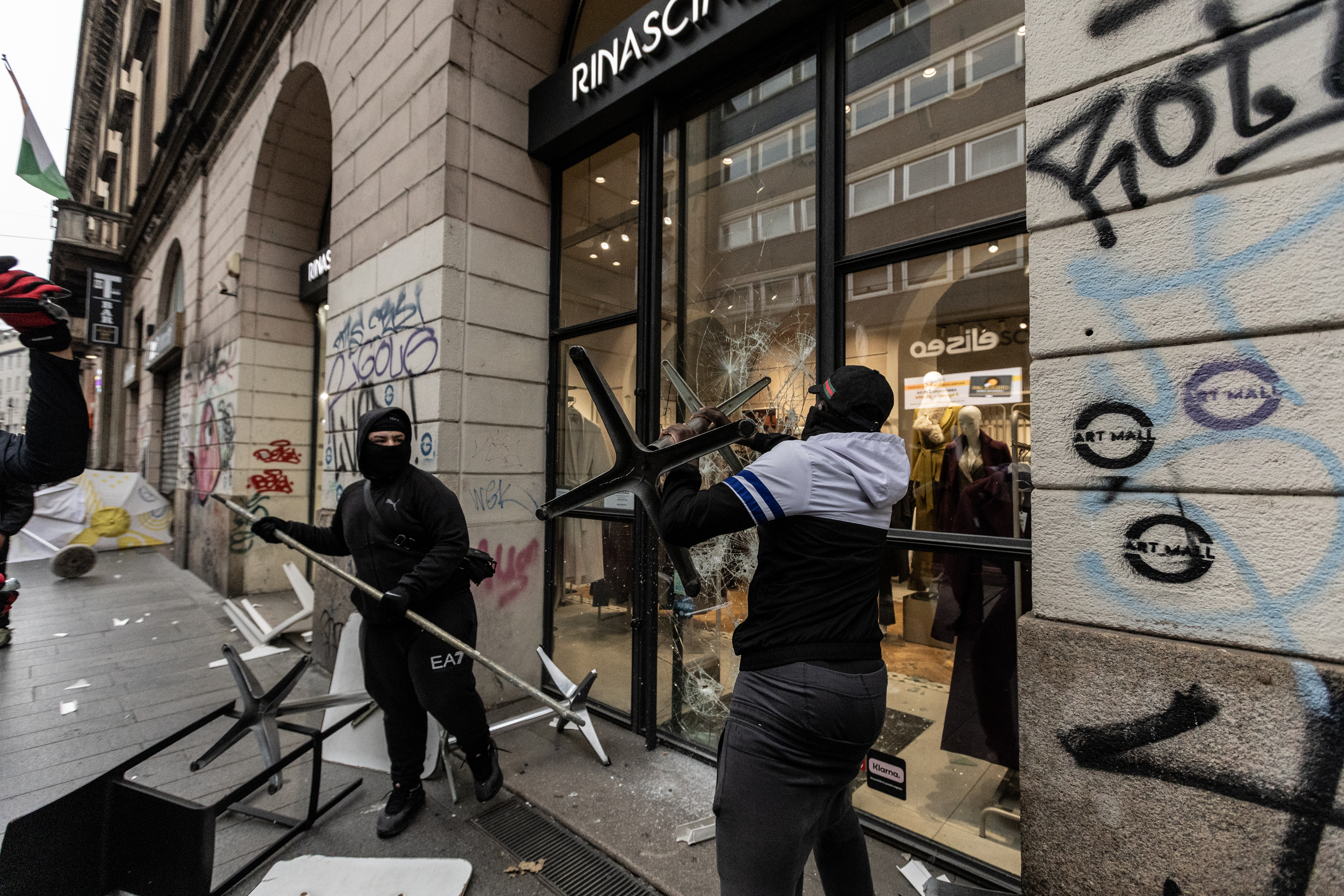
In Milan, police clashed with protesters as some threw stones and looted shops during demonstrations against underfunded services and the rising cost of living.
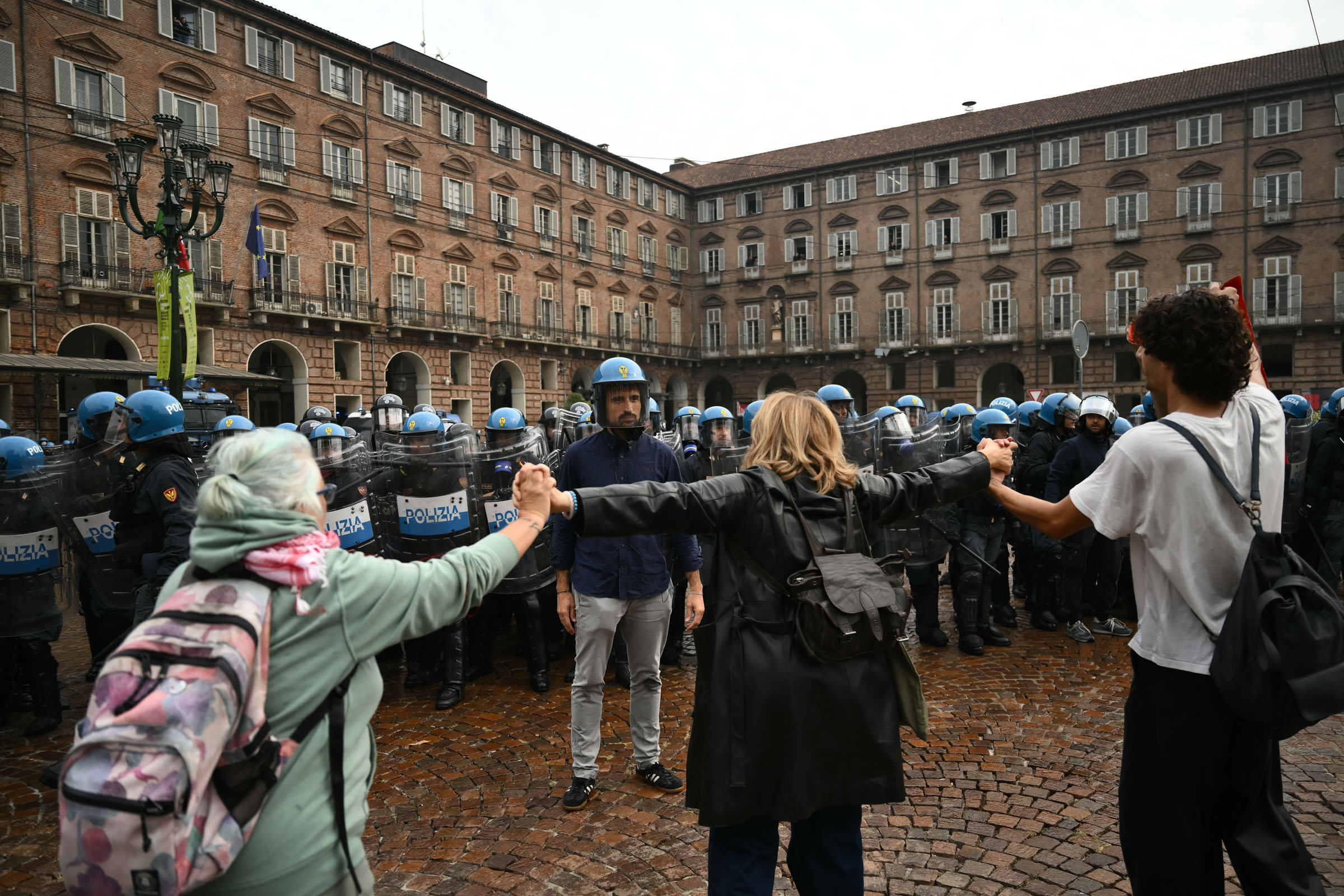
Italian Prime Minister Giorgia Meloni condemned "the violence of criminals who, even through organized groups, exploit demonstrations to seek confrontation and sow chaos." There were further clashes between police and protesters in Bologna and Turin.
Unrest also broke out in Brussels, Belgium, on Saturday afternoon, as antifascist activists took to the streets. The demonstrations turned violent, prompting police intervention amid reports of property damage.
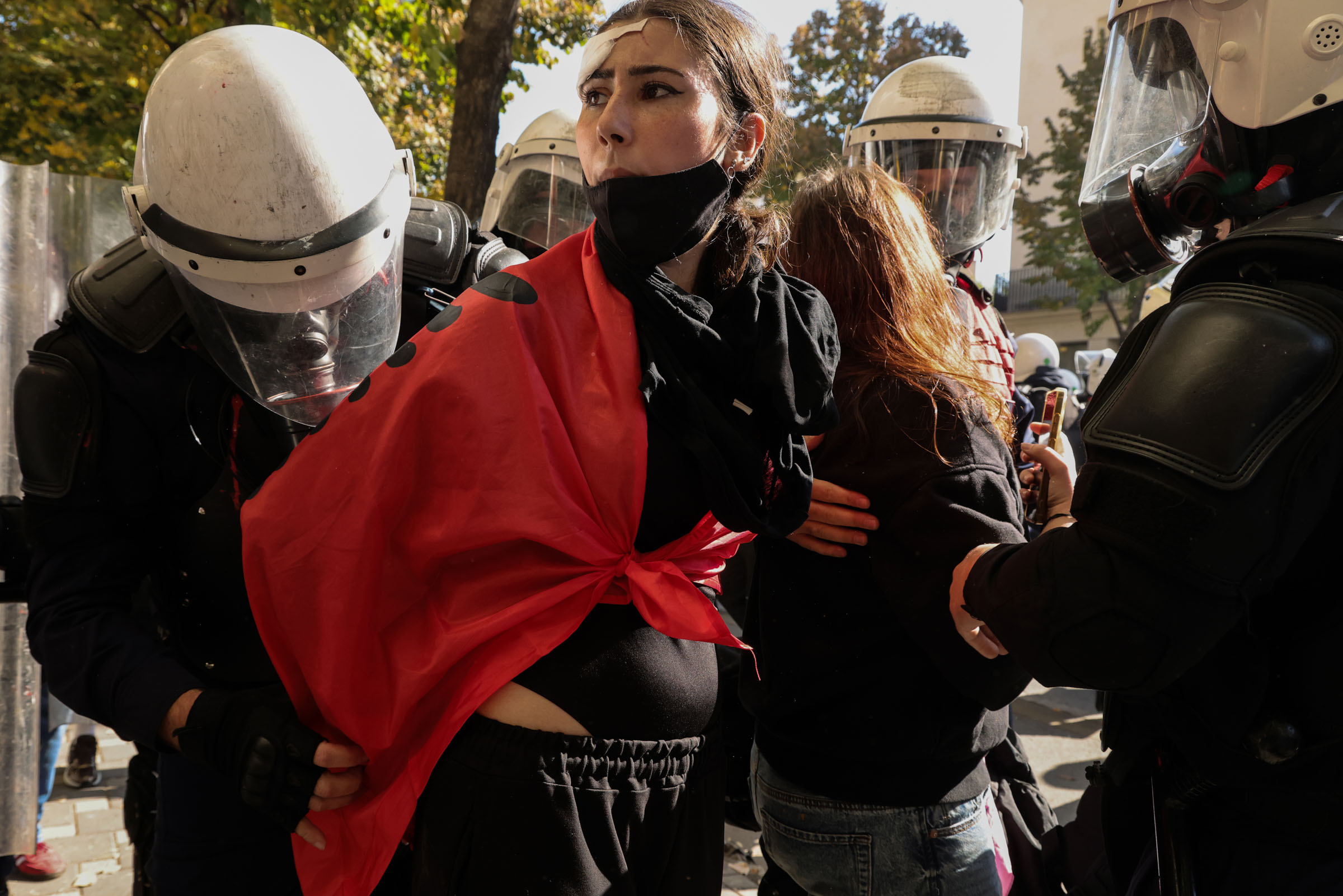
In Albania, protests spilled over to a sixth day on Sunday, with student-led demonstrations marching against, what they argue is, an underfunded education system, and allegations of government corruption. Police and protesters clashed in the capital of Tirana, as Prime Minister Edi Rama staunchly rejected calls for his resignation.
Albania’s current demonstrations come months after a protest movement rallied against a planned luxury development linked to Jared Kushner, U.S. President Donald Trump’s son-in-law. The initial marches in May were borne out of environmental concerns, but protests developed amid allegations of corruption and discontent over cost-of-living pressures.