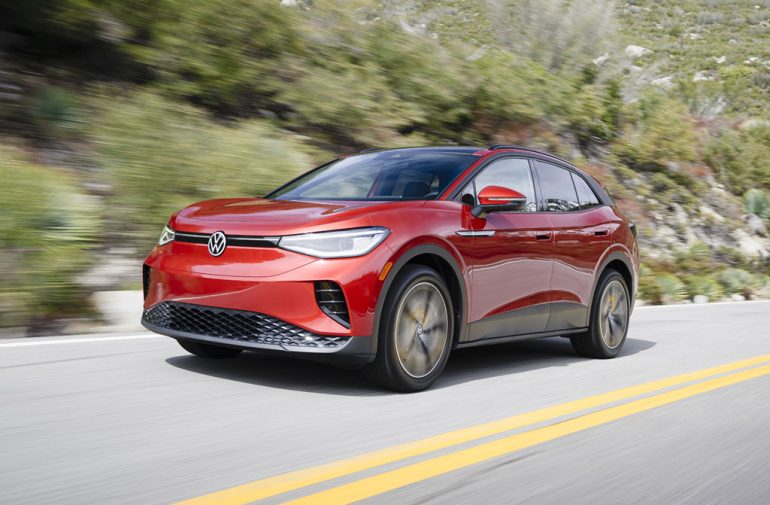
Imagine waking up one morning to discover that your electric vehicle can no longer charge to its full capacity, not because of a mechanical failure, but because the manufacturer has decided to limit it remotely. That’s exactly the situation facing thousands of Volkswagen ID.4 owners as the German automaker prepares to impose an 80% battery charging limit on certain vehicles through an over-the-air software update. The move comes as part of an ongoing safety recall involving 22,524 Volkswagen ID.4 electric SUVs from the 2023 through 2026 model years. According to recall documents filed with the National Highway Traffic Safety Administration (NHTSA), certain high-voltage batteries may experience conditions that could lead to overheating and potentially a vehicle fire when charged beyond 80%. It’s certainly not the kind of news EV owners want to hear, especially when driving range remains such an important part of the electric vehicle ownership experience.
What’s particularly concerning is that Volkswagen hasn’t yet identified the exact cause of the battery problem. According to reporting from Car and Driver and InsideEVs, the automaker believes certain charging conditions combined with a battery state of charge exceeding 80% could trigger thermal propagation, a dangerous situation in which excessive heat spreads through battery cells. Volkswagen has identified 22 related claims in the United States between January 2024 and August 2026, although the company estimates that only about 0.1% of the recalled vehicles may actually contain the defect. Still, the potential consequences are serious enough to warrant immediate precautions. This also isn’t Volkswagen’s first battery-related recall involving the ID.4 in 2026. An earlier campaign affected nearly 44,000 vehicles from the 2023 through 2025 model years, raising additional questions about battery reliability and quality control in one of the brand’s most important electric vehicles.
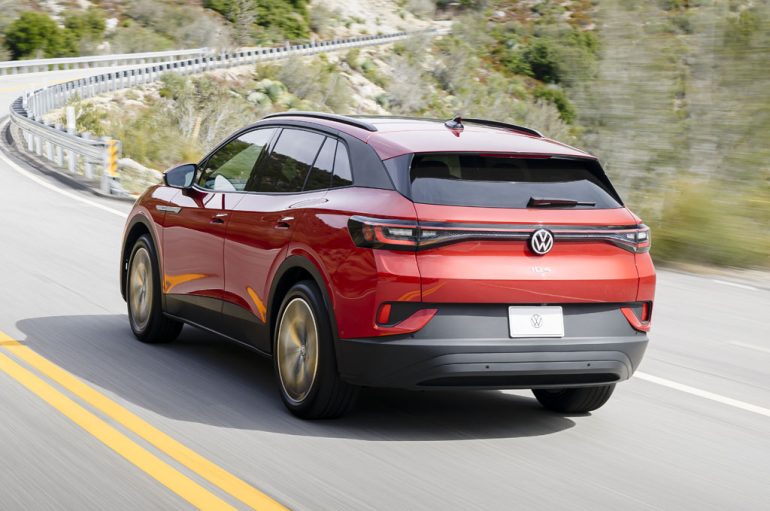
Rather than waiting until a permanent repair is developed, Volkswagen is taking a somewhat unusual approach by using the ID.4’s connected technology to restrict charging. InsideEVs reports that affected owners have received notifications through Volkswagen’s myVW app explaining that the company intends to apply a temporary 80% charging limit around October 27, 2026, unless owners decline the change by October 21. Volkswagen is also distributing warning stickers reminding drivers not to charge their vehicles beyond the recommended threshold. The software restriction is intended as a temporary safety measure, not a permanent repair, and the automaker is continuing to investigate the underlying battery issue. While over-the-air updates are generally viewed as a convenient way to improve vehicle functionality, this situation demonstrates how the same technology can also be used to impose restrictions on a vehicle’s capabilities when safety concerns arise.
For ID.4 owners, the biggest immediate inconvenience will likely be the reduction in available driving range. Limiting a battery to 80% means drivers lose access to the upper 20% of its capacity, which can make a noticeable difference during road trips or longer daily commutes. For example, an ID.4 with an EPA-estimated range of 263 miles could theoretically have around 210 miles available when starting with an 80% charge, assuming similar driving conditions. Actual results will vary depending on weather, driving habits, and vehicle configuration. That reduction could become particularly frustrating during colder months when EV efficiency naturally declines. It’s worth noting that charging to 80% is already a common recommendation for preserving long-term battery health in many electric vehicles, but there’s a considerable difference between voluntarily following that practice and being advised to do so because of a potential fire risk.
Volkswagen dealers have already been notified of the recall, while formal interim notification letters to affected owners are expected to begin arriving by November 27, 2026. Owners can check their vehicle identification number through the NHTSA recall database to determine whether their ID.4 is included, and Volkswagen’s recall campaign is identified as 93EX, with NHTSA recall number 26V630. Until an official repair becomes available, affected owners should follow Volkswagen’s recommendation to keep charging at or below 80%, regardless of whether their vehicle receives the automatic software restriction. We think this situation highlights one of the challenges automakers face as electric vehicles become increasingly dependent on complex battery technology and connected software systems. Volkswagen deserves some credit for taking precautionary action rather than waiting for additional incidents, but customers also deserve a lasting solution that restores the full functionality they originally purchased. Hopefully, the company can identify the underlying problem quickly and put this latest ID.4 battery concern behind it.