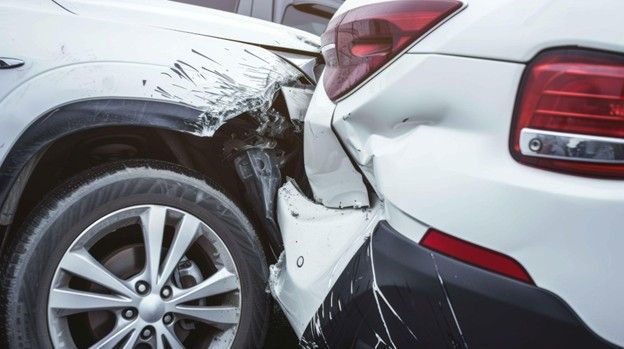
Most people assume the driver who rear-ends another vehicle automatically takes the blame. It is an understandable assumption because the following vehicle made the physical impact, but Georgia law requires a closer look at how the collision actually happened.
The following driver’s speed, distance, attention, and reaction can be important, but so can the actions of the driver ahead. A sudden lane change, unexpected reversing, defective brake lights, or other circumstances may affect how responsibility is evaluated.
Anyone facing a disputed rear-end claim may speak with a car accident lawyer in Lawrenceville to better understand how the available evidence and Georgia law may apply to the collision.
Georgia Code Section 40-6-49 requires a driver not to follow another vehicle more closely than is reasonable and prudent, taking into account the speed of the vehicles, traffic, and highway conditions.
That rule is particularly relevant after a rear-end collision. Investigators and insurers may examine whether the following driver left enough distance to react when traffic slowed or stopped, whether the driver was distracted, and whether speed or road conditions affected the ability to stop.
A citation for following too closely may become part of the evidence surrounding a crash, but a traffic citation by itself should not be treated as the final determination of civil liability. Gauge Magazine’s look at whether a traffic citation proves fault after a car accident explains why the circumstances and other evidence still matter.
A rear-end impact does not mean every case has exactly the same explanation. Georgia law requires drivers to exercise reasonable care, and responsibility depends on the circumstances surrounding the collision.
The conduct of both drivers can therefore matter. Evidence may show that the following driver was traveling too closely or failed to react appropriately. In another situation, evidence may show that the lead vehicle made an unexpected movement or had an equipment problem that contributed to the collision.
The important question is not simply which vehicle struck the other from behind. It is what each driver was doing before the impact and whether those actions contributed to the crash.
Several situations can complicate what initially looks like a straightforward rear-end collision. None automatically transfers fault to the lead driver, but each may become relevant when determining how the collision occurred.
Georgia Code Section 40-8-25 contains requirements concerning vehicle brake lights. If defective lighting is alleged to have contributed to a crash, evidence about the condition of the lights and their connection to the collision may become relevant.
A rear-end collision can also involve shared responsibility. Georgia Code Section 51-12-33 provides for damages to be reduced according to the plaintiff’s percentage of fault.
For example, if damages are determined to be $50,000 and an injured person is found 20% responsible for the collision, the damages would be reduced by 20% to $40,000.
Georgia’s modified comparative-fault rule also establishes an important cutoff. A plaintiff who is 50% or more responsible is not entitled to recover damages under the statute.
This is why seemingly small details about the moments before a collision can become significant when fault is disputed. Responsibility should be evaluated using the complete evidence rather than assuming that the location of the impact settles every question.
A rear-end collision can happen in seconds, but several sources of evidence may help reconstruct what occurred before impact.
No single piece of evidence necessarily answers every liability question. Photographs may show only the aftermath, witnesses may see the crash from different angles, and electronic data varies by vehicle. The evidence is generally more useful when considered together.
Gauge Magazine’s guide to important evidence in a car accident injury claim explains how photographs, witness information, vehicle records, medical documentation, and other evidence can help establish a clearer picture of what happened.
Visible damage can also help investigators understand a rear-end collision, but the outside of the vehicle does not always tell the complete story.
A rear impact may affect bumper components, structural areas, the trunk floor, exhaust mounts, suspension points, sensors, and other components that are difficult to see during a roadside inspection. Gauge Magazine has examined hidden collision damage after a minor accident and why an apparently simple bumper impact may require a closer inspection.
Damage patterns may also help establish points of contact or support portions of a driver’s account, although vehicle damage alone does not automatically determine who was legally responsible for the collision.
No. A rear-end collision can provide strong reasons to examine the actions of the following driver, particularly whether that driver maintained a reasonable following distance and reacted appropriately to traffic ahead. But the fact that one vehicle struck another from behind does not automatically resolve every question of liability.
A complete evaluation should consider the actions of both drivers, vehicle condition, road and weather conditions, witness accounts, photographs, video, citations, and any other reliable evidence connected to the crash.
The circumstances leading up to the impact ultimately matter more than simply assuming that the position of the two vehicles tells the entire story.
The post Rear-End Accident in Lawrenceville: Is the Driver Behind Always Liable? appeared first on Gauge Magazine.