Would you buy a car that doesn’t have a steering wheel, brake pedal, or even traditional mirrors? Tesla is betting that some consumers will, and the company wants to make that possibility a reality before 2026 comes to an end. During Tesla’s third-quarter earnings call, company executives revealed plans to begin delivering the futuristic Cybercab to customers by December, even as federal regulators investigate whether the fully autonomous vehicle complies with existing safety standards. According to Reuters, Tesla Vice President of Vehicle Engineering Lars Moravy confirmed that the automaker is targeting initial customer deliveries before the end of the year, although the rollout would begin on a relatively small scale. It’s another ambitious timeline from Tesla, which has spent years promising a future where vehicles handle virtually every aspect of driving without human intervention. This time, however, the company has already put a limited number of Cybercabs into commercial service, making the latest announcement particularly interesting.
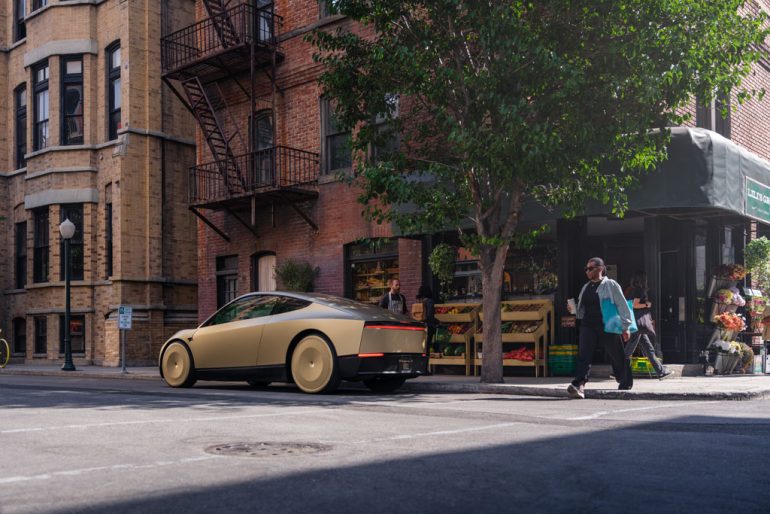
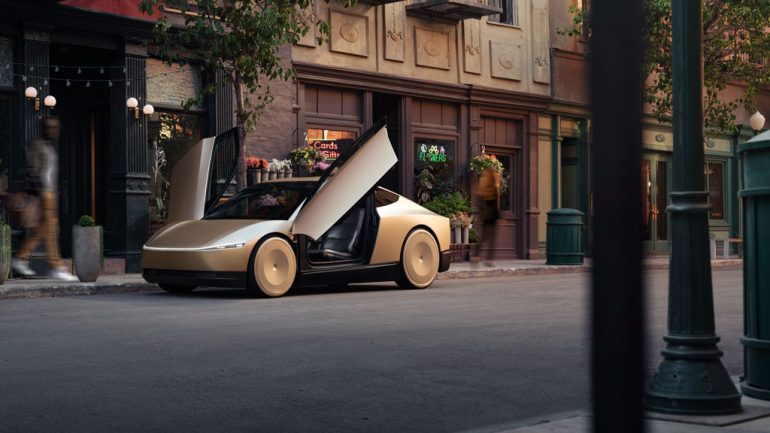
The Tesla Cybercab is unlike anything currently available to ordinary American car buyers. The compact, gold-colored electric vehicle features seating for two passengers, dramatic butterfly-style doors, and an interior completely devoid of conventional driving controls. There are no pedals, no steering wheel, and no traditional side mirrors because Tesla designed the Cybercab specifically for autonomous operation. CEO Elon Musk sees the vehicle as a cornerstone of Tesla’s transformation from an electric car manufacturer into a company increasingly focused on artificial intelligence, robotics, and autonomous transportation. Tesla began offering paid rides in a limited number of Cybercabs in Austin, Texas, in September, marking an important milestone after years of development and missed projections. The company also intends to expand its robotaxi service to Dallas in November, gradually building a network that includes both purpose-built Cybercabs and specially equipped Tesla Model Y vehicles.
Unfortunately for Tesla, federal regulators aren’t quite ready to embrace the steering-wheel-free future without asking some important questions. The National Highway Traffic Safety Administration (NHTSA) opened an investigation shortly after Cybercab service began in Austin, examining how Tesla determined that the vehicle meets applicable Federal Motor Vehicle Safety Standards. Many of those regulations were developed decades ago around vehicles operated by human drivers, requiring equipment such as brake pedals, steering controls, and mirrors. Tesla, like other automakers operating in the United States, is responsible for certifying that its vehicles comply with federal safety requirements. However, NHTSA is now reviewing the technical evidence and reasoning behind Tesla’s certification, particularly whether the company considered certain regulations inapplicable to a vehicle designed without human controls. Tesla has until October 30, 2026, to respond to the agency’s questions. While regulators have proposed updating safety standards to better accommodate fully autonomous vehicles, those changes haven’t yet been finalized, leaving Tesla facing some significant regulatory uncertainty.
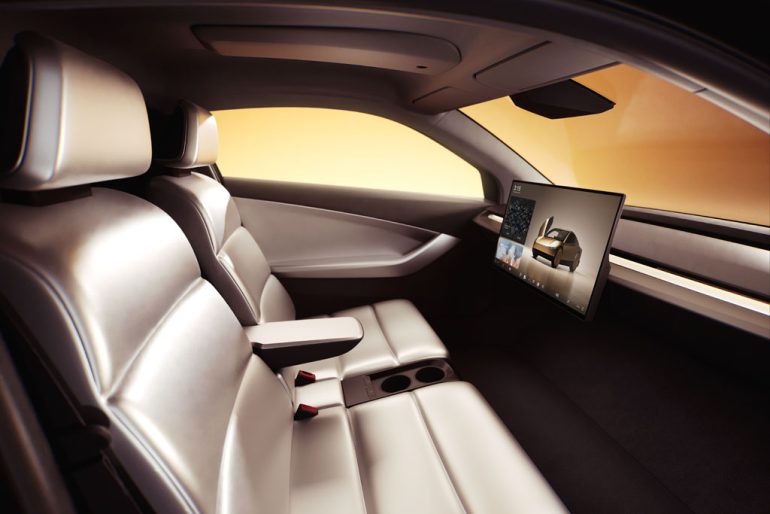
Despite the investigation, Tesla executives appear confident that Cybercab production can expand relatively quickly once the necessary regulatory issues are addressed. Ashok Elluswamy, Tesla’s head of artificial intelligence, told analysts that manufacturing the Cybercab should be comparatively straightforward, describing it as one of the company’s easier products to scale. The bigger challenge, according to Tesla, involves securing the necessary approvals to deploy vehicles as rapidly as they can be manufactured. Interestingly, Musk also indicated that most Cybercabs will initially remain under Tesla ownership and operate within the company’s ride-hailing network rather than being sold directly to individual consumers. That creates an important distinction between Tesla’s ambitious plans to offer the Cybercab to the public and the company’s immediate focus on building a commercial autonomous transportation service. While some customers may eventually be able to purchase their own Cybercab, questions remain about pricing, ownership requirements, insurance, and where privately owned vehicles could legally operate.
We think the Cybercab represents one of Tesla’s most fascinating and controversial projects, largely because it challenges the fundamental idea of what a car should be. There’s certainly potential for autonomous vehicles to transform transportation, particularly for people who cannot drive or those who simply want a more convenient way to get around. However, removing conventional driving controls entirely raises legitimate concerns about safety, reliability, and what happens when automated systems encounter situations they cannot handle. Tesla has already demonstrated that its Cybercab can carry paying passengers in a limited operating environment, but expanding that capability into widespread public use is an entirely different undertaking. Given Tesla’s history of optimistic production timelines and delayed autonomous driving promises, we’ll be watching this latest deadline with some healthy skepticism. If Tesla actually begins delivering Cybercabs to customers before the end of 2026, it would represent a significant milestone for autonomous transportation. For now, though, the biggest question isn’t necessarily whether Tesla can build enough Cybercabs, but whether regulators and consumers are ready for a vehicle that leaves all the driving to a computer.