Nine roadsters were chasing one of the biggest trophies in hot rodding, but the Grand National Roadster Show 2026 was a whole lot bigger than the fight for America’s Most Beautiful Roadster. That’s always been part of the appeal of GNRS. You can spend time studying an elite-level ’32 Ford built to win AMBR, turn a corner and find a radical custom, then move into another building filled with traditional rods, lowriders, trucks, motorcycles and race cars.
For its 76th running, the Grand National Roadster Show returned to the Fairplex in Pomona, California, January 30 through February 1, 2026. The indoor show spread across nine buildings, while the 20th Annual Grand Daddy Drive-In added another side of the show outside. The result was a pretty good cross-section of where hot rodding and custom-car culture have been—and where builders are still taking it.
Photographer Cheri Delgadillo covered the show for Gauge Magazine, and her 199-photo gallery gives us plenty to dig into. Cheri also shot our Grand National Roadster Show 2025 coverage, so if you want to compare the cars and competition from Pomona’s 75th anniversary with the 2026 show, we’ve got both.
You can’t talk GNRS without talking AMBR. The America’s Most Beautiful Roadster trophy has been part of the show since 1950, and winning it puts a car into a lineage that hot rodders have been following for generations. The trophy may say “roadster,” but at this level you’re looking at complete builds where stance, bodywork, paint, trim, interior, chassis detailing and the smallest finishing choices all matter.
For 2026, that trophy went to Nicole Baird’s 1932 Ford roadster “Blue Ribbon,” built by Squeeg’s Kustoms. The ’32 also picked up the Von Dutch Pinstriping Award, making it an especially strong weekend for the blue-and-white Ford.
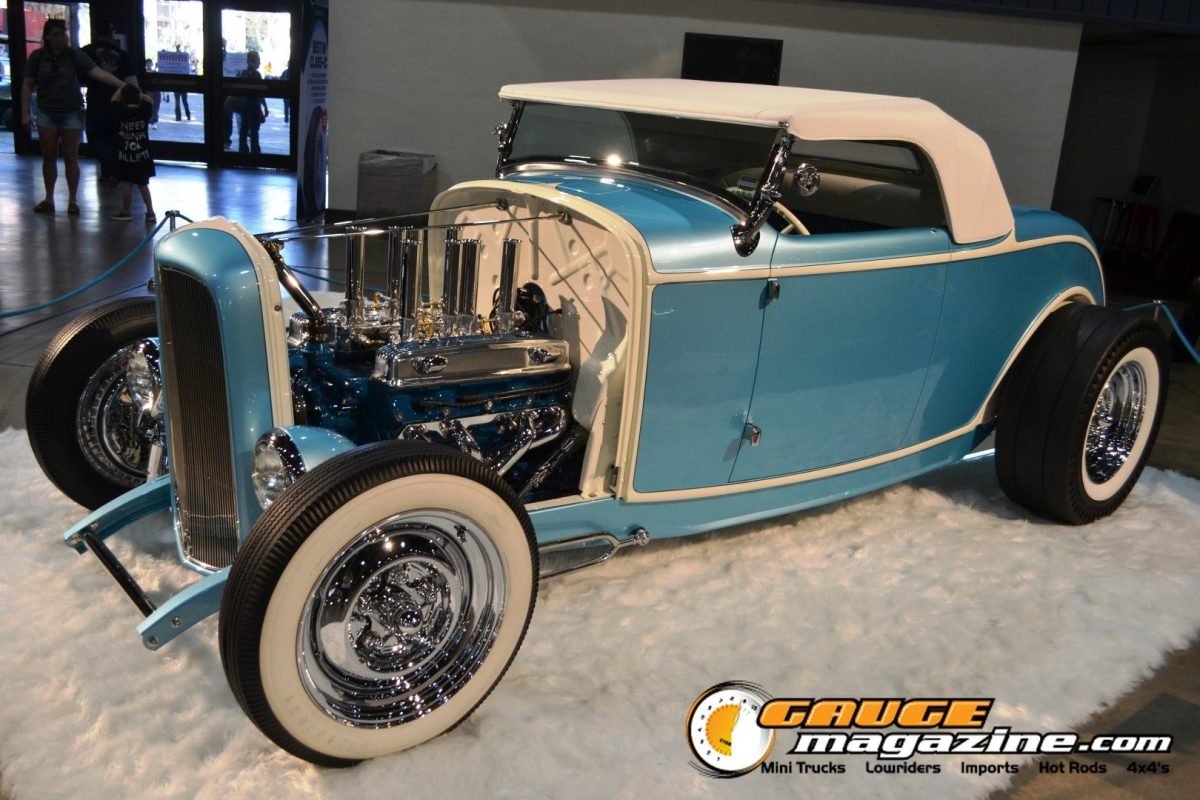
That’s the car that leaves Pomona with the headline, but focusing only on the AMBR winner misses what makes this competition worth following. Getting into the AMBR field means bringing a roadster capable of being examined as a complete package. Different builders can approach that problem from completely different directions, which is why the contenders themselves are worth studying even after the trophy has been handed out.
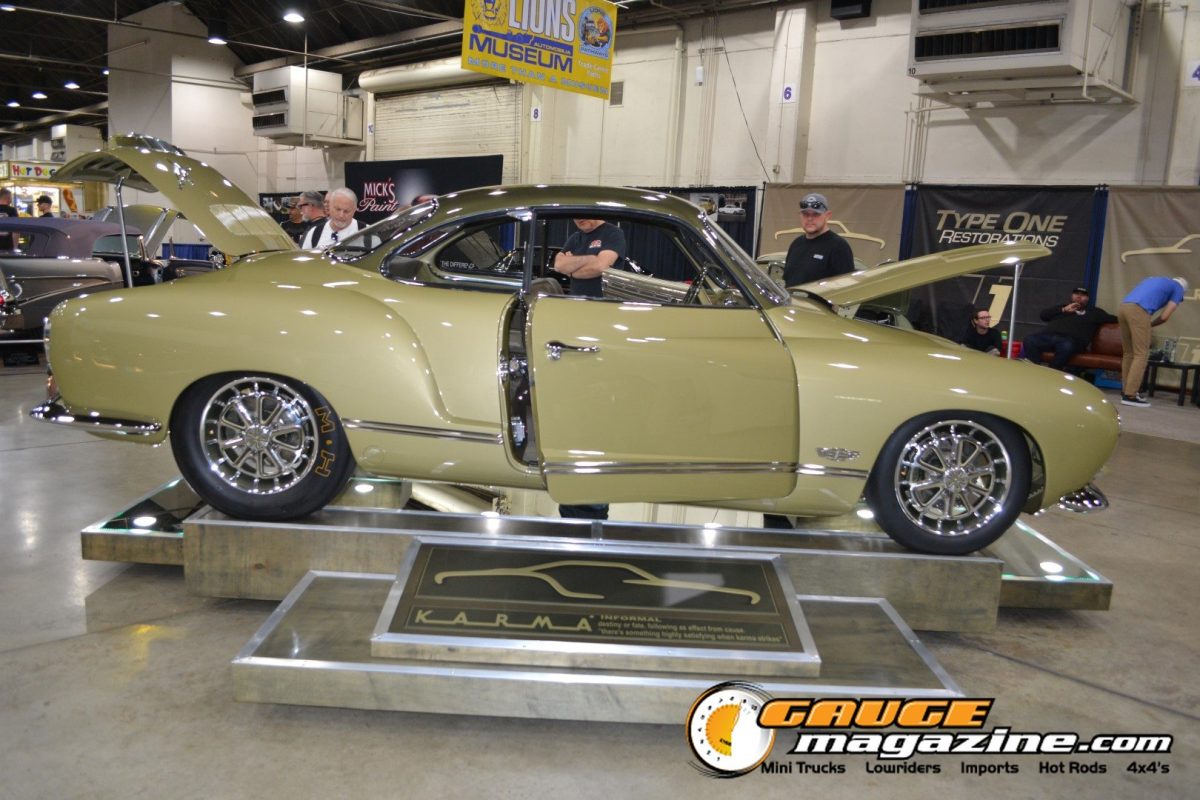
The Al Slonaker Memorial Award is where GNRS can get especially interesting. It gives the top non-roadster debut at the show its own major prize, and in 2026 a 1955 Volkswagen Karmann Ghia walked away with it.
Dennis Troggio’s Karmann Ghia, built by Type One Restorations, is exactly the kind of result that shows how broad the Grand National Roadster Show has become. Put a ’55 Volkswagen next to the Fords, Chevrolets, traditional rods and American customs most people associate with GNRS and it could sound like the odd car out. At this level, though, the badge on the nose isn’t enough. Execution matters.
The Sweepstakes winners stretched the field even farther. Danny Schaffer’s 1933 Ford Roadster Pickup took Sweepstakes Rod, Eugene Bothello’s 1959 Chevrolet Impala earned Sweepstakes Custom, Gary Holyoak’s 1963 Chevrolet C10 won Sweepstakes Truck, Craig DeJong’s 1969 Chevrolet Camaro took Sweepstakes Street Machine/Competition, and Mario Serrano’s 1953 Chevrolet Bel Air earned Sweepstakes Restored.
Look back at Gauge Magazine’s Grand National Roadster Show 2024 coverage and you can see why following GNRS year after year is worthwhile. The trophies stay the same, but the cars competing for them keep changing.
Then there was Fat Attack.
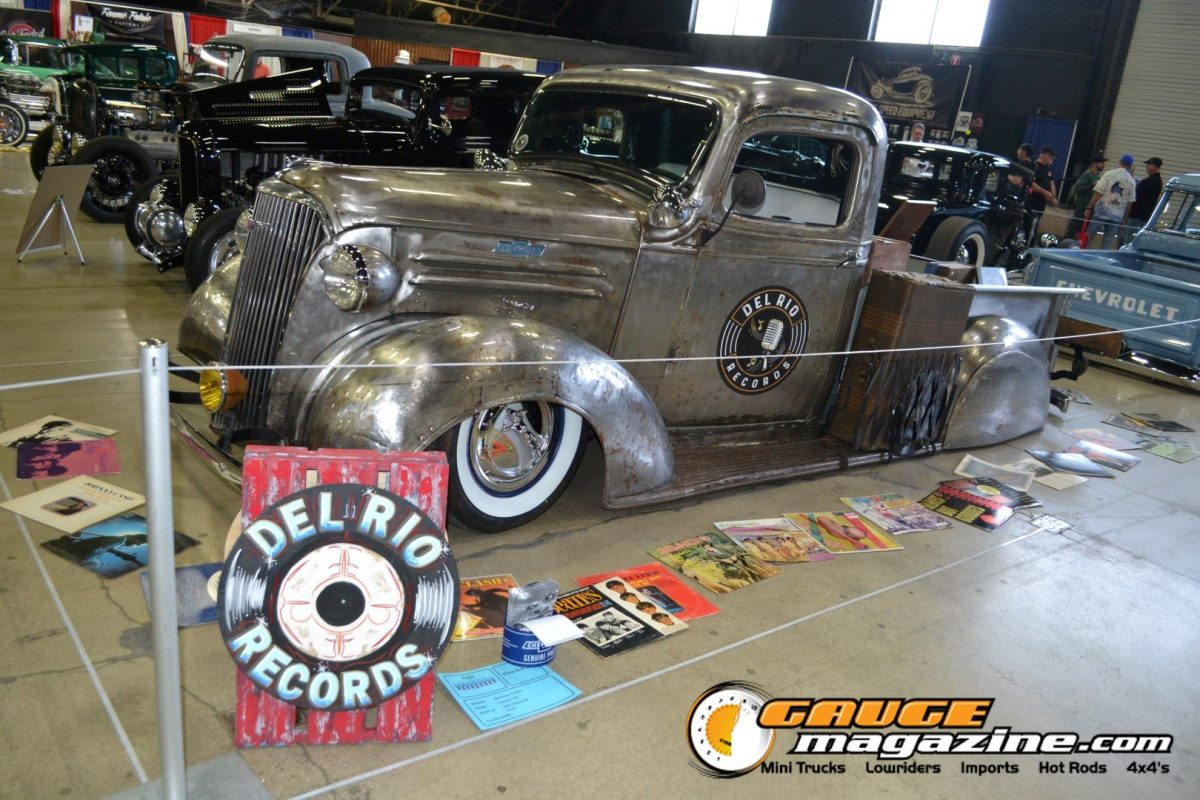
The 2026 Feature Building was dedicated to cars and trucks from 1935 through 1948—the fat-fender years when American body design moved away from the upright shapes of the early hot-rod era and into wider fenders, flowing grilles and increasingly rounded sheetmetal.
For a hot rodder, that’s a deep pool to work from. A late-’30s or ’40s Ford can become a traditional custom, street rod, gasser or something much harder to put into one box. The same goes for the pickups, sedans and coupes from the period. Fat Attack wasn’t interesting just because the vehicles shared an age range. It was the different ways builders interpreted that old steel.
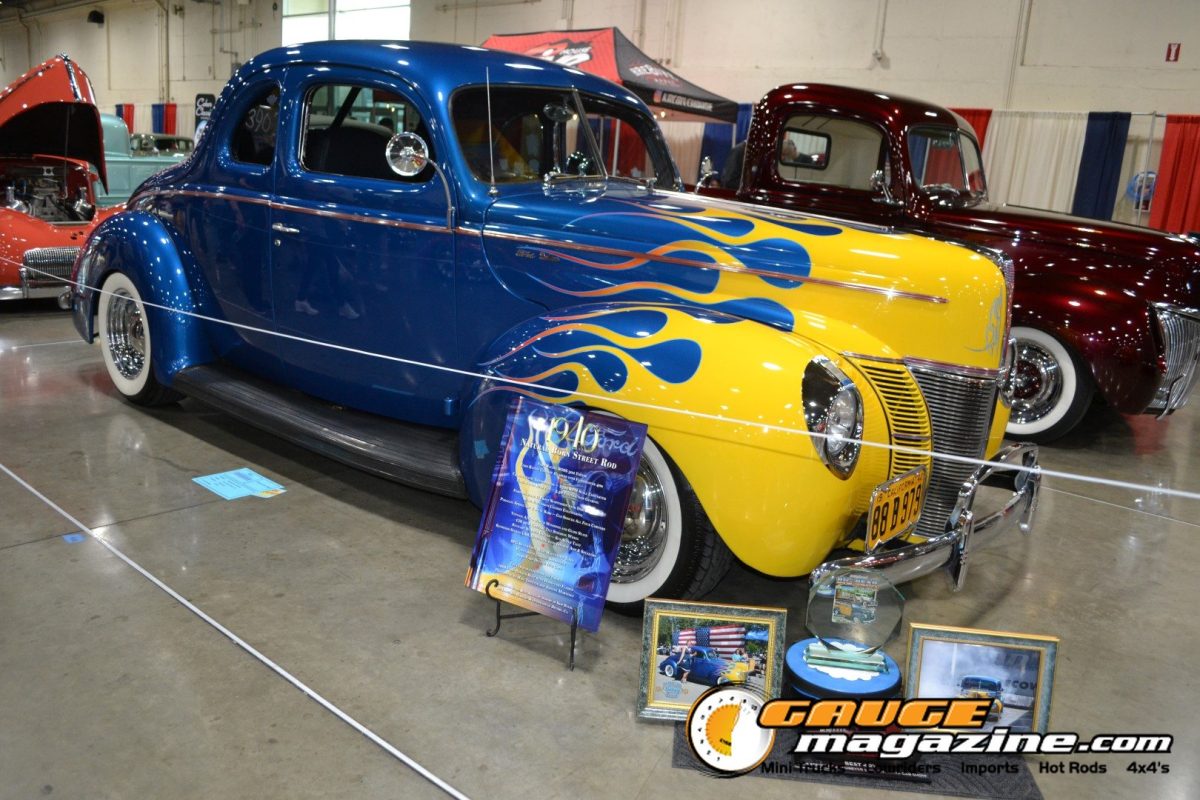
GNRS has been using its Feature Building to dig into specific corners of automotive history since 2007, with previous displays centered on everything from Deuces and Model A Fords to drag racing, land-speed cars, muscle cars and classic trucks. Fat Attack fit the show because these aren’t forgotten cars being displayed as museum pieces. They’re still raw material for builders.
The big awards give GNRS its prestige, but some of the most interesting browsing starts when you quit worrying about who is going home with a trophy.
The Suede Palace keeps traditional hot rodding and customs in the conversation, where the attitude is very different from the polished cars competing at the highest level of the main show. Then you’ve got lowriders, street machines, custom pickups, restored cars, motorcycles, race-inspired builds and combinations that don’t fit neatly into any one category.
That’s important. Hot rodding has never moved in one straight line. Some builders chase period-correct details. Others want flawless contemporary construction. Somebody else wants a radical stance, a chopped roof, custom bodywork or a truck laid down over the wheels. GNRS works because those different ideas can exist at the same event without pretending they’re all trying to accomplish the same thing.
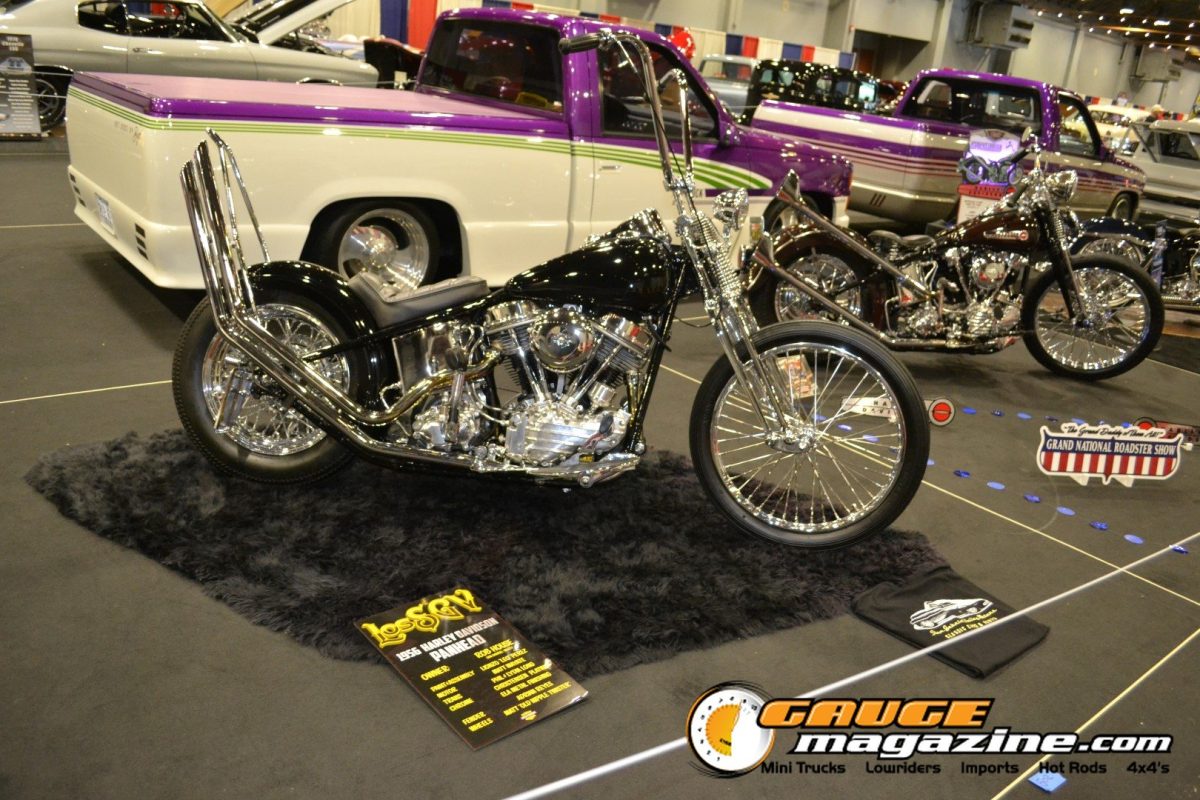
That’s also why Cheri’s full gallery is worth going through instead of stopping at the award winners. There are details buried in these cars that don’t show up in a list of results—wheel and tire combinations, body modifications, paint choices, engine bays, interiors, fabrication and dozens of different approaches to stance and proportion.
After enough time under the lights inside the Fairplex buildings, the Grand Daddy Drive-In changes the pace.
The outdoor portion celebrated its 20th year in 2026, bringing another group of hot rods, customs, classics, muscle cars and trucks onto the grounds. These aren’t just extra cars that couldn’t fit inside. The Drive-In has become its own part of the GNRS formula.
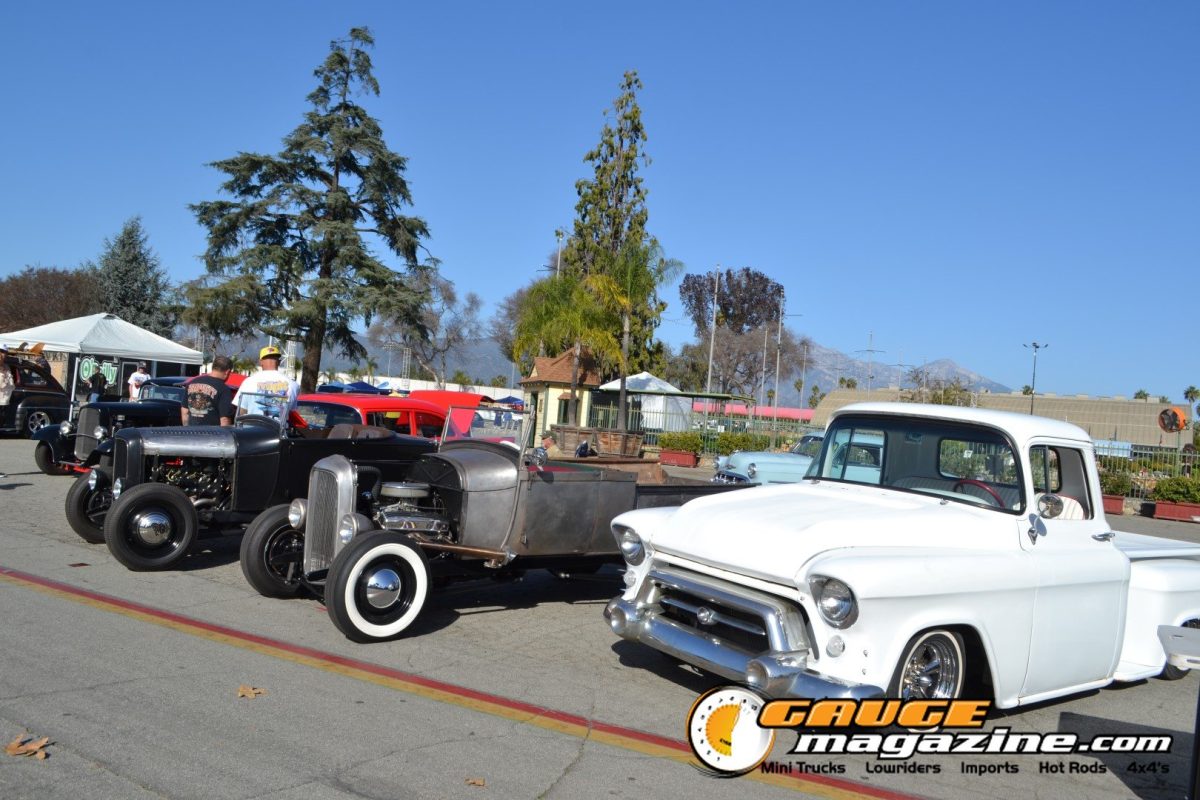
It also gives you a different look at the hobby. Inside, you’re naturally drawn toward debut vehicles, judged competition and cars finished to an extreme level. Outside, the mix opens up. You get the kind of cars and trucks enthusiasts actually build across a much wider slice of the hobby, sitting in California daylight instead of under show lighting.
Put the indoor show and the Drive-In together and the scale of GNRS starts making more sense. The nine AMBR contenders are important, but they’re sitting at the sharp end of a much larger culture.
A show doesn’t make it to number 76 just because it has an old name.
GNRS still works because it hasn’t reduced hot rodding to one definition. A Squeeg’s-built 1932 Ford can take America’s Most Beautiful Roadster. A Type One Restorations-built 1955 Volkswagen Karmann Ghia can grab the Slonaker. A building full of fat-fender iron can celebrate cars from the ’30s and ’40s, while traditional rods, lowriders, trucks, motorcycles and street machines fill out the rest of the grounds.
That’s a much better picture of the hobby than pretending everybody wants to build the same car.
The trophies matter. The builders who chase them are operating at a level that deserves the attention they get. But the reason the Grand National Roadster Show remains worth covering is everything surrounding those trophies—the different eras, styles, ideas and people still finding new things to do with old cars.
We’ve only scratched the surface here. Gauge Magazine’s complete 199-photo Grand National Roadster Show 2026 gallery goes much deeper into the AMBR competition, award cars, Fat Attack, traditional hot rods, customs, trucks, motorcycles and the Grand Daddy Drive-In.
Photography by Cheri Delgadillo for Gauge Magazine.
The post 76th Annual Grand National Roadster Show: Pomona’s Best Come to Play appeared first on Gauge Magazine.