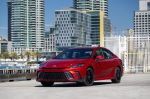
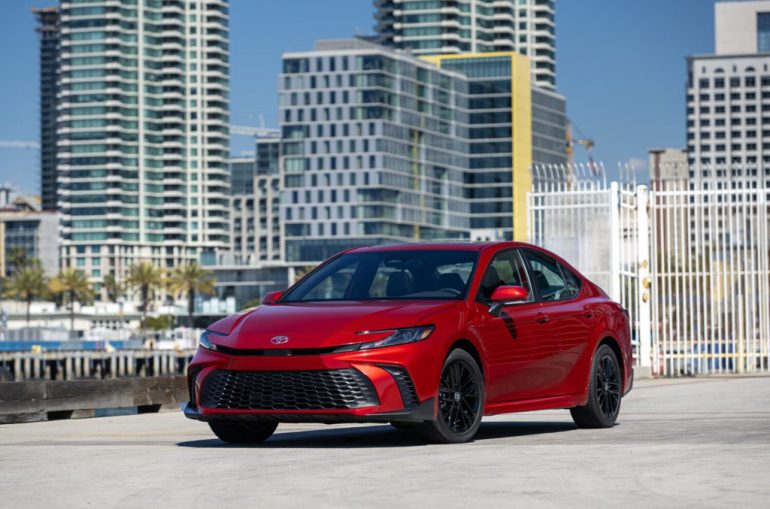
The Toyota Camry is now exclusively a hybrid. Toyota made the switch for the eighth-generation redesign and the 2027 model continues on that path: every Camry sold in the U.S. pairs a 2.5-liter four-cylinder with the fifth-generation Toyota Hybrid System, and there is no gasoline-only option. The result is a midsize sedan that starts at $29,700 and delivers up to 51 mpg combined on the entry LE trim — numbers no conventional gas midsize sedan can touch. For 2027, prices increase by $700 across all trims while content and powertrain carry over unchanged from 2026. All-wheel drive is available on every trim for $1,525 additional. Here is what dealers paid and what you should be targeting.
The 2027 Camry is available in ten configurations across five trim levels: LE, SE, Nightshade, XLE, and XSE, each offered in FWD and AWD. Prices below exclude the destination charge.
| Trim | MSRP | Invoice | Gap |
|---|---|---|---|
| LE FWD | $29,700 | $27,325 | $2,375 |
| AWD LE | $31,225 | $28,727 | $2,498 |
| SE FWD | $32,200 | $29,624 | $2,576 |
| Nightshade FWD | $33,200 | $30,544 | $2,656 |
| AWD SE | $33,725 | $31,028 | $2,697 |
| AWD Nightshade | $34,725 | $31,948 | $2,777 |
| XLE FWD | $34,900 | $32,109 | $2,791 |
| XSE FWD | $36,100 | $33,213 | $2,887 |
| AWD XLE | $36,425 | $33,511 | $2,914 |
| AWD XSE | $37,625 | $34,615 | $3,010 |
Invoice figures sourced from AutoFinder. Some pricing sources may list different MSRPs. Always verify the current MSRP on the window sticker before making an offer.
Toyota has not formally published the destination charge for the 2027 Camry at the time of this writing. Based on the 2026 Camry’s destination charge and Toyota’s typical freight structure for Kentucky-built vehicles, expect approximately $1,095 to $1,200. With destination, the LE FWD comes to roughly $30,800 to $30,900 at entry, and the AWD XSE reaches approximately $38,700 to $38,825 fully configured before options. Confirm the exact destination charge with your dealer at time of purchase.
The 2027 Camry is a carryover model with one change: price. Every trim increases by $700 versus the equivalent 2026 configuration. The powertrain, platform, feature content, available options, and trim structure are unchanged from 2026. Toyota did not add new standard features, new available technology, or new trims to justify the price increase; the $700 is a straightforward annual price adjustment on a vehicle that continues to sell well without incentivization.
For buyers who were shopping the 2026 Camry, the 2027 is the same vehicle at a higher price. The 2026 model may still be available at some dealers at a discount, and comparing the out-the-door price on a remaining 2026 versus a 2027 is worth doing before committing.
Every 2027 Camry uses a 2.5-liter four-cylinder gasoline engine paired with an electric motor and lithium-ion battery through Toyota’s fifth-generation Hybrid System (THS 5). Power flows through an electronically controlled CVT. FWD models produce 225 net combined horsepower. AWD models add a rear-mounted electric motor generator for 232 net combined horsepower; the AWD system operates on-demand and does not require driver intervention to engage.
The Camry’s hybrid system is self-charging. There is no plug, no charging cable, and no range anxiety. The battery replenishes through regenerative braking and engine charging during normal driving. It operates identically to a conventional vehicle at a gas station.
EPA fuel economy — FWD trims:
EPA fuel economy — AWD trims:
These figures reflect the 2026 EPA ratings on the same unchanged powertrain; Toyota has confirmed 51 mpg combined on the 2027 LE FWD. The sport-tuned suspension and larger wheels on SE, Nightshade, and XSE trims account for the efficiency drop versus the LE. The XSE AWD’s 43 mpg combined is the lowest-rated Camry configuration and still exceeds almost every non-hybrid competitor in this segment. Regular unleaded fuel is recommended across the entire lineup.
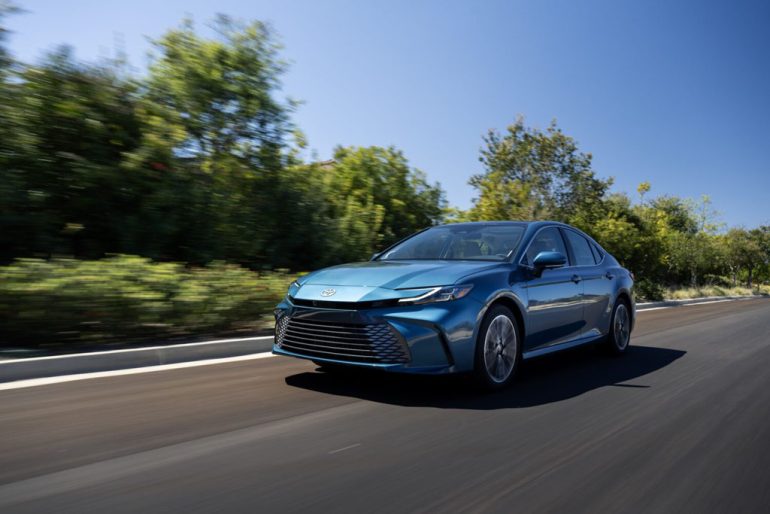
Fuel tank: 13.2 gallons. At 46 combined mpg, a full tank on the SE FWD covers approximately 607 miles. At 51 combined mpg, the LE FWD covers approximately 673 miles.
The LE FWD ($29,700) is the entry point and the fuel economy benchmark. Standard content includes a 7-inch digital gauge cluster, an 8-inch touchscreen with wireless Apple CarPlay and Android Auto, Qi wireless charging, five USB ports, a six-speaker audio system, dual-zone automatic climate control, push-button start, LED headlights, heated front seats, woven fabric seating, and Toyota Safety Sense 3.0 with pre-collision warning, automatic emergency braking, lane departure alert with steering assist, automatic high beams, and radar-based cruise control. Blind-spot monitor with rear cross-traffic alert and Safe Exit Alert are also standard. The LE is the value anchor of the Camry lineup and the trim that maximizes fuel economy at the lowest price point.
The LE AWD ($31,225) adds Electronic On-Demand AWD for $1,525 over the FWD. At 50 mpg combined, it costs just 1 mpg compared to the FWD LE. For buyers in markets with meaningful winter weather, the AWD LE is one of the most fuel-efficient all-weather sedans available at any price.
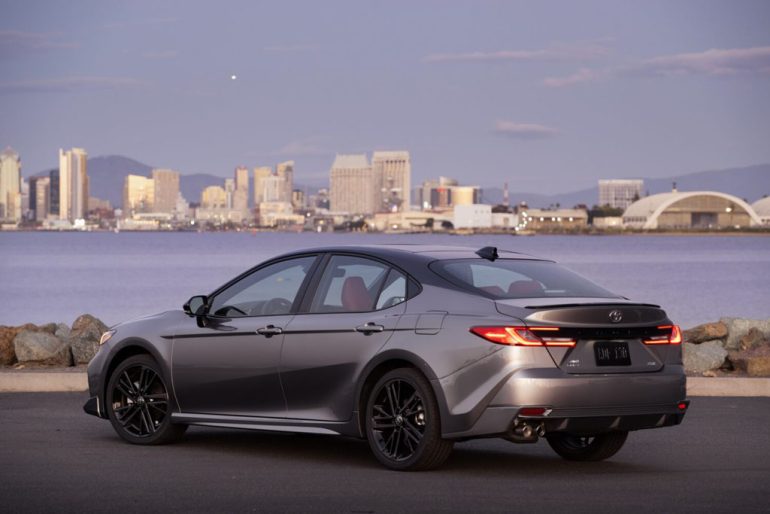
The SE FWD ($32,200) is the sport-flavored Camry. Over the LE, it adds a sport-mesh grille, sport-tuned suspension, 18-inch black alloy wheels, SofTex synthetic leather seats with white accent stitching, aluminum sport pedals, paddle shifters, a rear spoiler, and dual exhaust tips. The SE does not add the XLE’s premium interior materials or the larger gauge cluster; it is an appearance and dynamics package rather than a luxury step up. For buyers who want a more aggressive look at a reasonable premium over the LE, the SE is the right choice.
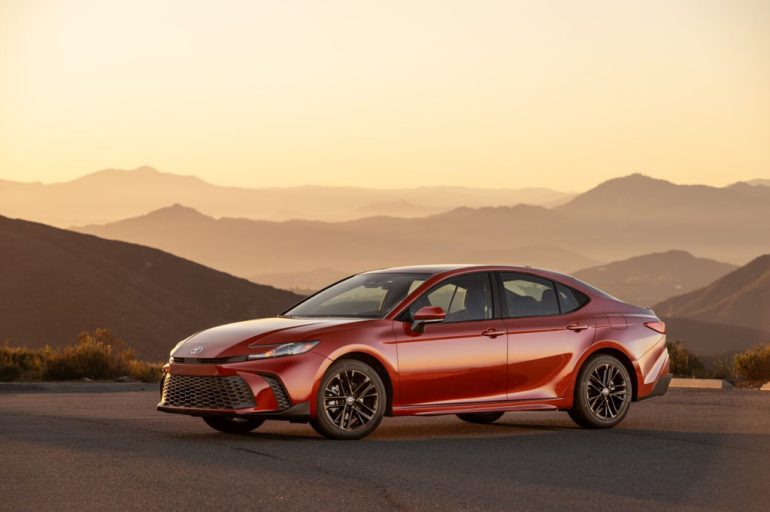
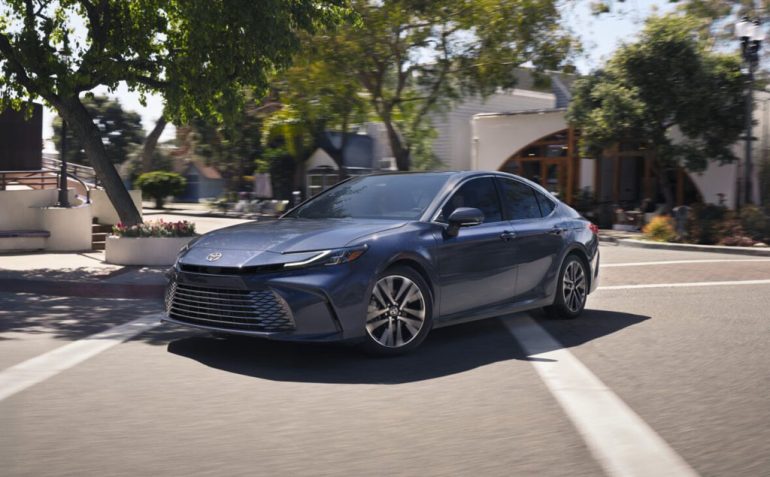
The Nightshade FWD ($33,200) and AWD ($34,725) share the SE’s powertrain configuration and sport-tuned suspension but swap the chrome and body-color accents for Midnight Black Metallic exterior trim, blacked-out badging, and 19-inch dark wheels. The Nightshade is available in a limited color palette: Ice Cap white, Supersonic Red, or Midnight Black Metallic. If the blacked-out aesthetic is what you want, the Nightshade delivers it at a $1,000 premium over the SE in each drivetrain configuration.
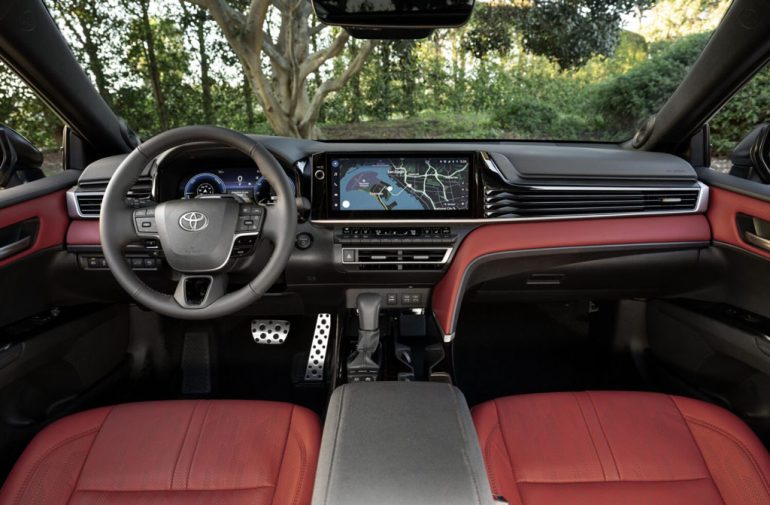
The XLE FWD ($34,900) and AWD ($36,425) are the premium everyday Camry. Over the SE, the XLE adds a standard 12.3-inch digital gauge cluster, leather and Dinamica microfiber seat trim, standard heated and available ventilated front seats, 8-way power-adjustable front seats, acoustic-laminated front side glass for reduced cabin noise, a standard wireless phone charger, an 18-inch alloy wheel upgrade in a different finish, available memory settings for the driver’s seat and mirrors, an available 10-inch head-up display, an available nine-speaker JBL premium audio system, and an available power panoramic moonroof. The XLE is the choice for buyers who want a genuinely comfortable daily sedan with premium interior quality and room to add convenience technology. Its sport-tuned suspension is not included; buyers who want both the premium interior and the sport suspension must look at the XSE.
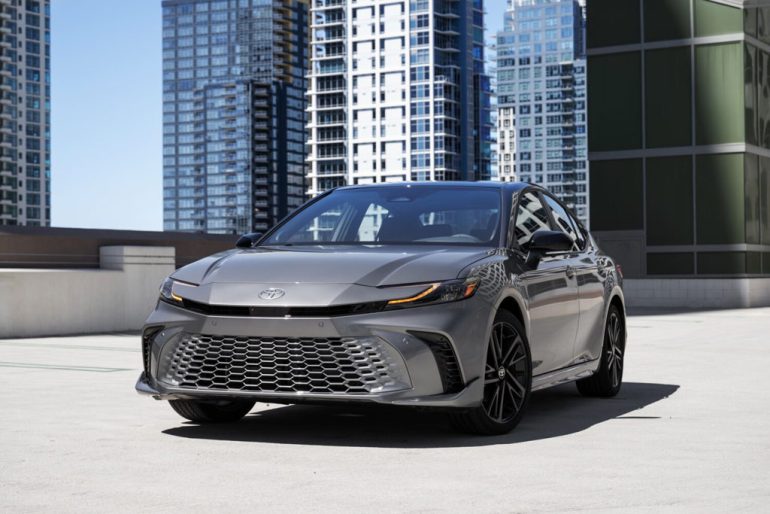
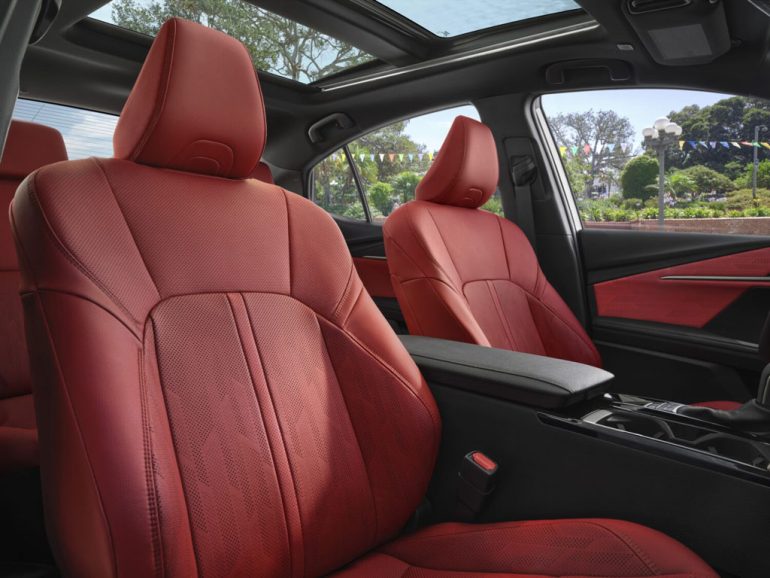
The XSE FWD ($36,100) and AWD ($37,625) combine the SE’s sport-tuned suspension and aggressive exterior styling with the XLE’s premium interior content, adding standard heated and ventilated front seats, perforated leather seating with “shooting blade” perforation patterns, 19-inch two-tone alloy wheels, and optional two-tone paint with a contrasting black roof. The XSE is the top of the Camry lineup in both price and content and the choice for buyers who want the sport character and the premium interior in one package. At $37,625 for the AWD XSE, it is the most expensive Camry configuration before options.
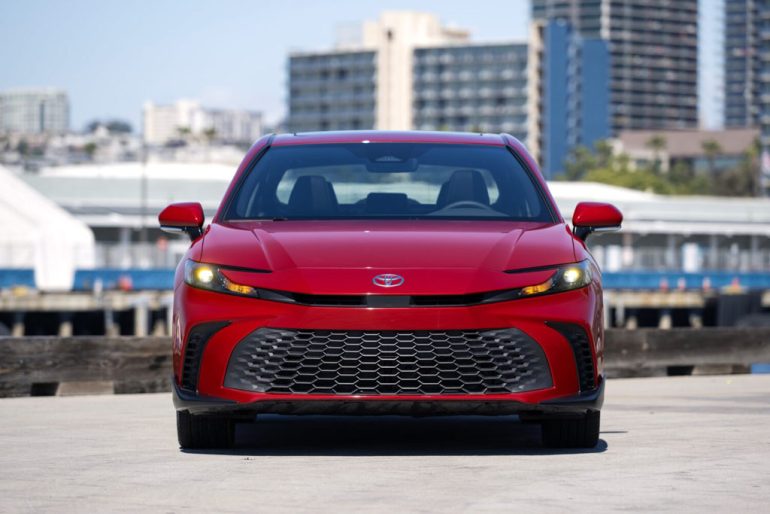
AWD is available on all five Camry trim levels at a consistent $1,525 premium. The AWD system adds a rear-mounted electric motor generator that engages on-demand; there is no driver control required. Combined output increases from 225 to 232 horsepower with AWD engaged.
The fuel economy penalty for AWD is minimal — typically 1 to 3 mpg depending on the trim, with the XSE AWD showing a larger drop at 43 versus 47 mpg combined FWD. For buyers in Jacksonville and other warm-climate markets where winter traction is not a consideration, the FWD Camry delivers the same powertrain, interior, and content at $1,525 less. The case for AWD is clearest for buyers in the Southeast, mid-Atlantic, Northeast, and Pacific Northwest who encounter wet roads and occasional winter conditions. At $1,525, the AWD premium on a vehicle that will be owned for 5 to 7 years represents a relatively modest per-year cost for meaningful all-weather confidence.
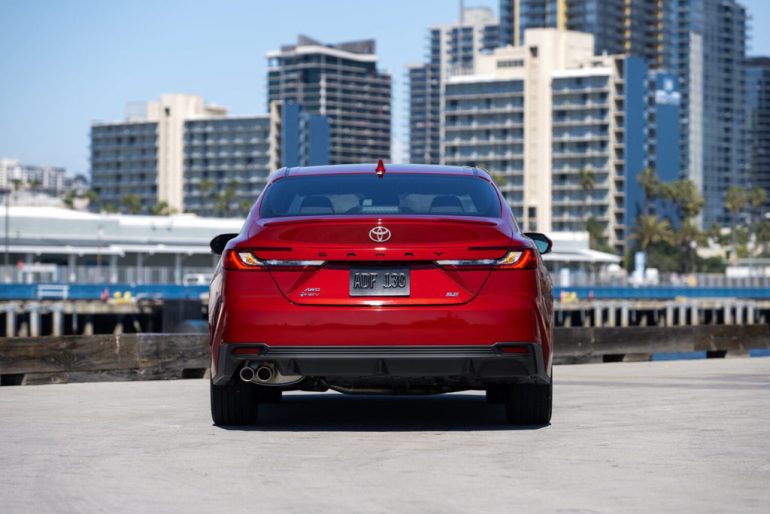
Toyota’s hybrid battery warranty on the 2027 Camry is a significant ownership advantage that is worth calling out explicitly. The warranty covers hybrid components for 8 years / 100,000 miles and the hybrid battery specifically for 10 years / 150,000 miles — and it is transferable to subsequent owners. This warranty means that a buyer who purchases a 2027 Camry and sells it at year 5 passes along 5 more years of battery coverage to the next owner, which supports resale value. For buyers who plan to keep the vehicle long-term, the 10-year battery coverage dramatically reduces the financial risk of hybrid battery replacement, which typically costs $3,000 to $5,000 or more out of warranty.
The standard basic warranty is 3 years / 36,000 miles and the powertrain warranty is 5 years / 60,000 miles — shorter than what Kia and Hyundai offer on their comparable vehicles, but the hybrid battery coverage specifically is longer than most competitors. ToyotaCare includes one year or 10,000 miles of complimentary scheduled maintenance and three years of roadside assistance.
As of early November 2026, Toyota typically offers modest incentive support on the Camry because the vehicle sells consistently without significant dealer motivation. Toyota does not commonly offer substantial purchase allowances on the Camry in markets where inventory is balanced. Regional lease programs exist and vary monthly; some markets see conquest offers for buyers switching from competing brands. ToyotaCare’s complimentary maintenance adds real ownership value that does not appear in the sticker price comparison. Check Toyota’s website for the current month’s programs before signing paperwork, as incentives update monthly and vary by region.
The 2027 Camry’s invoice gaps run from $2,375 on the LE FWD to $3,010 on the AWD XSE. These are meaningful gaps in absolute dollars for a mid-$30,000 vehicle, but Toyota’s strong market position and consistent Camry demand mean dealers have less motivation to negotiate than on vehicles from brands with more competitive pressure.
Invoice is your anchor. On the SE FWD at $32,200 MSRP with an invoice of $29,624, a realistic opening offer is $30,200 to $30,800 before destination. On the XLE FWD at $34,900 with an invoice of $32,109, targeting the $32,500 to $33,000 range before destination is a credible starting position. On the top AWD XSE at $37,625 with an invoice of $34,615, the $3,010 gap gives you real room: a target of $35,200 to $35,800 before destination positions you close to invoice while leaving room for the dealer.
The 2026 comparison is worth making. The 2027 Camry is identical to the 2026 in every meaningful way except price. If your local Toyota dealer has remaining 2026 inventory, compare the out-the-door price on a similarly configured 2026 versus the 2027. A 2026 SE FWD discounted to clear could easily undercut the equivalent 2027’s invoice price, and you are getting the same vehicle.
Toyota dealers are consistent on price. Unlike some brands where dealer negotiating flexibility varies dramatically between stores, Toyota dealers tend to hold closer to market pricing on in-demand vehicles. Getting quotes from two to three dealers via email is still the right approach, but do not expect the same magnitude of negotiating flexibility you would find at a Mitsubishi or Kia dealer with excess inventory. The Camry’s consistent demand means dealers are rarely in a position where they need to move units at a loss.
Factor in total cost of ownership. At 46 to 51 mpg combined across most configurations, a Camry owner driving 15,000 miles per year at $3.50 per gallon spends approximately $1,020 to $1,140 annually on fuel — roughly $400 to $600 less per year than a comparable conventional gas midsize sedan at 32 to 35 mpg. Over five years of ownership, that fuel saving approaches $2,000 to $3,000, which offsets a portion of any price premium over conventional gas alternatives.
The midsize sedan segment has contracted significantly over the past decade, but the remaining players are strong. The Honda Accord Hybrid, Hyundai Sonata Hybrid, and Kia K5 are the primary competitors. The Camry’s advantages are its fuel economy lead, its 10-year / 150,000-mile transferable hybrid battery warranty, Toyota’s historically strong reliability reputation, and an interior that steps up meaningfully from the previous generation.
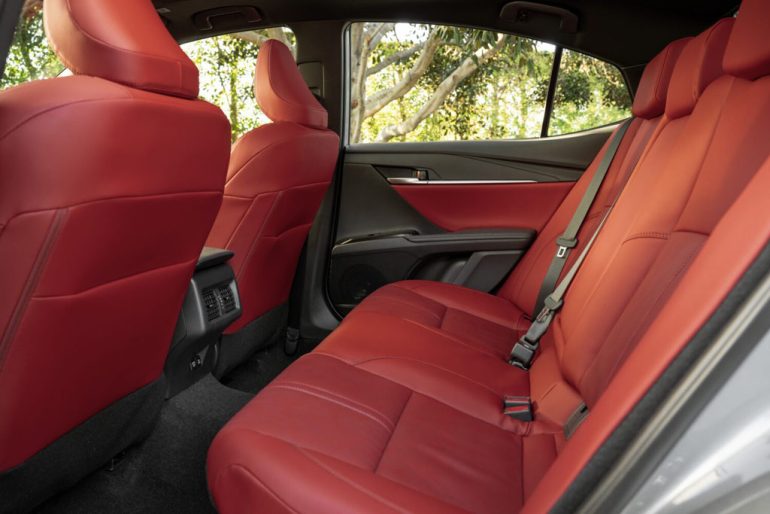
The Honda Accord Hybrid is the closest competitor, offering a larger interior in a wider body, a standard 1.5-liter turbocharged gas engine on the base trim and a hybrid system on higher trims, and comparable or slightly lower pricing. The Accord’s main advantages over the Camry are interior space and infotainment quality; the Camry’s main advantages are hybrid-across-the-lineup consistency and the stronger battery warranty.
The Hyundai Sonata Hybrid and Kia K5 compete at lower price points and offer stronger base warranty coverage (5-year/60,000-mile powertrain on Hyundai/Kia versus Toyota’s 5-year/60,000-mile) but trail the Camry on resale value and long-term reliability data. For buyers for whom resale value and reliability confidence are primary considerations, the Camry commands its pricing premium over Korean alternatives most convincingly.
The Camry’s main competitive limitation in 2027 is the $700 price increase on a vehicle with no content additions. Buyers who were planning to purchase based on 2026 pricing will need to adjust their target, and the value proposition of the LE FWD at $29,700 — while still strong on fuel economy and warranty — becomes slightly less compelling relative to competitors who held their pricing or added content. For buyers who prioritize long-term hybrid reliability, resale value, and industry-leading battery coverage, the 2027 Camry remains the benchmark midsize hybrid sedan in the U.S. market.