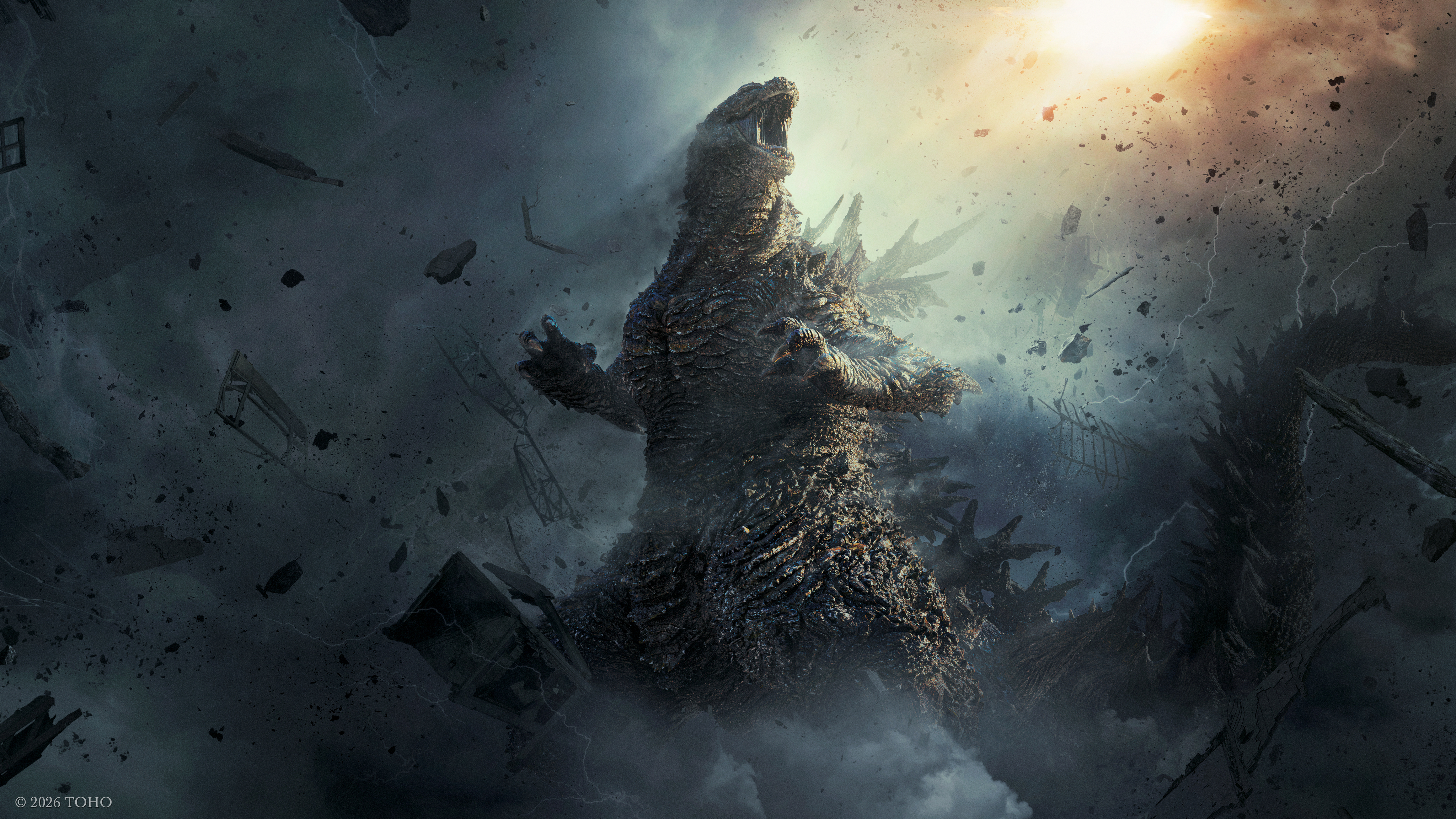
All monster movies can be read as metaphors, whether they’re intended to be or not: It’s not much of a stretch to intuit that the fearsome creatures we meet in the movies— whether they’ve been catapulted from outer space or brought to life by our own hubris—represent the unnamed fears we struggle with every day. Even so, there’s something particularly poignant about Godzilla, the raging reptilian behemoth who made his first appearance in the 1954 Japanese sci-fi classic of the same name. The United States had dropped the atomic bomb on Hiroshima only nine years before; Godzilla, stomping listlessly through the streets of Tokyo, was both a symbol of nuclear destruction and an expression of the kind of rage that can’t easily be put into words. He didn’t ask to be born, yet here he was, clumsy, solitary, misunderstood. If you could, you would shoot fire from your mighty jaws too.
Godzilla has been resurrected over the years, but rarely so inventively as in writer-director Takashi Yamazaki’s 2023 stunner Godzilla Minus One, in which a kamikaze pilot, Ryunosuke Kamiki’s Koichi Shikishima, tries to return to normal life in his shattered country, even as he feels shame over his own failure to take action in the war's last days. Godzilla Minus One wasn’t just a showcase for a magnificent monster; it was a thoughtful, beautifully paced picture, one that took its time to unfold, and its focus on human redemption was as delicate as its star kaiju was grand. Godzilla Minus One might have been a tough act to follow. But Yamazaki’s new Godzilla Minus Zero doesn’t so much try to surpass its predecessor as to cap it like a protective bookend. It’s a magnificent entertainment with a melancholy heart.
It’s 1949, shortly after the events of the earlier film, and Koichi has at last leaned into the comforts of domestic happiness with Noriko (Minami Hamabe), the woman he met, and at first resisted, after his wartime return, and their adopted daughter Akiko (Sae Nagatani). Godzilla has supposedly been vanquished, though of course we’ll learn otherwise. And as Japan rebuilds from both wartime devastation and from Godzilla’s rampage through various cities, including Tokyo, a new threat arrives from outer space—and this one can fly. Ghidorah is an elegant flying beastie straight from the margins of a medieval manuscript. His head, aglitter with feathery scales, is small, neat, furious; his wingspan could wipe out several city blocks at once. He shoots a golden death beam from his beaked mouth, and he has regenerative powers that appear to make him indestructible.
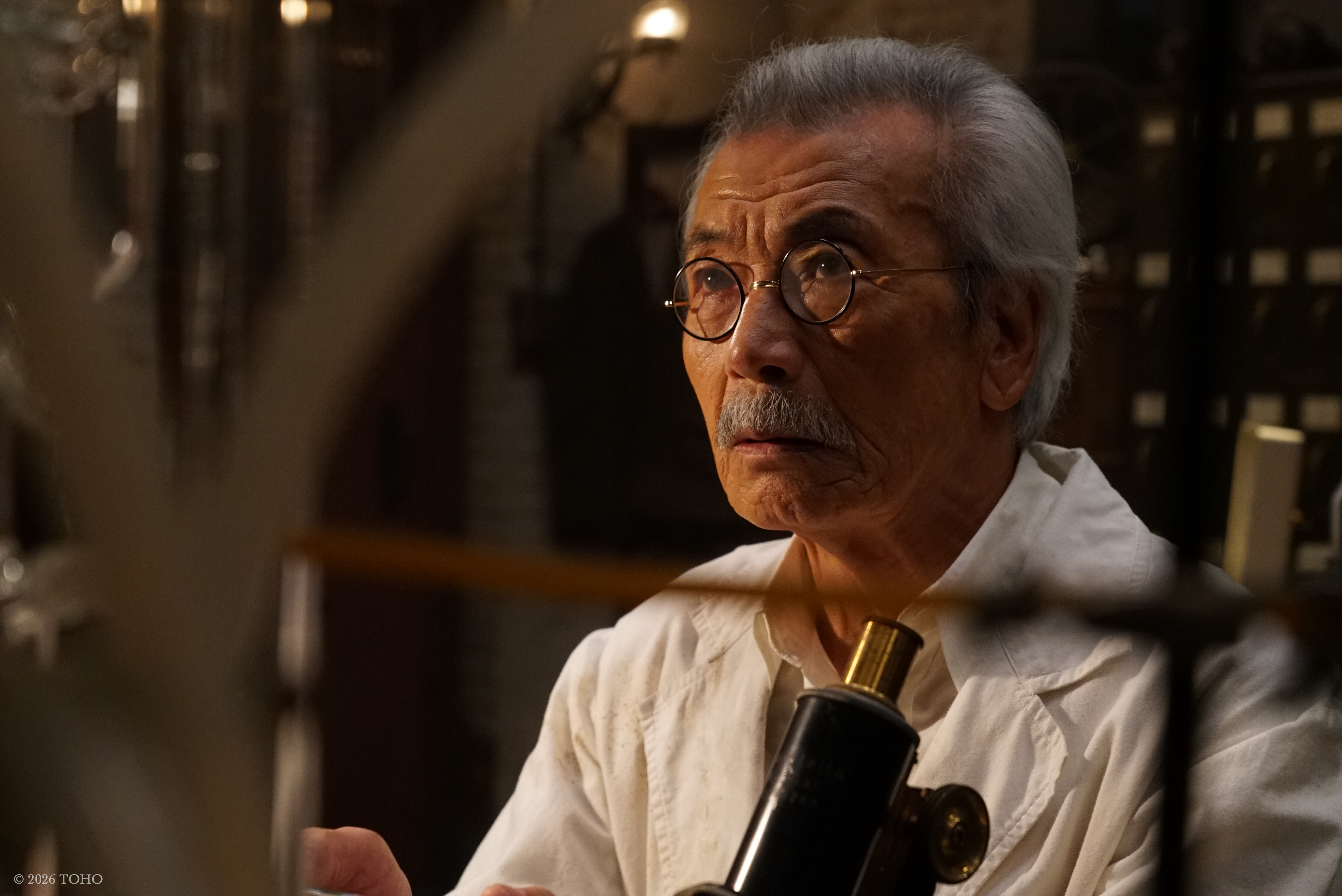
Before Ghidorah even shows up, it’s clear that no one has recovered from Godzilla’s earlier rampage. Noda (Hidetaka Yoshioka), the brainy, principled naval weapons engineer who figured so prominently in the earlier film, heads up a bureau whose chief aim is to deal with giant marauding creatures. He once again needs Koichi’s help, and also enlists some new talent, including ace meteorologist Aoyama (Masami Nagasawa) and Professor Murakami (Min Tanaka), a respected science whiz who lost his family in the bombing of Hiroshima and who harbors, not so secretly, a simmering resentment toward the U.S. military.
Meanwhile, the U.S. military officers now stationed in Japan prove their untrustworthiness without even trying. The plot of Godzilla Minus Zero is a whirl of characters trying to redeem themselves for their past mistakes, or feeling so much anger toward an aggressor that their own moral compasses go awry. Guilt, suffering, and justified rage all loom large in Godzilla Minus Zero, and though this is science-fiction, Yamazaki is also keyed in to the real-life underpinnings of his fictional characters’ feelings. One dream sequence, in particular, hints at the effects of a nuclear attack on the human body; it’s brief, but it’s both alarming and affecting. Yamazaki has said his film is in part a response to Christopher Nolan’s Oppenheimer, which didn’t show the effect of the atomic bomb on people. Godzilla Minus Zero is fiction, but its sense of history courses through its bloodstream even so.
And what about the creatures, the metaphorical vessels invented to carry so many undefinable feelings? They are—unsurprisingly, given the majestic special effects of the earlier movie—superb. The plot involves some wackadoodle science that doesn’t make much sense, but you needn't worry about that. Ghidorah, having flown into town from God-knows-where, is a displaced ball of anger. Wherever home is, he’s far away from it, and deeply unhappy. His golden breath has electromagnetic powers—at one point it uproots both structures and people, Wizard of Oz-style, and whirls them in the air, only to later smash them to the ground. There’s nothing nice about him, but in his somber, unruly rage, he is beautiful.
And then there’s Godzilla himself, who appears to be—and must ever remain—unkillable. His enormous, unmanageable tail swings to and fro as he once again clomps through Tokyo, a city that has had no time to recover from his previous visit. Tossing his proportionately tiny head, he roars with anguish and frustration. When he gets really mad, gorgeous but deadly blue radioactive spines sprout from his back. He has the body of a tyrant and the mind of a toddler. No wonder we both fear him and feel protective of him. He’s both our villain and our destiny, a vessel for incompatible ideas that we can’t always resolve with human logic. He’s not just coming for us; he is us. In Godzilla Minus Zero, we're again invited to tremble before him—but, once again, not without tenderness.