

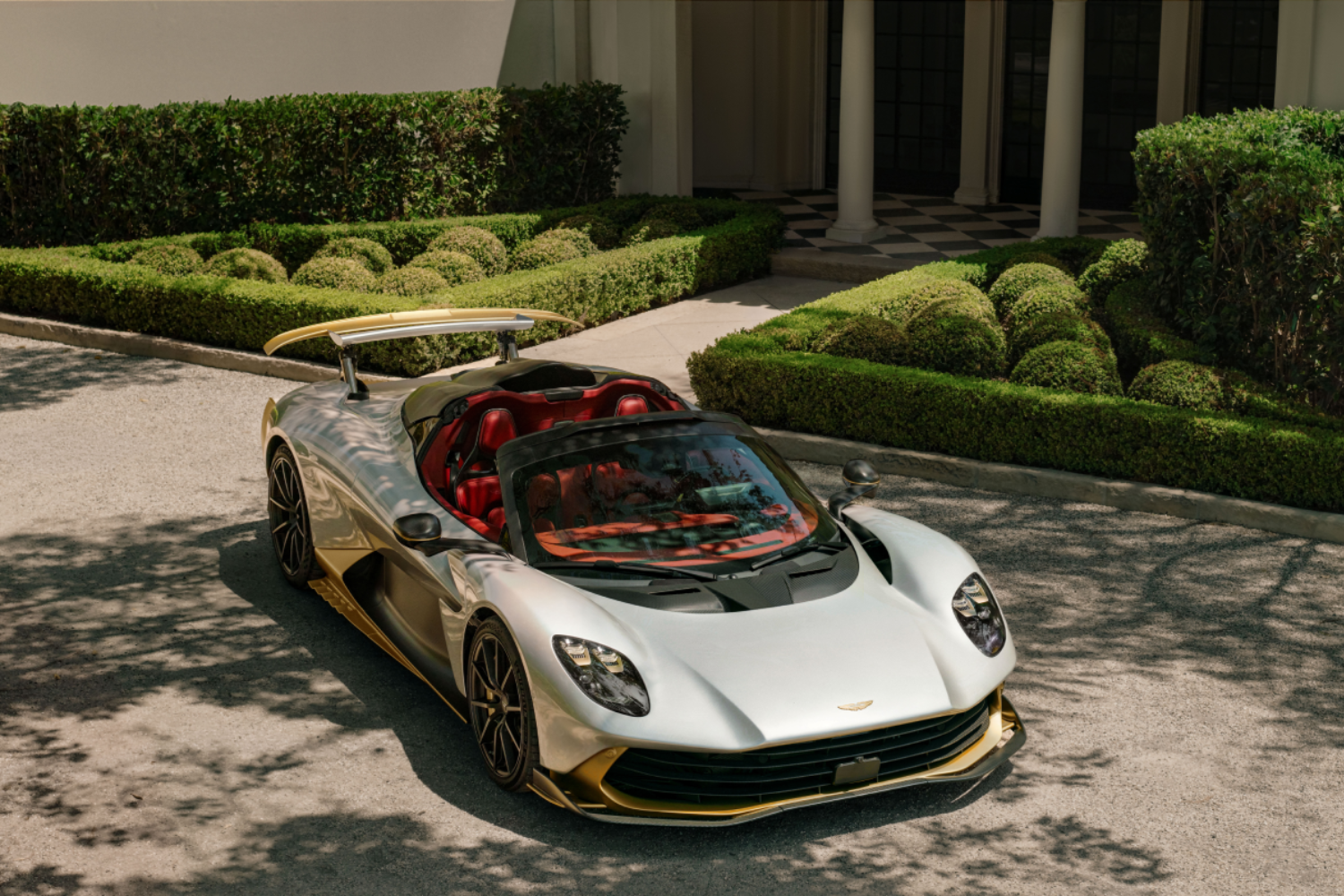
Aston Martin has taken its extraordinary Valhalla supercar and removed the roof. The result is the new Aston Martin Valhalla Spider, a 1,079PS plug-in hybrid designed to deliver exceptional performance with the sky above your head.
Unveiled on 28 October 2026, the Spider follows the successful introduction of the Valhalla Coupe earlier this year. It also marks a significant milestone for the British marque. This is Aston Martin’s first production mid-engined supercar with an open cockpit.
However, removing the roof involves more than giving drivers a better view of the sky. Aston Martin has worked to preserve the Coupe’s remarkable handling, aerodynamic efficiency and everyday usability.
The result promises an exciting combination of speed, style and driver engagement. Better still, the Spider can reach its maximum speed with the roof removed.
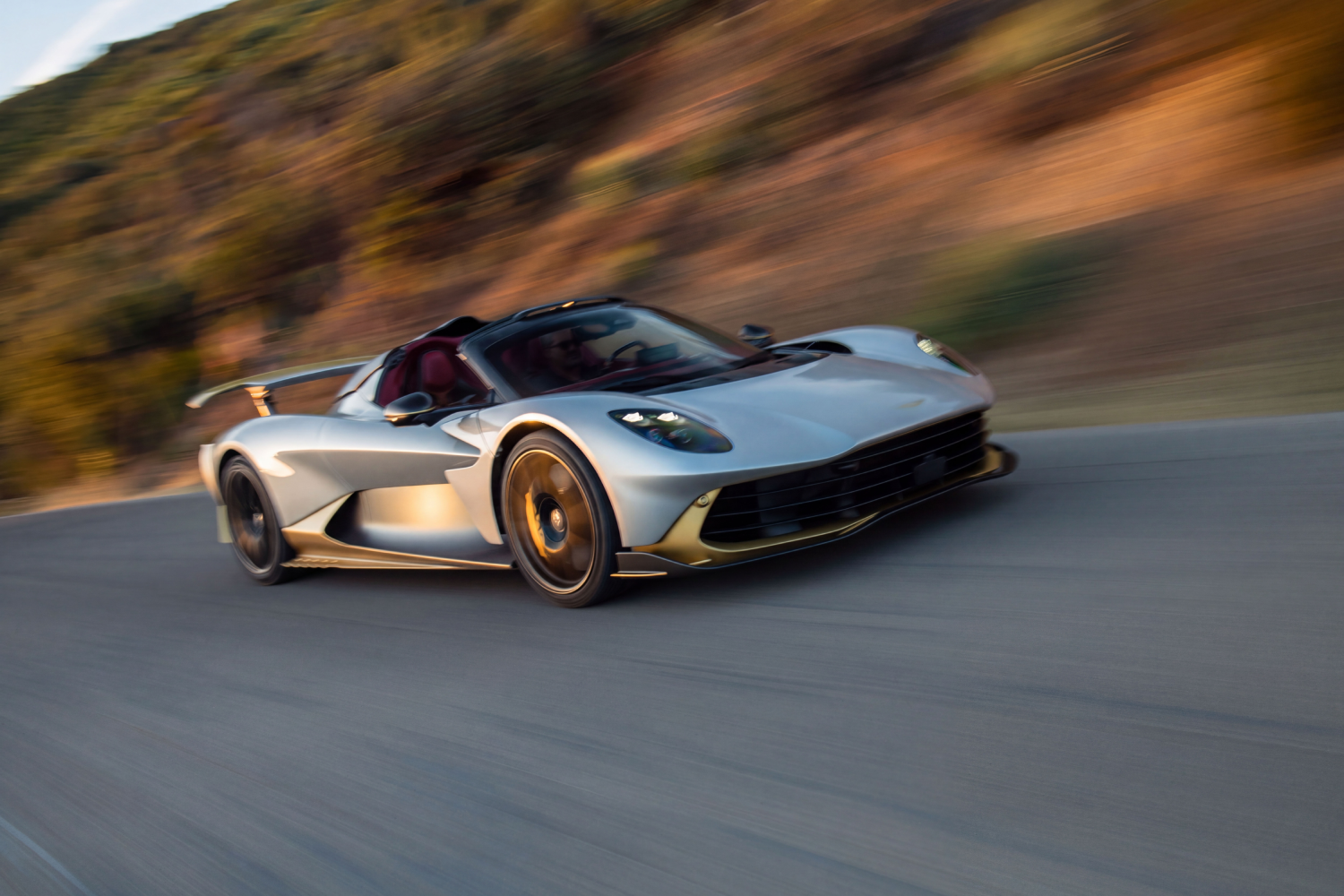
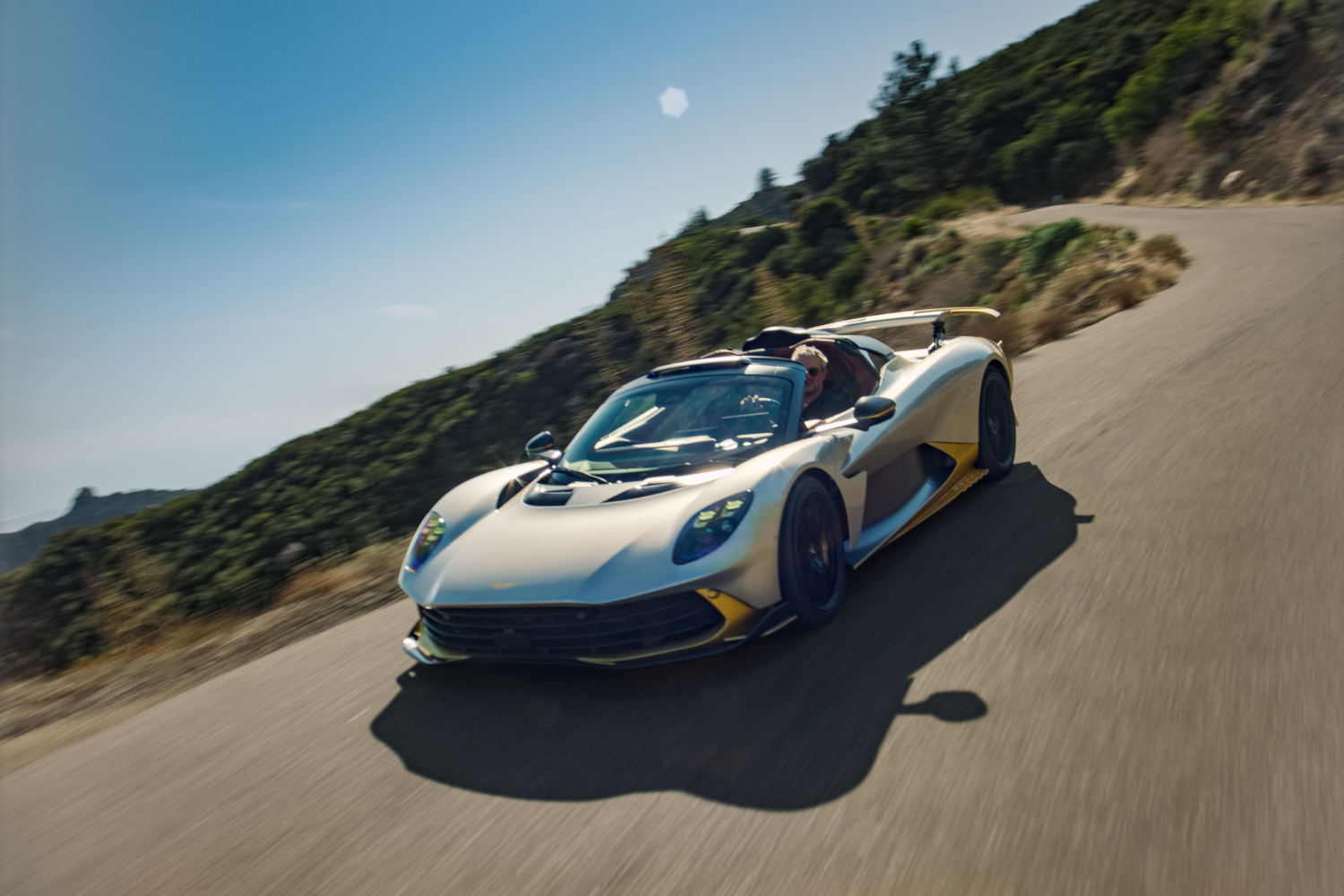
The Valhalla Spider builds on the foundations established by the Coupe. Both models share the same hybrid powertrain, carbon fibre structure and advanced aerodynamic systems.
However, the Spider introduces a different dimension to the driving experience.
Open-cockpit motoring brings the sounds of the engine and the surrounding environment closer to the driver. It also offers a more direct connection with the road.
Aston Martin has worked closely with Aston Martin Performance Technologies (AMPT) throughout development. The organisation draws on the expertise of the Aston Martin Aramco Formula 1® Team.
That collaboration has helped refine the Spider’s aerodynamics, materials and driving dynamics. Consequently, the new model aims to deliver exceptional performance without sacrificing comfort or control.
The company describes the Spider as its fastest open-cockpit production car ever. It also promises the same impressive range of abilities as the Coupe.
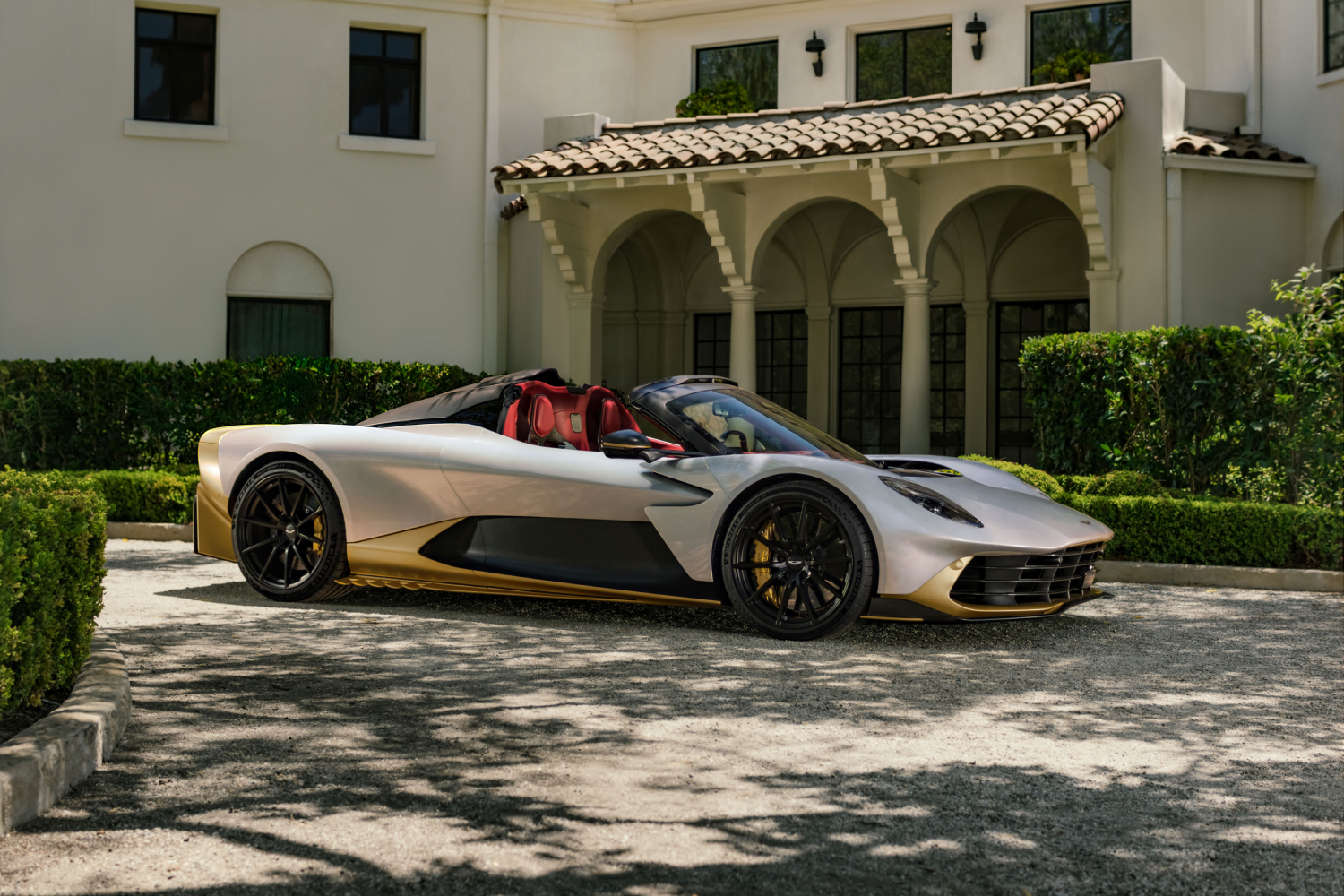
The Valhalla Spider features a carefully designed roof system that preserves the Coupe’s flowing appearance.
A removable black fabric roof comes as standard. It allows drivers to enjoy open-air motoring while retaining protection from changing weather.
With the fabric roof fitted, the Spider can reach speeds of up to 124mph (200km/h).
For drivers seeking greater performance, Aston Martin offers an optional carbon fibre hard top. This alternative allows the car to reach its electronically limited maximum speed of 217mph (350km/h).
The company also supplies a rain cover for use when the car is parked.
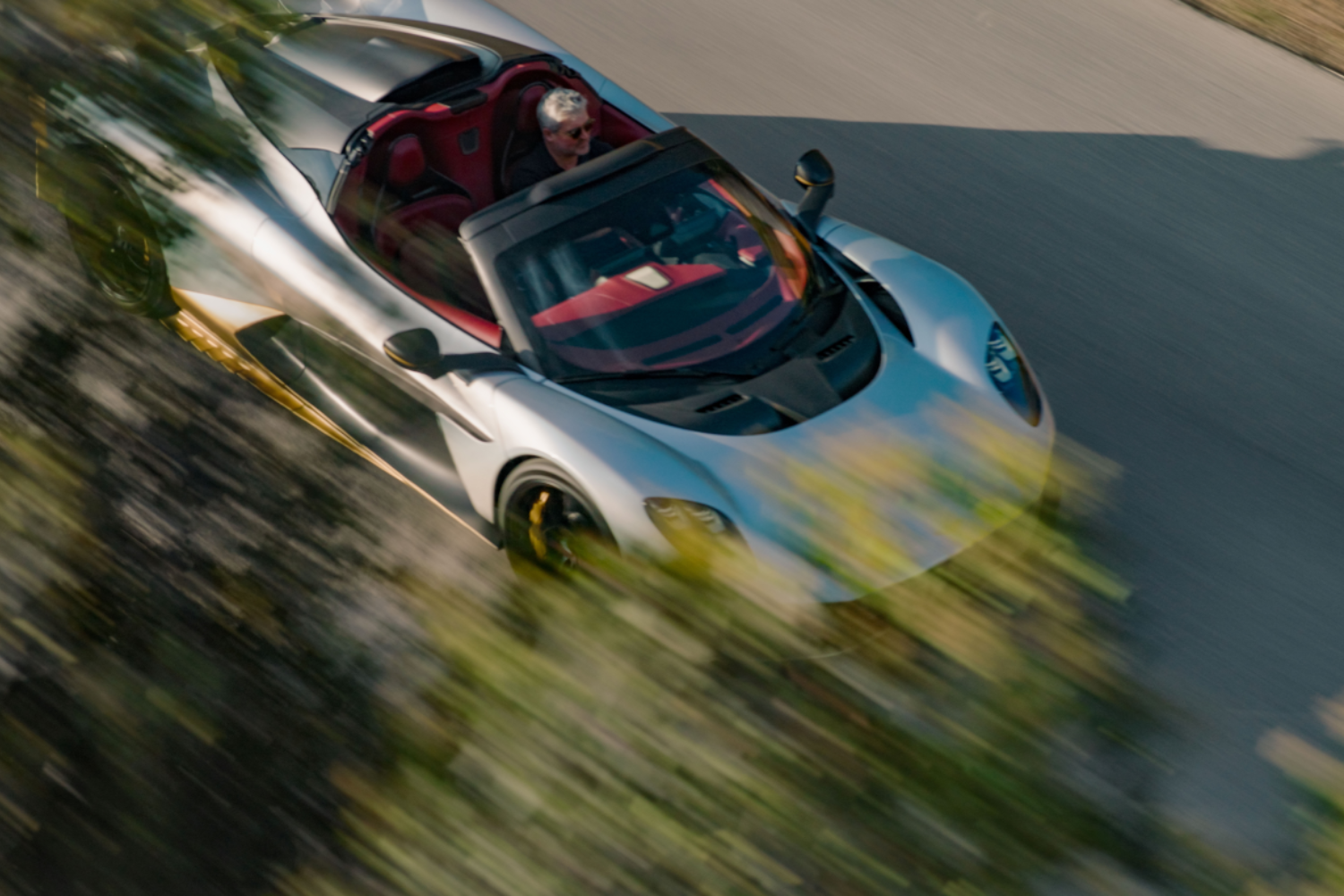
One of the Spider’s most impressive features is its ability to reach maximum speed with the roof removed.
This achievement makes it the fastest open-cockpit Aston Martin ever produced.
However, high-speed open-air driving presents challenges. Airflow can affect stability, while strong winds can make the cabin uncomfortable.
Aston Martin has developed several solutions to address these concerns.
A specially designed wind deflector clips into place when the roof comes off. It directs airflow over the occupants while helping maintain a supply of cooling air to the engine.
The deflector also helps reduce turbulence inside the cockpit.
With the roof fitted, drivers can fold the deflector into three sections. It then fits inside the new 15-litre storage compartments within the sills.
Meanwhile, Aston Martin has adjusted the active aerodynamics and electronic stability systems. These changes help maintain predictable handling in both roof-on and roof-off conditions.
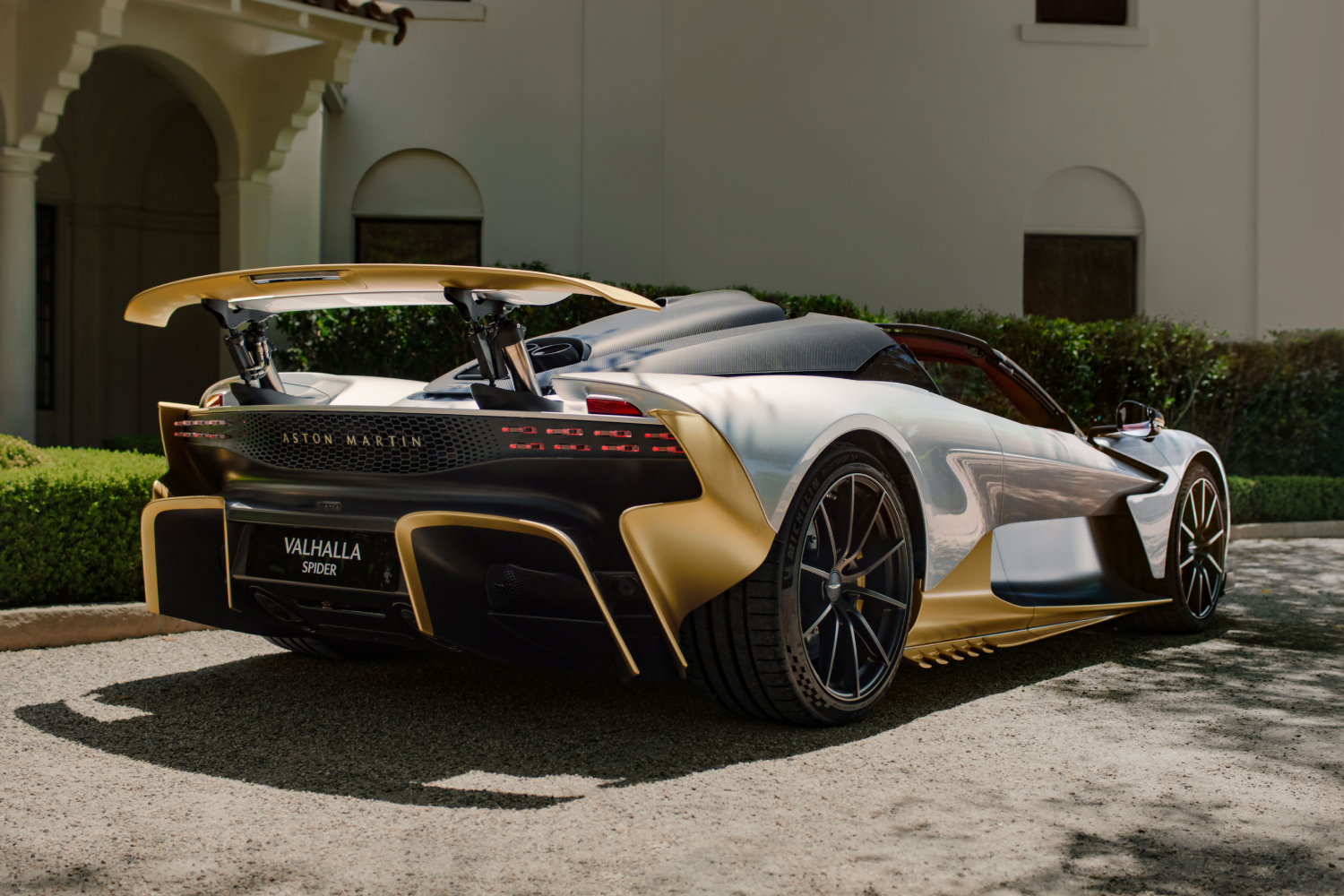
The Valhalla Spider shares its sophisticated plug-in hybrid powertrain with the Coupe.
At its heart sits a 4.0-litre twin-turbocharged V8 producing 828PS. Aston Martin has developed this engine specifically for the Valhalla.
Its output of 207bhp per litre represents the highest specific output of any Aston Martin combustion engine.
Three electric motors and a high-performance battery add another 251PS. Together, the system delivers 1,079PS and 1,100Nm of torque.
These figures place the Spider firmly among the most powerful supercars on the road.
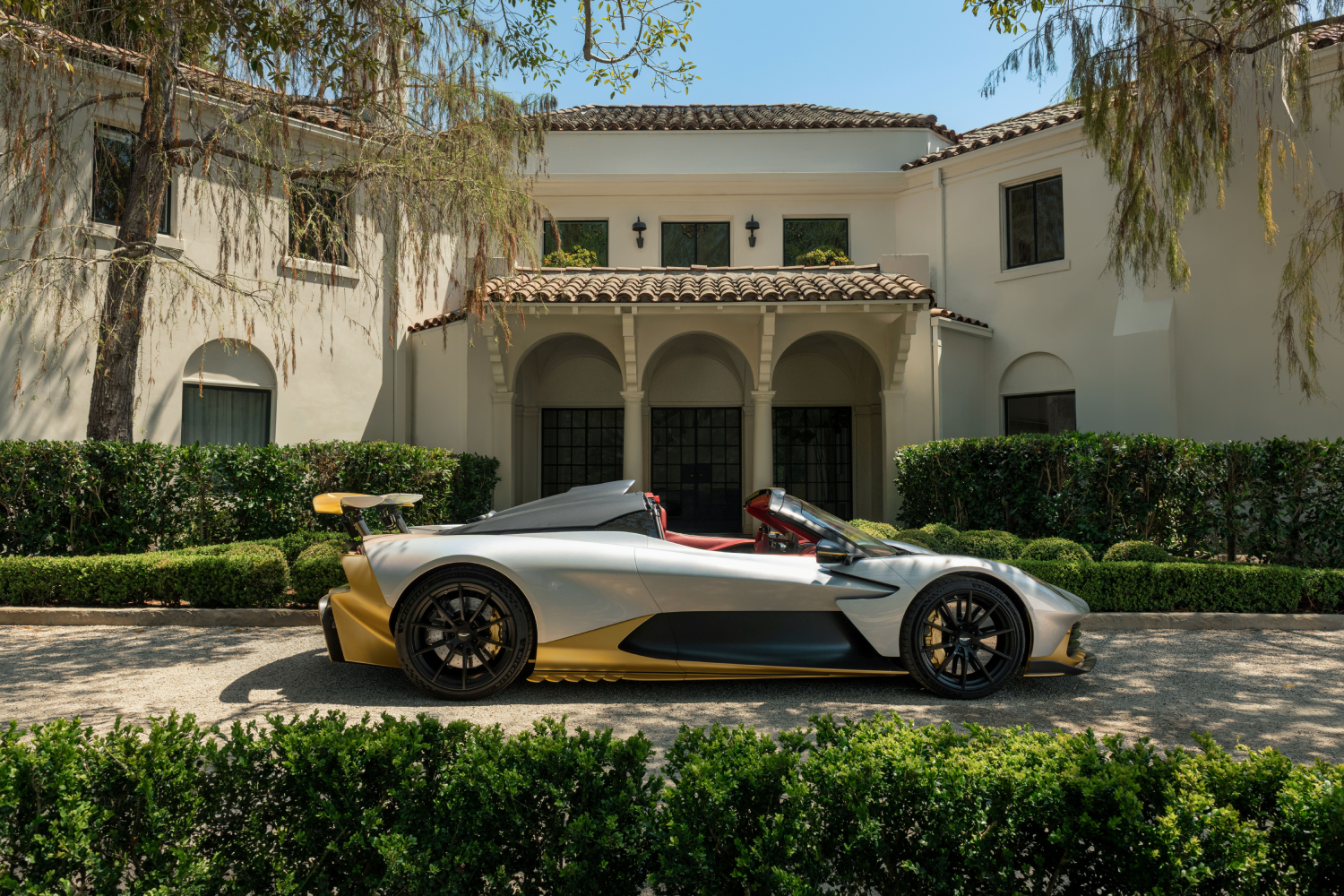
Two electric motors power the front wheels. They also provide electric torque vectoring, which helps improve agility and stability.
The third motor sits alongside the eight-speed dual-clutch transmission. It assists the V8 in driving the rear wheels.
This arrangement allows the system to manage power independently across the four wheels.
There is no mechanical connection between the front and rear axles. Instead, Aston Martin’s Integrated Vehicle Dynamics Control system coordinates the powertrain, suspension, brakes and steering.
The system also manages the active aerodynamics.
Together, these technologies help the Spider respond naturally to driver inputs. They also allow it to adapt to changing road and track conditions.
Drivers can choose from four driving modes. Each offers a different balance of performance, efficiency and comfort.
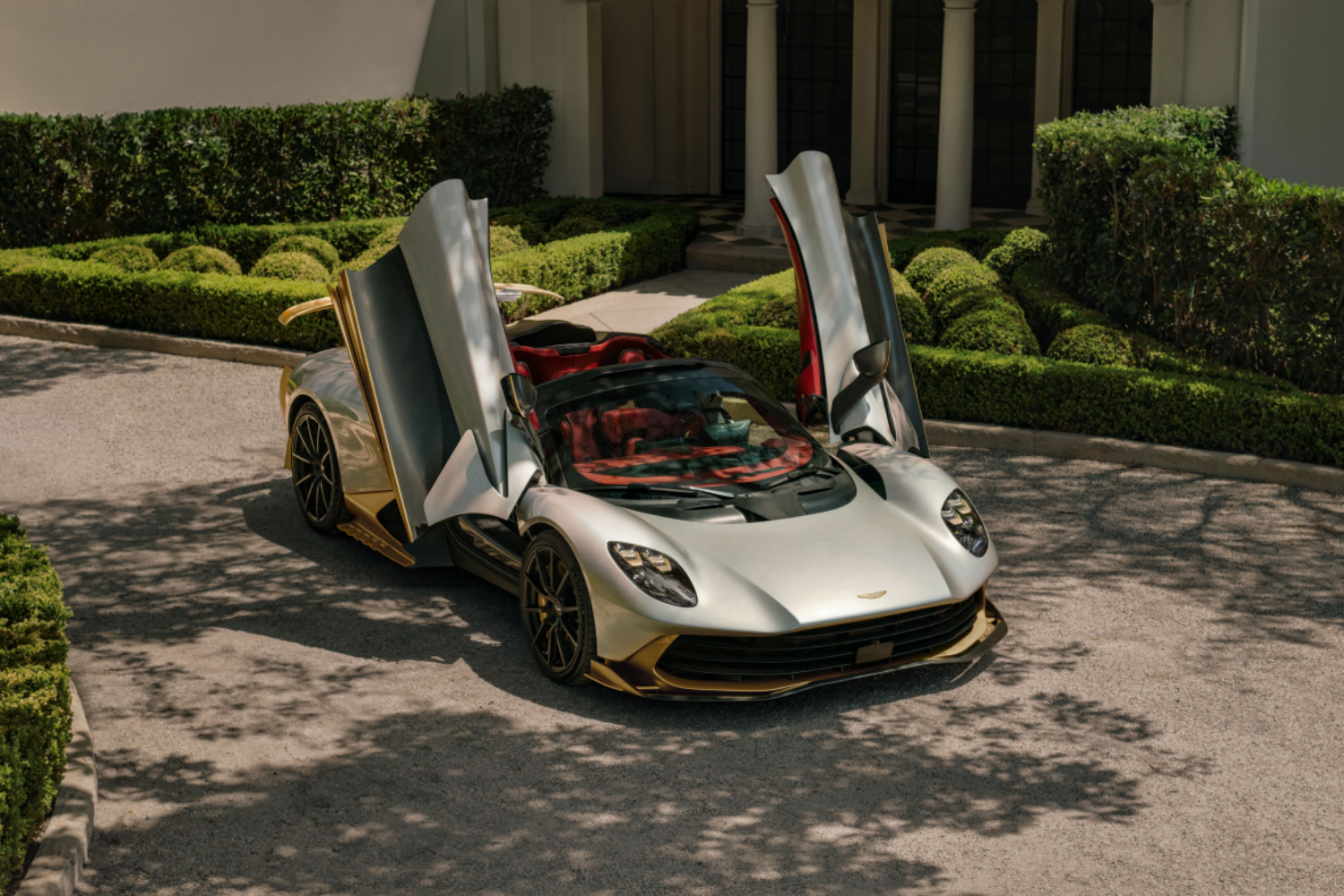
The Valhalla Spider retains the Coupe’s sophisticated active aerodynamic systems.
These include movable surfaces and carefully managed airflow beneath the car.
The systems continually adjust the balance between downforce and drag. This helps the Spider maintain grip and stability while improving aerodynamic efficiency.
At higher speeds, the car can generate more than 600kg of downforce with the roof fitted.
That figure highlights the Spider’s serious track ambitions. However, the aerodynamic systems also benefit everyday driving.
They help the car remain stable during acceleration, braking and cornering. In addition, they adapt to the selected driving mode and changing conditions.
Aston Martin has made specific adjustments for the Spider’s open-cockpit configuration. These changes help preserve consistent aerodynamic performance, regardless of whether the roof is fitted.
The company has also revised the electronic stability control calibration. As a result, the Spider aims to deliver the same confidence-inspiring handling as the Coupe.
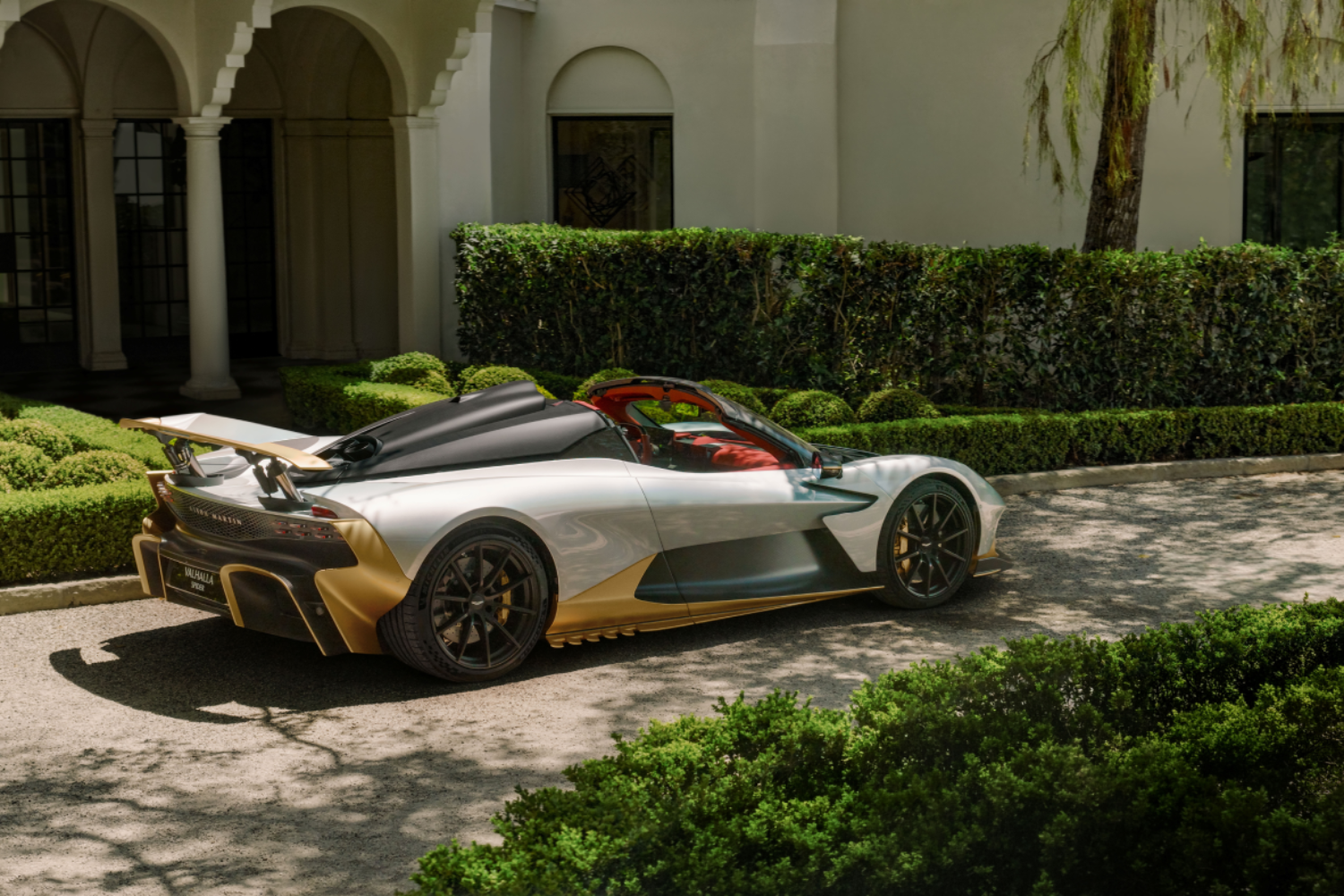
Removing the roof from a supercar can create challenges for structural strength and handling.
Aston Martin has addressed these concerns with a bespoke carbon fibre structure. The Spider shares the same carbon fibre tub as the Coupe.
AMPT developed the structure using its specialised Formula 1® engineering knowledge.
The upper and lower sections are moulded from carbon fibre. Aston Martin combines resin-transfer moulding with technology derived from Formula 1® manufacturing.
The result is a lightweight, rigid passenger cell.
This structure helps maintain the car’s handling precision while providing protection for the driver and passenger.
It also allows Aston Martin to preserve the Spider’s elegant proportions without compromising its performance ambitions.
The Valhalla Spider retains the Coupe’s distinctive carbon fibre dihedral doors.
These doors open upwards, adding drama whenever occupants enter or leave the car.
However, Aston Martin has refined their operation. The revised design provides smoother movement and introduces frameless glass.
The door glass also features a slightly more curved upper edge. This improves access when the roof is fitted.
Inside, the Spider introduces a new carbon fibre Touring Seat as standard.
The seat aims to improve comfort during everyday driving. It also makes entering and leaving the car easier when the roof is in place.
Drivers who prefer greater support during spirited driving can retain the original Coupe carbon fibre seat at no additional cost.
This option highlights Aston Martin’s commitment to offering a more versatile driving experience.
The Spider may deliver extraordinary performance, but it also needs to remain comfortable on ordinary journeys.

Aston Martin CEO Adrian Hallmark describes the Spider as a natural extension of the Coupe.
He highlights the original model’s importance as the company’s first production mid-engined supercar and plug-in hybrid.
The Coupe also introduced Aston Martin’s bespoke flat-plane crank V8 and new eight-speed dual-clutch transmission.
According to Hallmark, the Spider builds on these achievements while offering greater opportunities for open-air driving.
He also emphasises the car’s ability to deliver engaging performance on both road and track.
The Spider’s development reflects a clear objective. Aston Martin wants to combine the excitement of open-cockpit motoring with the performance and precision of a modern supercar.
The Valhalla Spider brings together several qualities that rarely come together so convincingly.
It offers the power of a 1,079PS hybrid system, the precision of advanced aerodynamics and the appeal of open-air driving.
Meanwhile, its carbon fibre structure and carefully developed roof system help preserve the Coupe’s performance.
The Spider also demonstrates how Aston Martin continues to expand its engineering capabilities.
The company has created a car that promises exceptional speed without abandoning comfort or usability.
Its global debut takes place at the 2026 Concours at Wynn Las Vegas.
For now, the Valhalla Spider stands as a striking example of what happens when British design meets Formula 1® engineering.
Would you choose the Valhalla Spider over the Coupe? Would you prefer the freedom of open-air driving or the added refinement of a fixed roof?
Share your thoughts in the comments. We would love to hear which version of Aston Martin’s remarkable hybrid supercar you would choose.

The post Why the Aston Martin Valhalla Spider Is the Most Exciting New Supercar of 2026 appeared first on My Car Heaven.