
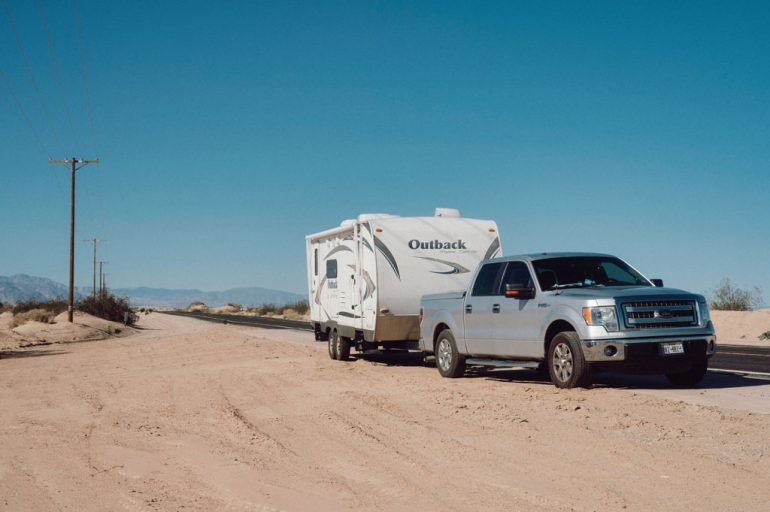
A trailer can look like a perfect match for a pickup and still be the wrong purchase. A roomy deck, sturdy ramps, and an attractive price don’t establish tow vehicle compatibility. The difficult part is understanding what the truck can handle once passengers, tools, and cargo enter the picture.
Choosing the right trailer for your truck starts with a question that listings rarely answer completely: what will the entire working combination weigh? Empty trailer specifications tell only part of that story, particularly when the load changes between jobs.
With trailer listings emphasizing dimensions and capacity, the truck’s limits deserve closer attention. Those limits provide the context for judging everything else, from loading arrangements to construction materials.
The right trailer fits within the truck’s published ratings when loaded and suits the cargo you haul most often. The order matters: establish the truck’s limits, calculate the loaded trailer weight, and then choose the trailer’s style and construction.
The towing capacity documented for the truck’s actual configuration is the ceiling, not a dealer’s claim or a brochure’s maximum. The owner’s manual and door-jamb labels provide the starting information. An empty trailer’s listed weight understates the working load because cargo, attachments, fuel, and tools add to the total.
For anyone still evaluating a used truck, checking towing and payload ratings belongs before the purchase. Options affect those ratings, so a truck’s size or appearance doesn’t establish what it can handle.
Safe matching requires several separate checks, not one impressive towing figure. Towing capacity, payload, combined weight, and hitch ratings each impose a limit; passing one doesn’t cancel out another. The truck and trailer must satisfy every applicable rating, with the lowest limit governing the combination. That means checking the loaded setup rather than relying on empty specifications.
GVWR (Gross Vehicle Weight Rating) describes the trailer’s maximum permitted loaded weight, not its empty weight or cargo allowance. Compare trailer GVWR with the truck’s towing capacity; actual loaded trailer weight must remain within both ratings.
A landscaper’s utility trailer carrying a zero-turn mower, a car hauler carrying a project car, and low-pro haulers from Brechbill Trailers carrying a compact excavator or skid steer all combine trailer and cargo weight, pushing the load toward the truck’s limit.
The truck’s combined-weight rating adds another check: the loaded truck and loaded trailer must fit within that total.
Tongue weight is the downward load the trailer places on the hitch, usually about 10–15 percent of loaded trailer weight. It counts against the truck’s available payload alongside occupants, bed cargo, and added equipment.
A trailer can therefore fall below towing capacity while its tongue weight pushes the truck over its payload rating. The trailer manufacturer’s guidance should establish the required tongue-weight range. Loaded scale measurements provide a firmer basis than assuming the empty trailer’s balance remains unchanged after loading.
Hitch type alone doesn’t establish capacity. The receiver, ball mount, ball, and coupler each have ratings; the lowest applicable rating limits the connection. A higher-rated ball doesn’t upgrade the receiver.
Brake requirements vary by state, often beginning in the 1,500–3,000-pound range, so check the applicable state’s rules.
Conventional electric trailer brakes need a compatible in-cab brake controller and a seven-pin connector. A basic four-pin connection serves lighting functions, not electric brake control. Connector shape alone doesn’t establish that the truck has a functioning brake-control circuit.
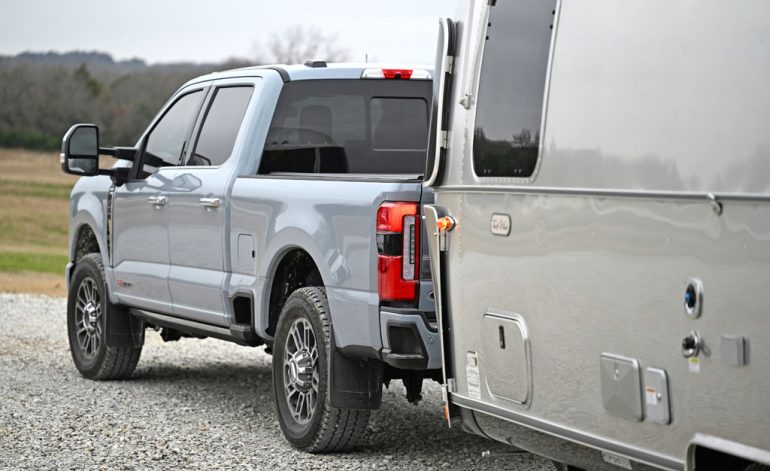
The regular load should determine the configuration, not an unusually large job that happens once a year. A trailer sized around that exception brings its extra bulk and empty weight to every smaller trip. Once the weight checks establish a workable range, deck access, cargo protection, and loading space become useful deciding factors.
A bumper pull trailer connects through a rear receiver hitch, leaving the truck bed available for cargo. For lighter hauling within the receiver’s rating, that arrangement avoids an in-bed hitch installation. Despite the name, it doesn’t mean attaching a loaded trailer to an unrated bumper.
A gooseneck trailer uses an in-bed hitch, placing weight over the rear axle for greater stability with heavier loads. It requires bed clearance and the correct installation. Among trailers built for heavy loads, this layout supports different loading and weight-distribution needs, but it doesn’t override truck ratings.
A single-axle trailer is lighter and easier to maneuver and back up. A tandem axle trailer carries more weight and tracks more steadily, although axle count alone doesn’t establish carrying capacity. It can also remain controllable after a tire failure, but a second axle doesn’t guarantee control. Tire condition and proper loading still matter.
An open trailer generally costs less and provides direct access from above and often from the sides, making equipment loading easier. An enclosed trailer protects cargo from weather and theft, but adds empty weight and catches more wind.
For tools that need covered storage during transport, that trade-off has a purpose. For equipment routinely loaded from above, however, the walls become an obstacle.
Material choice returns the decision to the earlier weight budget. Comparable steel trailer designs often cost less upfront but require rust prevention and attention to damaged coatings. An aluminum trailer generally costs more, weighs less, and needs less upkeep, although actual specifications matter more than the material label.
Any weight saving leaves more room within the towing limit for cargo, provided the trailer’s own cargo rating permits it. Aluminum still needs inspection and maintenance, including checks of joints, fasteners, flooring, and running gear.
The decision follows a clear order: establish the truck’s configuration-specific ratings, calculate loaded trailer weight, account for tongue weight within payload, and check the hitch and brake setup. Trailer style and material come after those limits, with everyday cargo determining which configuration earns its space and weight.
Tow vehicle compatibility isn’t established by matching a large truck with a large trailer. It comes from a combination that stays comfortably inside every applicable rating, including the weakest part of the towing chain. The right trailer carries the usual load without relying on the truck’s headline towing figure to excuse another limit.