Image source: Unsplash
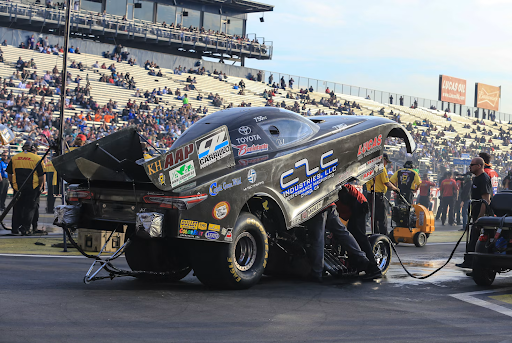
For most of its history, Sportsman drag racing has been something you had to show up for. If you weren’t in the grandstands at a divisional race or crewing for someone in the lanes, you heard about the results on Monday, if you heard at all. That has been changing for a few seasons, and 2026 is the clearest sign yet. For the second year running, NHRA is streaming its Lucas Oil Drag Racing Series divisional events free on NHRA.tv and the NHRA YouTube channel, putting Super Comp, Super Gas, Stock and Top Dragster eliminations on any screen with a decent connection.
There is one catch worth knowing up front. The free coverage is for divisional and Sportsman racing. The 20 national events in the Mission Foods Drag Racing Series stay behind the NHRA.tv paywall, at $164.99 for the season or $24.99 per event.
The 2026 slate covers more than 30 divisional races across all seven NHRA divisions, running from February to November. It opened with a Division 7 double-divisional at Firebird Motorsports Park outside Phoenix and concluded with the Division 7 race at The Strip at Las Vegas Motor Speedway, November 5 to 8.
A handful of events carry extra weight. The Cajun SPORTSnationals at No Problem Raceway in Louisiana got the spring going in March, the JEGS SPORTSnationals at Beech Bend Raceway in Kentucky followed in August, and the Hot Rod Reunion brought the nostalgia crowd in June. Some divisional races ask viewers to set up a free NHRA.tv account first, but there is nothing to pay.
Sportsman racing doesn’t look like the nitro show on Sunday TV, and that is the point. Much of the field is made up of racers who build and tune their own cars, often with family as the crew, and the racing turns on things a camera can actually show: a good light off the tree, a driver taking the stripe without breaking out, a holeshot win over a quicker car. For anyone who has only watched the pro classes, an afternoon of index racing is a crash course in why drag racing rewards consistency as much as horsepower.
The production is simpler than a national event broadcast, and that suits the racing. You see the staging lanes, the burnout box and the long build-up to a final that can come down to a few thousandths of a second. Gauge has also covered how drag-racing communities are changing.
Sportsman eliminations move quickly, and the class names don’t explain much on their own. If you’re new to it, NHRA’s guide to its drag racing classes is worth keeping open in another tab, but the basics come down to four groups.
Image source: Unsplash
Super Comp, Super Gas and Super Street are heads-up classes run to a fixed index: 8.90 seconds, 9.90 and 10.90 respectively. The cars are built to run right on that number, usually with throttle stops and timers doing the fine work, and the first car to the stripe wins as long as it doesn’t go quicker than the index. Run under it and you’ve broken out, which usually ends your day.
Top Dragster and Top Sportsman work like bracket racing at the sharp end. Each driver picks a dial-in no slower than 7.99 seconds (8.19 in Divisions 6 and 7), the slower car leaves first on a full three-amber tree, and the breakout rule still applies. Fields run to 32, 48 or 64 cars, so reaching the final takes a long day of clean passes.
Stock and Super Stock are where the engine and weight combinations get very specific. Cars are classed by factory shipping weight against NHRA-factored horsepower, then raced on an index set for their class. Stock keeps the rules much tighter, with unaltered bodies and stock heads, intake and carburetor. Comp is the most varied category of all, with dozens of classes, each given an index based on what a well-built car should run.
Once you know which is which, the scoreboard starts to make sense. In index racing, a reaction time can decide a round as surely as the elapsed time, and on a free stream you get to watch that happen pass after pass.
Being on a stream won’t turn a weekend racer into a star, and nobody should pretend it will. What it does give a Sportsman competitor is something that used to be hard to come by: broadcast footage of their own runs, ready to share with family, followers and the local businesses that might back the car next season.
Sponsorship is already part of the picture. The 2026 free coverage is supported by industry names including Summit Racing Equipment, Strange Engineering and Laris Motorsports Insurance, brands built on selling to racers like the ones on screen. Running its own free channel also puts NHRA alongside sports bodies that treat their digital output as a content platform for sports fans rather than a place to post results.
The wider picture is about to shift. At the start of October, NHRA announced new media rights agreements with FOX Sports, The CW and FloSports that begin with the 2027 season, with FloRacing set to stream every round of national event qualifying live and exclusively. NHRA hasn’t said yet what the new deals mean for free divisional coverage.
The final free divisional of the year ran in Las Vegas November 5 to 8. If you’ve never sat through a full day of Sportsman eliminations, it costs nothing to find out what the regulars at your local track already know.
The post Free NHRA Streams Bring Grassroots Drag Racing to a Bigger Crowd in 2026 appeared first on Gauge Magazine.