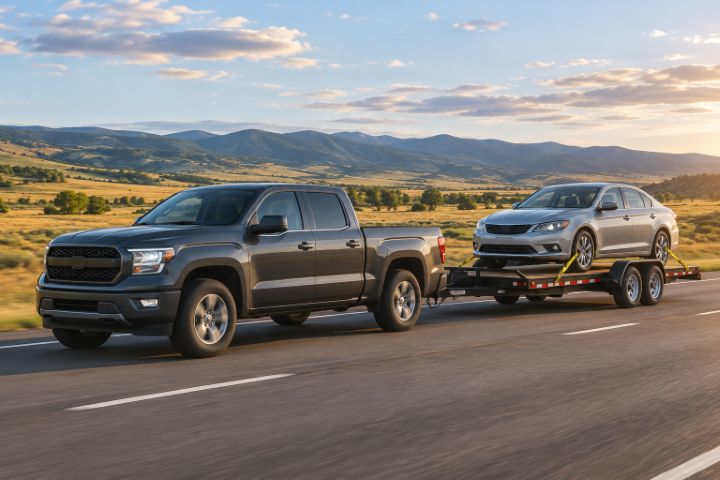
A cross-country move already comes with enough boxes, checklists, and “Where did that go?” moments. Hauling a car doesn’t have to add a roadside plot twist. A well-matched trailer and a few smart checks can turn the trip into a manageable part of the adventure. Before you book, Gauge’s guide to trailer types for different hauling jobs can help you compare your options.
You don’t need to be a professional driver to prepare carefully. What matters is understanding the equipment, allowing extra time for the unfamiliar parts of towing, and knowing when to ask the rental provider for help. Those simple habits can make the miles ahead feel a lot less intimidating.
Before you rent a car hauler trailer locally, check the car’s weight and dimensions against the trailer’s capacity and deck size. Then confirm that the tow vehicle is rated for the trailer and its load. Hitch class, tongue-weight limit, payload, and towing capacity all matter, and the lowest applicable limit sets the ceiling. Check the owner’s manual and the trailer’s information plate rather than relying on a guess. A few minutes with the specifications beats discovering at pickup that the setup isn’t a match.
Don’t overlook ground clearance and tire width, especially if the car is low to the pavement or has aftermarket parts. A vehicle that fits the deck on paper may still scrape a ramp or sit awkwardly between the trailer’s wheel guides. Give the rental company the exact year, make, and model of both vehicles so it can help verify the combination before moving day.
Rental options may be limited during busy moving seasons, so reserve before the calendar fills up. Ask what comes with the trailer, including tie-down straps, safety chains, ramps, a spare tire, and a lighting connection. Confirm pickup and return hours, rental-period terms, roadside-assistance options, and what happens if a delay disrupts the schedule. At pickup, photograph the tires, lights, ramps, and any existing damage. Keep the rental agreement and emergency contact information close at hand, not packed in the box marked “Definitely Not Important.”
This is also the time to ask about the total price, including mileage rules, late fees, deposits, and any optional protection plans. Check what your existing insurance actually covers rather than assuming the trailer or the car is automatically protected. A clear answer before pickup is far better than sorting through paperwork after an unexpected problem.
Pick a level, firm surface and follow the trailer maker’s loading instructions. Guide the car up the ramps at a slow, steady pace, then center it on the deck and set the parking brake. Attach properly rated straps to the recommended tie-down points. Skip improvised ropes and questionable attachment points; neither belongs in a cross-country plan. Check that the ramps are stowed, the safety chains are connected, and the lights work. Recheck the straps after the first few miles, then at every stop.
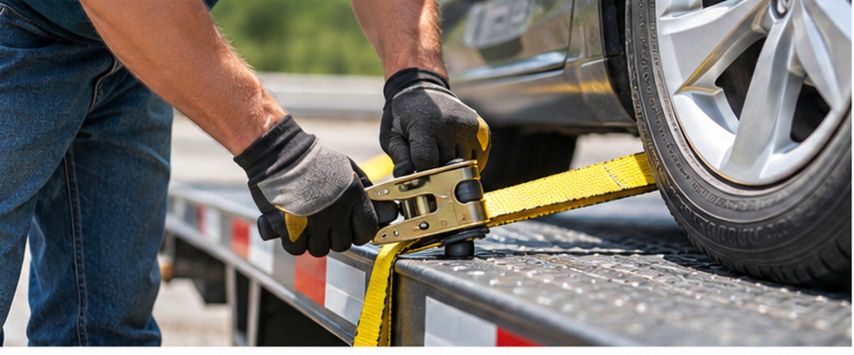
For consumer towing, follow the trailer manufacturer’s instructions and your rental provider’s guidance, such as U-Haul’s auto-transport user instructions, which explain loading orientation, tie-downs, and pre-trip checks for rental car trailers.
Keep bystanders well clear of the ramps and use a spotter who stands safely to the side, never between the car and trailer. Before you move, make sure the car is positioned exactly as the trailer provider specifies. Some auto transports require the vehicle to face forward, and loading it the wrong way can create dangerous sway. If anything looks uneven or a strap will not tighten correctly, stop and get help rather than hoping it settles on the road.
A shortcut that’s perfect in a car might be a headache with a trailer. Before leaving, look for bridge-clearance limits, construction, steep grades, narrow roads, and safe places to stop. Leave extra following distance, accelerate gently, and take turns wide enough to keep the trailer clear of curbs. Sudden braking and sharp steering are poor travel companions when towing. Plan realistic driving days, with overnight stops that have room for the entire rig. Check weather and road advisories along the route, and keep water, snacks, medication, and a roadside kit within easy reach.
Think about fuel stops, too. Choose stations with open approaches and plenty of room to pull forward instead of tight lots that demand complicated backing maneuvers. An extra ten minutes on a trailer-friendly route can be a worthwhile trade for avoiding a narrow street, a crowded parking area, or a stressful turnaround.
Before heading into traffic, take a short drive in a quiet area. Practice starting, stopping, turning, and reversing. When backing up, ask a spotter to guide the maneuver with clear signals while staying in view. At a safe stop, check the hitch, chains, lights, tires, and straps once more. The NHTSA tire-safety page offers reminders about tire condition and pressure, both worth checking before a long tow. Keep speed within the trailer maker’s limits and follow local rules.
Use that practice run to notice how much longer the whole setup takes to stop and how the trailer tracks through turns. Adjust your mirrors before leaving, and agree on a simple plan with anyone helping you park. If the rig feels unstable or makes an unfamiliar noise, pull over somewhere safe and inspect it before continuing. Confidence should come from a properly checked setup, not from rushing through the first hour.
The smoothest hauls aren’t magic; they’re a series of small checks made before little problems become big ones. Match the equipment, secure the car, plan sensible stops, and inspect the setup along the way. Then there’s a better chance the car arrives safely, with fewer surprises and one less thing to worry about. For more loading and tow-rig preparation, see Gauge’s guide to flatbed loading mistakes that can wreck your rig.
The post 5 Tips for Renting a Car Hauler for a Cross-Country Move Without Losing Your Mind appeared first on Gauge Magazine.