
Honda is making a major change to one of America’s favorite compact SUVs, and it looks like the days of buying a traditional gasoline-only CR-V are coming to an end. The next-generation 2028 Honda CR-V will reportedly be offered exclusively with a hybrid powertrain, following the same direction Toyota has taken with its redesigned RAV4. It’s a significant shift for Honda’s bestselling SUV, but one that makes plenty of sense when you consider how popular the CR-V Hybrid has already become. More than half of Honda’s CR-V sales now come from hybrid models, suggesting buyers are increasingly willing to pay a little more upfront for improved fuel economy and the added performance benefits of electric assistance. With the seventh-generation CR-V expected to debut in 2027, Honda appears ready to make hybrid technology the standard rather than an optional upgrade.
The biggest improvements will come from Honda’s fifth-generation two-motor hybrid system, which will continue pairing electric propulsion with an efficient Atkinson-cycle four-cylinder gasoline engine. While Honda hasn’t announced official horsepower or torque figures, the company promises meaningful gains in both performance and efficiency. The next-generation system is targeting a fuel economy improvement of more than 10% compared with the outgoing setup, thanks to improvements in engine operation, electric motor efficiency, and overall powertrain design. For reference, the current CR-V Hybrid produces 204 horsepower and achieves up to 40 mpg combined in front-wheel-drive form. If Honda delivers on its efficiency targets, the redesigned model could push those numbers even higher while providing stronger acceleration and a more refined driving experience. A new electric all-wheel-drive system is also part of Honda’s broader next-generation hybrid development program, potentially bringing additional improvements in traction and power delivery.
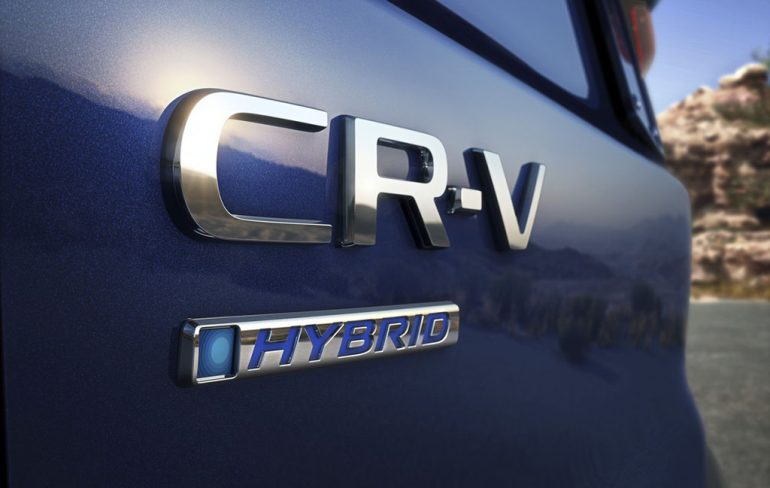
Beyond the powertrain, the 2028 Honda CR-V will introduce an entirely new vehicle platform designed to improve structural rigidity while reducing weight. Honda says the architecture will use a more advanced approach to managing body stiffness, helping improve handling stability, cornering behavior, and ride comfort. The new platform will also feature a modular design that allows greater component sharing across multiple vehicles, something that should help Honda reduce manufacturing costs while developing new models more efficiently. That could prove especially important as the automaker prepares to introduce 15 next-generation hybrid vehicles globally by 2030, with North America serving as a major focus. We haven’t seen the redesigned CR-V’s exterior or interior yet, but we’re expecting Honda to continue refining the practical packaging, comfortable cabin, and easygoing driving characteristics that have helped make the current model so successful.
From our perspective, Honda’s move toward a hybrid-only CR-V seems like a logical next step rather than a risky departure from tradition. We’ve long appreciated the CR-V for its practicality, spacious interior, and overall refinement, and adding more standard horsepower and better fuel economy should only strengthen its appeal. The real question will be pricing, particularly for buyers who currently gravitate toward the more affordable gasoline-powered versions. Toyota has already demonstrated its confidence in an all-hybrid RAV4 lineup, and Honda clearly doesn’t want to fall behind in one of the industry’s most competitive segments. With rising interest in hybrids and continued uncertainty surrounding the pace of fully electric vehicle adoption, we believe Honda is positioning itself wisely by investing heavily in conventional hybrid technology. The 2028 CR-V should provide a much clearer picture of that strategy when it makes its official debut, and we’re particularly interested in seeing whether Honda can deliver noticeably better performance and efficiency without sacrificing the value that has always made the CR-V such a popular choice.