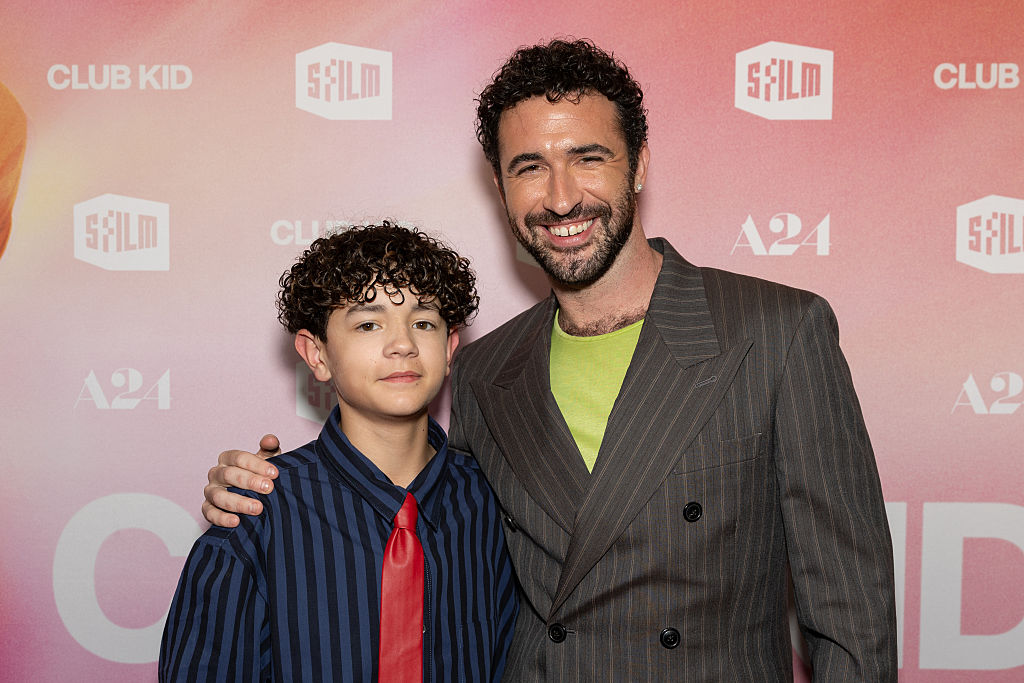
For Jordan Firstman, tears shed during the making of Club Kid would turn out to be a harbinger of success. “I remember getting to the end of the edit, and I would cry every time watching it,” he recalls over Zoom. “My editor would cry every time. Everyone who was allowed in the edit was crying. And so I knew people were gonna be moved.”
What the actor, writer, and internet personality did not predict for his feature debut was just how big and immediate that impact would be. It was the toast of the Cannes Film Festival in May. There, the story about queer nightlife and family (chosen as well as biological) received a big standing ovation after its world premiere and, after a bidding war, sold to A24 for a reported $17 million. Six months later, Club Kid has a 98 percent rating on Rotten Tomatoes with more than 100 reviews in. It opened in U.S. theaters Nov. 6 and averaged more than $65,000 per screen—more than stalwart 2026 indies like The Invite, Tony, and Teenage Sex and Death at Camp Miasma. A nationwide expansion is to follow. “I didn't, for a moment, write or make this movie with 75-year-old white men in mind,” says Firstman, though at the Telluride Film Festival in September, he saw even that demographic reacting strongly to his work. “Older people really like this movie and are leaving the theater in tears,” he reports.
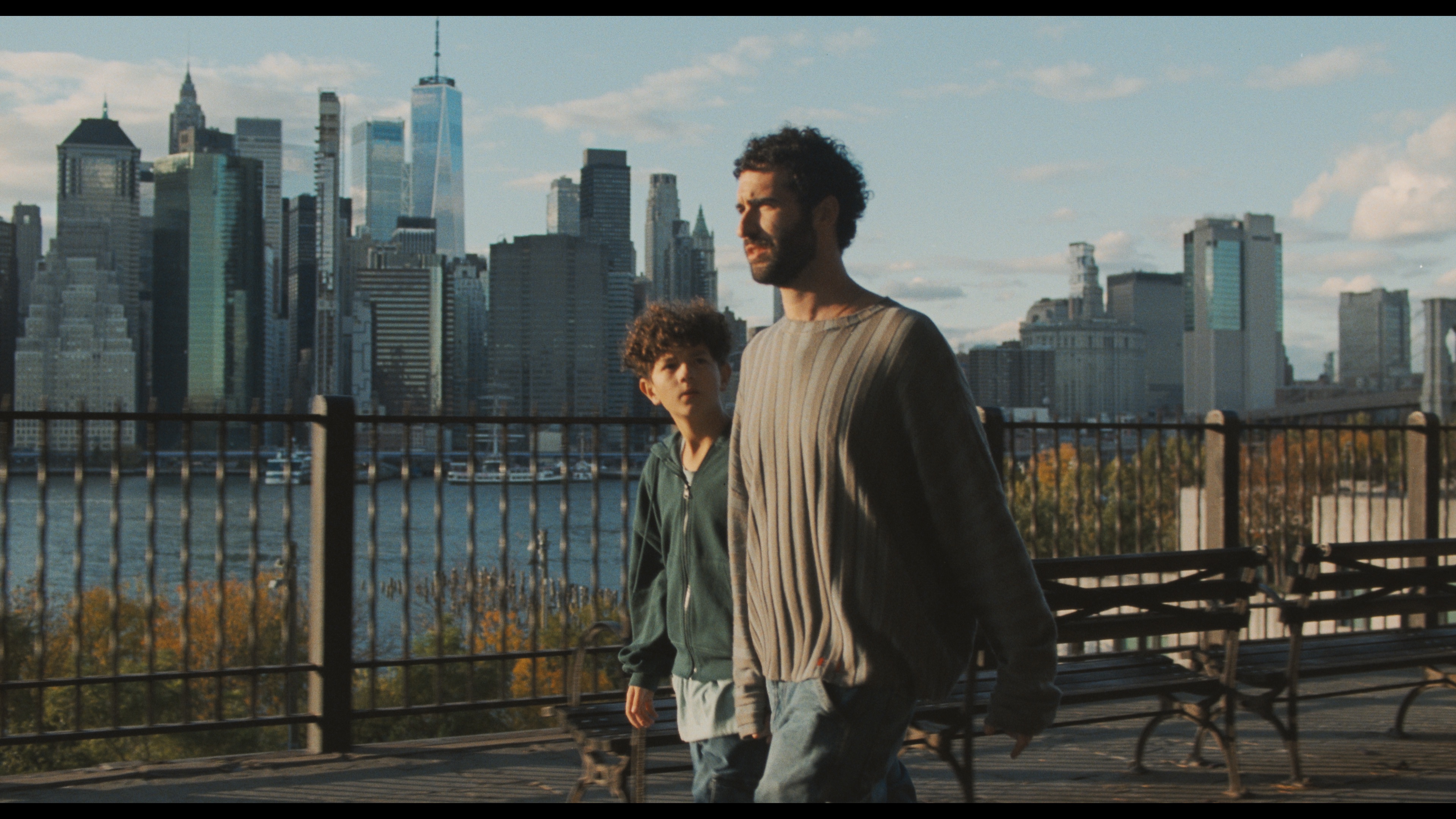
Club Kid is the feel-good movie of the year, and the copious amount of drugs ingested by its characters are merely a small part of how it’s earned that title. Firstman plays Peter, a toned-down version of the self-absorbed nightmare gay he’s graced both the big and small screens with in recent years (in 2023’s Rotting in the Sun and the HBO series I Love L.A., respectively). A New York City nightlife veteran who throws parties for a living, Peter is tasked with putting his fast-paced, Ketamine-snorting lifestyle on hold when he discovers he’s the father of a 10-year-old boy whose mother has died. Though he initially rejects the responsibility—he’d completely blocked the memory of having sex with a woman, for starters—Peter is wooed by the intelligent, sensitive Arlo (Reggie Absolom). Despite his limitations, he begins to take his job as a father seriously, which involves attempting to integrate his son into his world, literally bringing him to the club at times.
Firstman filled his film with people he knew from nightlife, and the supporting cast is a major reason why the movie plays so well—its roles feel utterly lived in. The director says he took inspiration from Paul Thomas Anderson’s Boogie Nights, a film in which “everyone with a line has a character.” He made sure there were no negligible roles. “I had talks with every single person in the cast about their backstory, who they are, what they dress like, what they're into,” he says.
But the movie simply would not work if Arlo could not charm the audience as readily and fully as he does Peter. “Child actors are hard,” says Firstman. “Some of them feel very extra, some of them feel fake.” Firstman scanned some 100 tapes of potential Arlos and stopped dead in his tracks when he saw Absolom. “That is the face that I was writing in my head—like, he literally had the same face,” says Firstman. “And then I just remember before clicking the link, being like, ‘Please, please be able to act.’”
Firstman was struck by Absolom’s naturalism and further impressed when the budding performer picked cuts from Massive Attack and Cocteau Twins from a playlist the filmmaker had sent the prospective Arlos. (“I had them pick out their favorite songs just so I could gauge their taste because I wanted the kids to be cool,” he explains.) And then they met and it was basically settled. “After he auditioned, I turned to say goodbye, and he gave me a look, and I just felt like I knew him. I felt like he was already my friend,” says Firstman.
Absolom came to the role by way of sheer ambition. “When I got told I had the first audition, I was like, OK, maybe I can be in my first film because that was one of the goals for me, acting-wise, just to be in a film. And this was such a big role,” says the British actor, on the same Zoom call with Firstman. But the script, which features drug use, public sex, and prolific profanity, gave Absolom, who would be 13 at the time of filming in late 2025, pause: “I was a bit skeptical, if I'm gonna be honest, at first. Like, ‘I'm gonna be around all this?’”
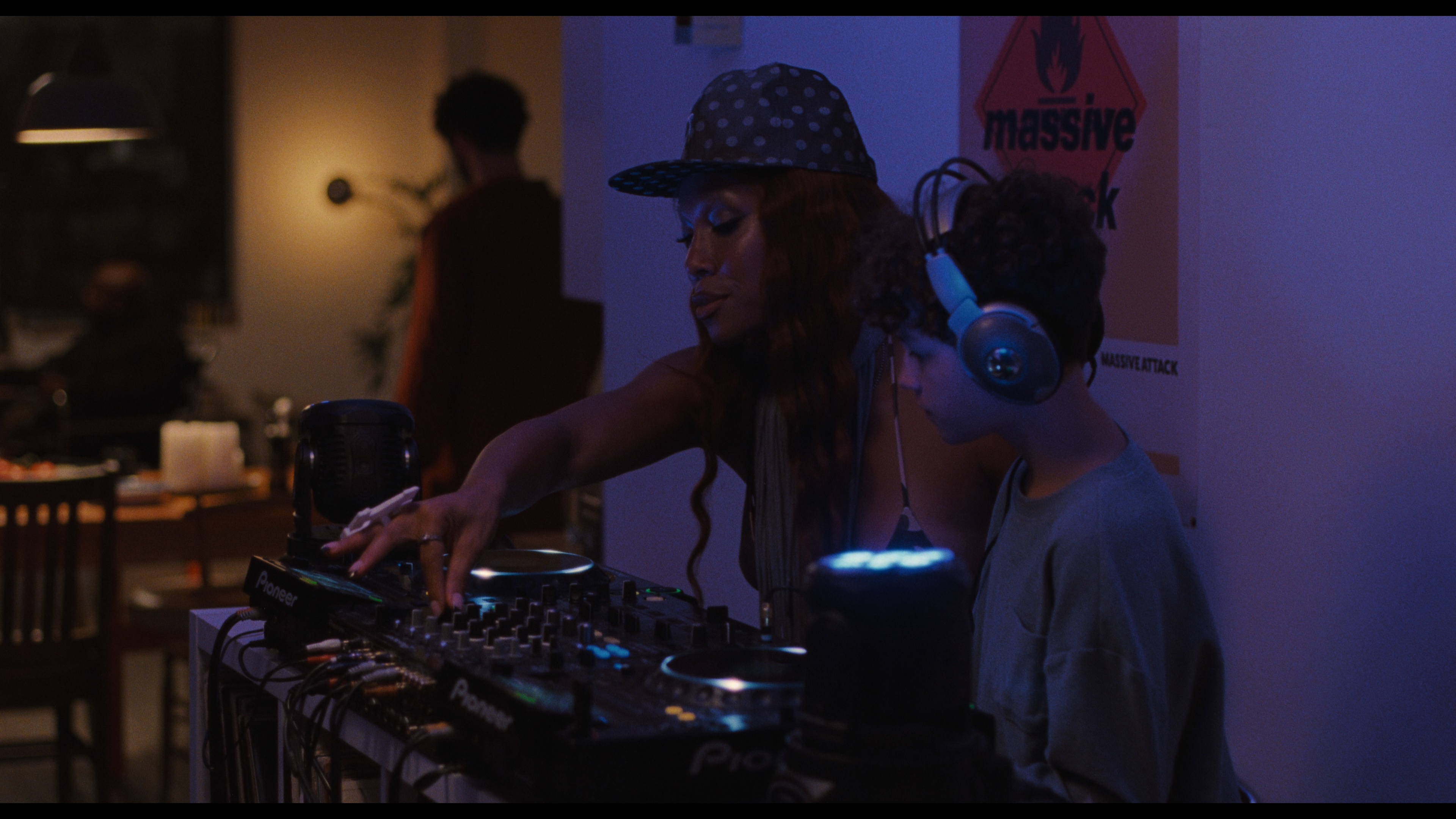
It’s a fair question to ask, and one that the movie itself prompts viewers to pose about its characters: Is this a proper environment for a child? After all, Peter ends up enlisting Arlo, a quick learner on the turn tables, to DJ some of his parties, and while there’s a difference between actually going to a club at 2 a.m. and filming a scene in a club that’s meant to look like it’s 2 a.m., Absolom got more of a taste of underground New York nightlife than possibly any other kid his age on earth. Firstman said he was “hyper aware” of the film’s potential to expose Absolom to inappropriate topics, and fine-tuned which lines would be said in front of the child actor. Absolom says he felt “really well protected” on set. For one thing, his mother accompanied him during shooting. “I understood most of the subjects that were going on, but I just wanted to read through the whole script to understand my character better,” he recalls. “I didn't really need to fully acknowledge what was going on.”
For Club Kid’s kid, shooting the movie was a learning experience. He put the DJing skills he absorbed to use, spinning at the after-party for the film’s Los Angeles premiere. The scene in which Peter’s DJ friend Saffron (Saturn Risin9) teaches Arlo how to use mixing equipment was improvised—Firstman directed Risin9 to abandon the script and just deliver a crash course in DJing. Absolom says he’s interested in clubbing when he’s of age, but “probably not as much as the people in the movie do.” And he’s not interested in drugs. “I'm not gonna do them ever. I don't see a point,” he says. But his biggest takeaway? “I can be friends with anyone, and I like meeting new people and seeing new personalities,” he says. Absolom worked alongside members of the queer community, gay men and trans women alike. He maintains shared streaming playlists with costars David Peck and Risin9, as well as Firstman. As for steering clear of so many of the challenges that have plagued child actors throughout Hollywood history, Absolom is largely focused on attempting not to internalize online negativity. “Most of the things that will happen to a child actor are seeing negative comments and feeling really bad about yourself because of it,” he says. “Right now, I can just block those out.”
Together on Zoom, Firstman and Absolom ribbed each other about a fried-chicken dinner at New York’s COQODAQ that Firstman had coordinated for them to get acquainted that never actually happened—Firstman showed up but Absolom didn’t. “I didn't get informed, so I got in the bath,” he says. And Firstman still owes his actor $60 after a promise made on set to give him $20 for each take they needed for a difficult scene in which they both vomit in a pizzeria. “I think when Reggie learned that he could make fun of me, that was a big turning point. Teasing is my love language and people really love to make fun of me,” says Firstman.
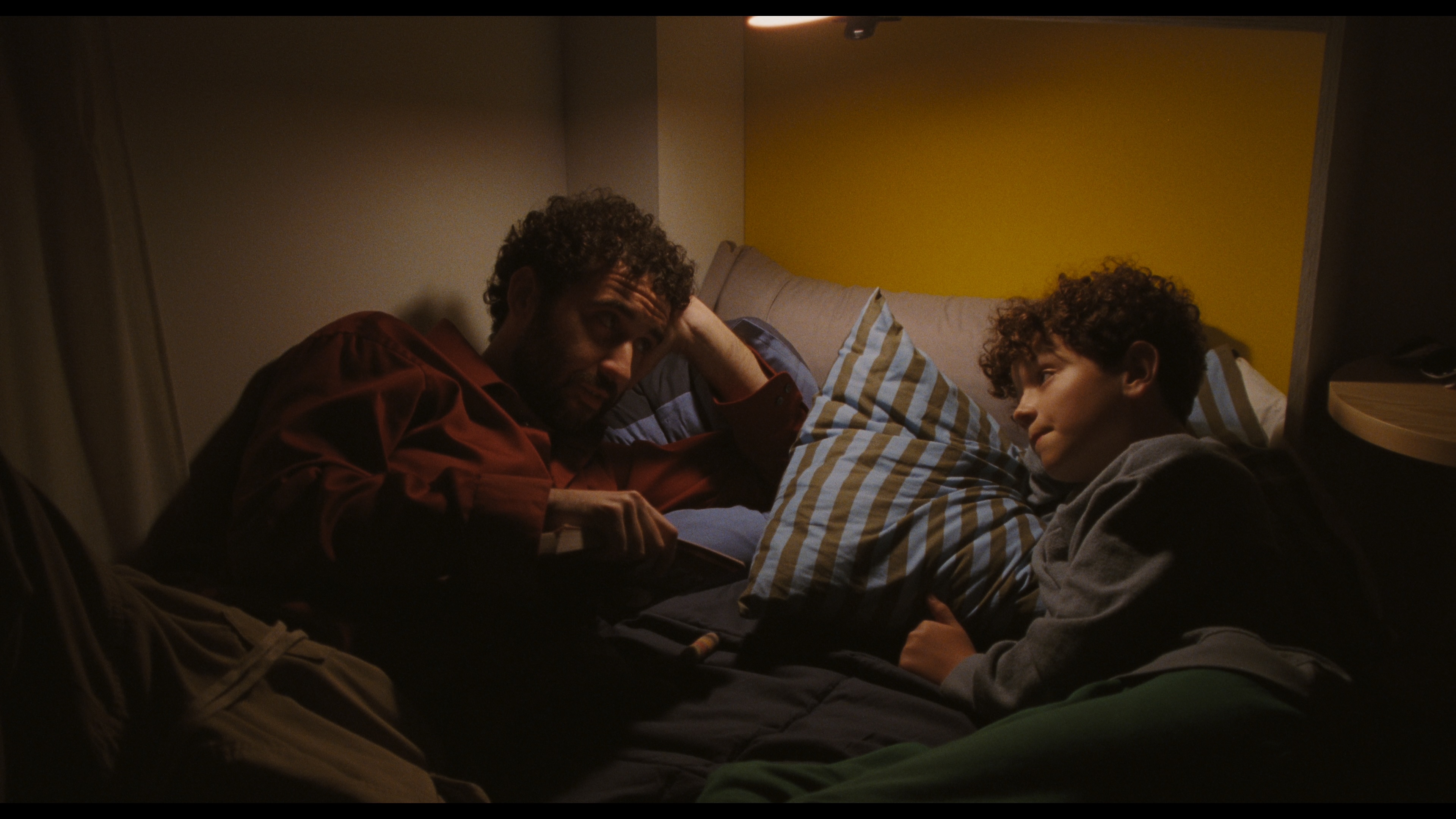
In the film, Arlo integrates seamlessly into Peter’s scene. Part of this is because, in Peter’s words, Arlo is “just so f-ckin’ cool…and you don’t need to do anything at all.” But the turn also functions as effective commentary on the eternal youthfulness of nightlife and the crowd it draws. “No one ever stops celebrating—from age 1 to when you die, you have birthdays, you have family events,” says Firstman. “Celebration is for everyone. And I think the way queer people do it is in a childlike way. You have middle school dances, and I feel like queer people keep that vibe going. We keep that sense of joy alive in us.”
For a time, at least. Without giving too much away, Club Kid traces the arc of Peter’s immersion in nightlife to a point where he is decidedly less invested in it, thanks in no small part to his newfound status as a parent. This, in turn, has led to online discourse suggesting that the film is ultimately conservative. Firstman isn’t having it. “I will not entertain the conservative allegations,” he says. “It's just not.” He rejects the notion that his film is “prescriptive,” explaining, “This is Peter's story and Arlo's story, and other characters do keep partying.” He points to a scene toward the end of the film where Peter briefly reunites with a member of his crew. “I tell Saffron to take care of herself, and she says, ‘I always do,’” he recalls. “And that’s my way of saying some people are cut out for this. They can make it work, and they can do it in a healthy way, and they can take care of themselves within the scene. This is a story about a man who couldn't at this time, and he needed to walk away for this moment. But I don't see it as a lifelong decision.” He suggests his character could return to the scene.
The fervor that Club Kid has whipped up, positive and negative, is hardly surprising given how strong of a reaction Firstman tends to elicit. He has discussed sensing “a hum of ‘everyone hates me’ for a long time,” despite having nearly a million followers on Instagram alone and several years’ worth of high-profile acting and writing gigs. Club Kid is personal to him not just because he made it, but because he poured himself into it. A scene where Peter describes his low self-esteem to Arlo might as well have been ripped from Firstman’s diary. “I've always been a really social person, and at the same time felt very lonely,” he says. “The part of Peter that I relate to a lot is feeling lonely inside a sea of people. I can have an inflated sense of ego, and I can have crippling [low] self-esteem. Both of those things are true. I think a lot of queer people feel this way a lot, and it's not bad. We've been through stuff, and it's hard to be queer. This movie was an act of compassion for myself.”