Noticing that driving after dark is tougher than it used to be can make any enthusiast unsettled. At first, you may assume it is just tired eyes, a dirty windshield, or harsh headlights from oncoming cars. But sometimes, these difficulties point to something deeper: real night blindness or another vision issue demanding attention. Recognizing when to act makes all the difference in nighttime safety and driving enjoyment.
After a long day, it is easy to blame night driving struggles on fatigue, glare, or the annoyance of dirty headlights. For many, straightforward fixes return that familiar nighttime confidence behind the wheel. Other times, persistent or worsening problems seeing after dark raise questions few want to ignore. Understanding the signs that separate normal discomfort from true night vision trouble is essential if you want to stay comfortable and safe long after the sun sets.
Almost every driver has experienced tired or strained eyes late in the day. Hours spent staring at screens, dry air, and the monotony of taillights ahead can leave your vision feeling fuzzy and your eyes burning. Typical tired-eye symptoms fade after a quick break, a bottle of water, or a bit of fresh air outside the car. Wiping a foggy windshield, replacing a grimy wiper blade, or changing your seating position are simple examples of fixes that often work right away.
Many cases of discomfort come and go with life’s routines. For example, glare from a dusty windshield or struggling after a poor night’s sleep can make traffic lights seem harsher. Similarly, walking into a brightly lit gas station helps your eyes recover, while pulling down the sun visor or stopping briefly at a well-lit rest area provides relief and helps restore normal vision after a draining stretch. Some drivers try glasses to see at night to reduce perceived glare, but these are not always necessary when simple changes solve the problem. These familiar remedies usually get you back on the road with restored confidence.
Trouble seeing after sunset that lingers, even when you are well rested and the car is spotless, might signal a deeper problem. Unlike normal fatigue, night blindness tends to show up as trouble adjusting after leaving bright places, slow adaptation after headlight glare, or missing curbs or lane markings on familiar drives. If you notice slow recovery after stepping into a dark cinema from a sunny parking lot, or if parking lot lighting never seems bright enough, these are all clues worth mentioning to your eye doctor. When symptoms persist, people often ask about night blindness glasses, but an exam is the right first step.
Night blindness, also known as nyctalopia, means your eyes struggle to adapt when moving from light to dark. Examples include taking much longer than friends to adjust after driving out of a well-lit garage, struggling to spot pedestrians on dim backroads, or becoming unusually disoriented after bright dashboard lights temporarily blind you. In that situation, see in the dark glasses may sound appealing, yet underlying causes still need to be identified. These are different from typical night driving annoyances, and they should not be dismissed as ordinary tiredness.
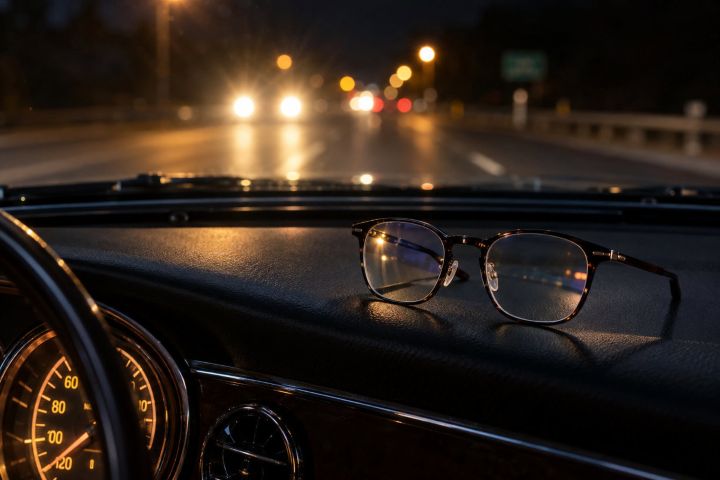
Good car care is often the first step in solving night driving woes. Cleaning all interior and exterior glass, regularly polishing foggy headlights, and making sure beams are properly aimed can greatly reduce glare and brighten your line of sight. Dim your dashboard lights to the lowest comfortable level so your eyes can better adapt to the surrounding darkness. Removing any clutter or shiny objects from the dash reduces stray reflections, giving you a clearer look at the road ahead. If you are considering glasses for seeing at night, remember that clean optics on the car itself often matter more.
Develop a routine of taking rest stops on long drives, especially if your vision becomes noticeably worse after a stretch behind the wheel. Track whether your difficulties persist even when every part of the car is clean and you are well rested. Schedule regular eye exams to spot early changes in vision before they compromise safety. If you consistently miss familiar turns or feel uncomfortable on low-lit routes, keep a list of these experiences to discuss with your eye care professional. Bring up any previous use of glasses to see in the dark so your provider can interpret what did or did not help.
Choosing the right eyewear for night driving can be complicated. While some night-driving glasses claim to improve low-light vision, most experts advise against tinted lenses for night use, since they reduce the amount of light reaching your eyes and may make things worse. Certain filters, however, can help with specific medical needs. For example, companies like NoIR offer specialized filters for people who have medical causes of night blindness or severe glare sensitivity. Some people with night blindness find that glasses that help you see at night offer a boost in visual comfort or contrast, but these are not a cure and do not guarantee safe night driving. Others compare glasses to see in the dark with clear anti-reflective coatings to see which feels more comfortable. Always discuss these options with your eye care provider and remember that no eyewear substitutes for proper headlight alignment, regular car care, and self-awareness during nighttime drives.
If you notice signs like persistent glare, missing hazards in low-light conditions, or taking too long to adjust after leaving brightly lit places, it is time to see a professional. Describe exactly when the issues occur and what driving situations are most troublesome. If you tried see in the dark glasses without meaningful improvement, share that detail during your visit. Being able to tell the difference between ordinary night driving discomfort and real night blindness can help you and your eye doctor make the right calls, whether that means adjusting your habits or seeking new solutions as car technology and vision care advance. For some people, night blindness glasses become part of a broader plan that also includes medical management and smarter driving choices.
Even if you are curious about glasses for seeing at night, treat any purchase as a complement to diagnosis rather than a shortcut around it. Many drivers find that optimizing headlight clarity, reducing interior reflections, and updating prescriptions provides more benefit than chasing quick fixes. If you do experiment with glasses to see in the dark, test them only in safe, familiar areas and discontinue use if they make the road appear dimmer. The best outcome comes from aligning your symptoms, your vehicle setup, and professional guidance instead of relying on trial and error.
The post Struggling to see after sunset? When night driving trouble is actually night blindness appeared first on Gauge Magazine.