
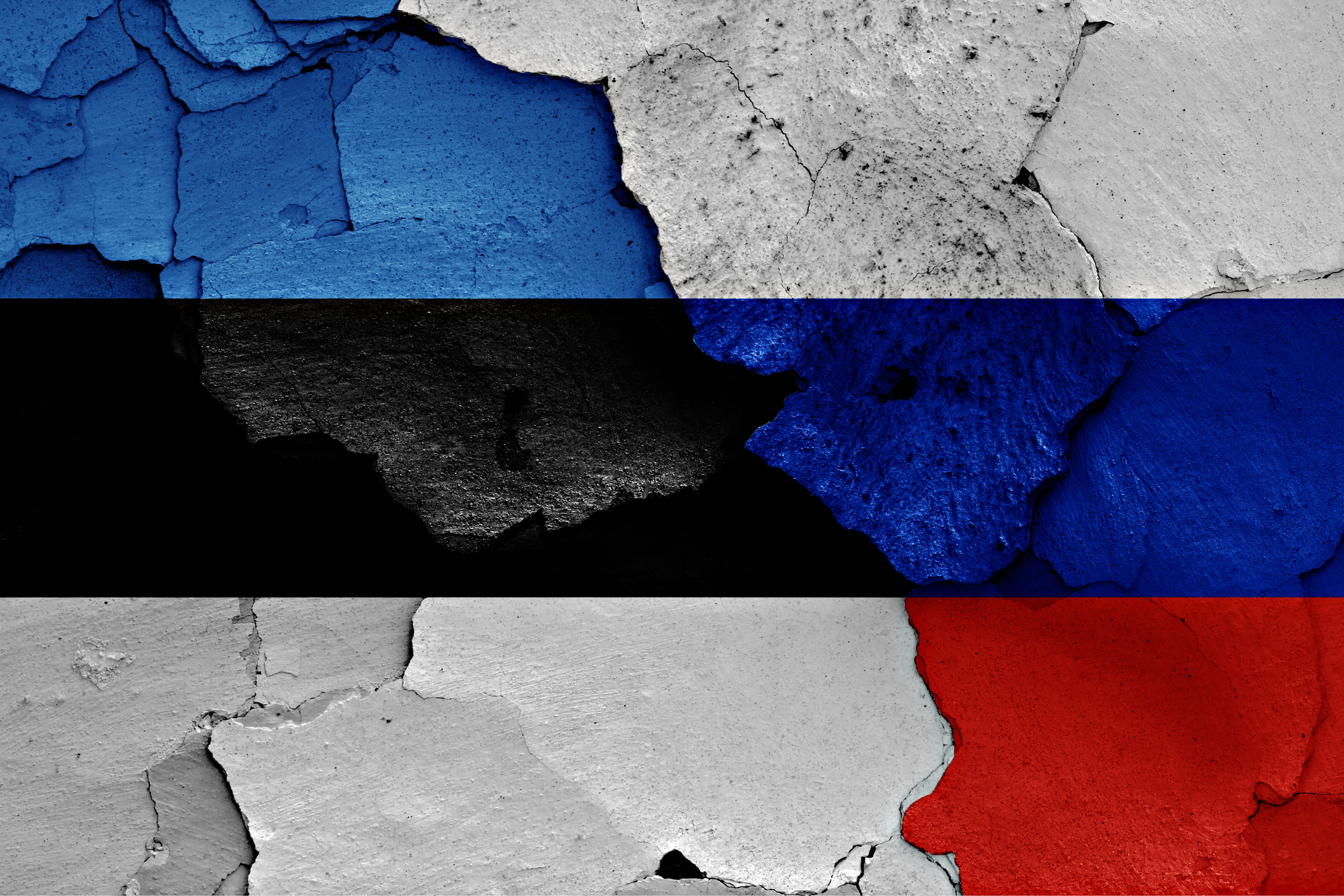
Russia has accused Estonia of bringing the two countries to the brink of “open war.”
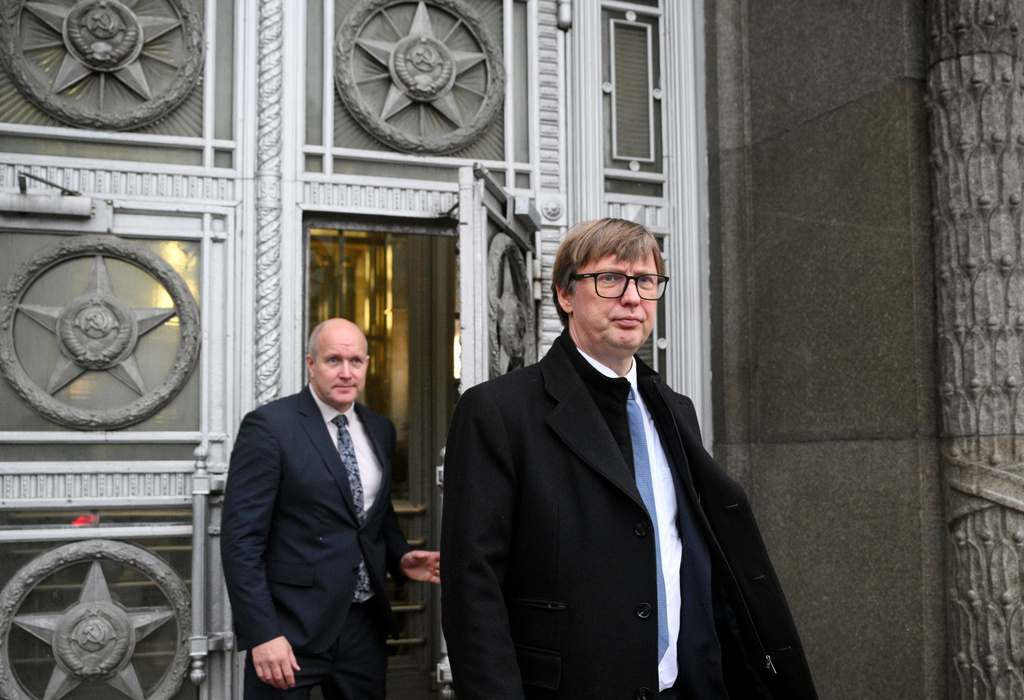
The Russian foreign ministry on Monday lodged a formal protest with the Estonian charge d’affaires in Moscow over Estonia’s decision to close its road border crossings with Russia. The ministry said the border closure was among several other “hostile” and “Russophobic” moves taken against Russia in recent years, adding that Russia reserves the right to respond with measures to protect its national interests.
“The Estonian diplomat was once again told that such provocative and extremely dangerous actions are on the verge of triggering open war with Russia,” the ministry said in a statement laying out the accusations.
“Tallinn apparently isn’t seriously considering the consequences of such a move,” the ministry warned.
Tensions between the Eastern European neighbors have sharply escalated since Estonia announced on Friday plans to close all road crossings with Russia for at least six months from December 1. Estonia’s decision came after it accused Russian intelligence of a foiled arson plot at an Estonian drone factory, which Moscow denied.
Estonia’s foreign minister Margus Tsahkna dismissed Russia’s claims and said Moscow is responsible for “the real security threats” in Europe.
“Russia is flooding the airwaves with baseless accusations against Estonia to distract from its own actions undermining European security,” Tsahkna posted on X on Monday.
As a member of both the NATO alliance and the European Union, Estonia would be entitled to assistance from members of both blocs if Russia launched an attack on Estonian territory. Asked about Russia’s accusations on Monday, NATO Secretary General Mark Rutte said NATO was monitoring the security situation in Estonia and that the alliance had options to respond if needed.
Here’s what to know about the recent hostilities between Russia and Estonia.
Russia’s foreign ministry said Estonia’s decision to close their road border is the latest of “numerous hostile actions” taken against Russia.
It accused the Estonian government of “tacitly” allowing Ukraine to use its airspace to attack Russia.
Russia has previously accused Estonia and other NATO Baltic states of letting Ukrainian drones use their airspace. Since Russia invaded the country in February 2022, Ukrainian drones have entered NATO airspace on multiple occasions, although NATO countries have denied permitting drones to use their airspace. The Ukrainian government said the incursions were a result of diversions caused by Russian electronic warfare.
Estonia rejected the allegation in a statement on Monday.
“While we generally do not comment on or engage with Russian propaganda narratives, in this case we can reiterate that Estonia has never allowed, and will never allow, its territory to be used for military operations by another country,” Estonia’s foreign ministry told Reuters.
The Russian foreign ministry also accused Estonia of attempting to obstruct the movement of Russian cargo ships in the Baltic Sea, including trying to “inspect, seize, and detain them with the aim of imposing a naval blockade” on Russia.
Estonia’s navy boarded and detained a Russia-bound tanker in April 2025, saying it lacked a valid flag, and attempted to stop another Russia-bound tanker the following month. There is no official blockade, and a senior Estonian commander told Reuters in April that the navy would refrain from detaining Russia’s shadow fleet vessels because of the risk of a military confrontation.
Russia’s foreign ministry pointed to Estonia’s Oct. 8 ban on the transit of Russian and Belarusian grain through its territory as another example of a “hostile” action against Russia. The E.U. tariffs grain imports from Russia and Belarus, citing Russia’s seizure of Ukrainian grain, although it allows shipments to transit the E.U. Estonia’s foreign ministry said Russia was looking for alternatives to Black Sea export routes and that Estonia would preventively keep its ports from serving as an outlet for Russian grain and potential revenue to fund the war.
Russia’s foreign ministry also alleged that the Estonian government imposed oppressive measures on Russian-speaking residents in Estonia. Among the alleged actions are a ban on the Russian language “at all levels,” criminal prosecutions and deportations of Russia sympathizers, and the threat of dissolving a Russian orthodox church in Estonia.
Estonia did not respond to those allegations in its statement. There is no official ban on the Russian language in Estonia. The government mandates Estonian in official settings and is phasing out Russian as a main teaching language in some kindergartens and schools as part of a transition to Estonian-language instruction. Russian is the mother tongue of around 27% of Estonia’s population, according to government data.
The Estonian Christian Orthodox Church and Pühtitsa Convent face a Dec. 28 deadline to comply with a law restricting ties to foreign religious bodies deemed a security threat, or face dissolution. Estonian law restricts administrative ties to Moscow, although it allows religious ties. The church has challenged the law at the European Court of Human Rights.
Relations between Russia and Estonia have been strained for years, and they further deteriorated after Russia invaded Ukraine.
Although Soviet Russia recognized Estonia as an independent state in 1920, Moscow has long sought to exert influence over its neighbor. The Soviet Union annexed Estonia in 1940 during World War II, before Nazi Germany occupied the Baltic state from 1941 to 1944. Soviet forces retook Estonia and placed it under Moscow’s rule until 1991, when Estonia regained its independence. The same year, the two countries restored diplomatic relations, and Russia began a phased withdrawal of its troops.
In 2004, Estonia joined both NATO and the E.U. Its border with Russia thus became part of the E.U.’s external border. A decade later, Estonia and Russia signed treaties defining their land border and maritime boundaries, but the treaties were never ratified.
Russia’s full-scale invasion of Ukraine triggered a breakdown in diplomatic ties. Estonia closed Russia’s consular offices in Narva and Tartu in 2022. In January 2023, the two countries expelled their ambassadors and downgraded bilateral representation to charges d’affaires.
Tensions have continued to escalate as the war has dragged on. In September 2025, NATO said three Russian fighter jets entered Estonian airspace. Earlier this year, Estonia began introducing overnight closures at certain road checkpoints, citing border incidents from the Russian side.
In recent weeks, Russia has escalated pressure on other countries bordering Ukraine. Last week, two Russian missiles and a suspected drone landed on Poland during a major Russian attack on Ukraine. Polish Prime Minister Donald Tusk said it appeared to be a deliberate provocation coinciding with European military drills in Poland. Days earlier, Moldova detected seven drones in its airspace amid Russian strikes on Ukraine, prompting it to summon Moscow’s ambassador-designate.
Estonian authorities said Russia’s military intelligence agency ordered an attempted arson on Estonian drone maker Threod Systems on Nov. 14. Moscow denied involvement. “We do not warn about these threats without reason,” Estonian Prime Minister Kristen Michal said about the foiled attack. Margo Palloson, Estonia’s domestic intelligence chief, told public broadcaster ERR that Russia has targeted around 10 Estonian defense companies.
In a Politico op-ed published Tuesday, Tsahkna said Estonia was closing its land border in response to “a growing number of acts of sabotage and intimidation” by Russia. He cited Polish authorities’ allegations that Russian intelligence services were behind an arson attack on Warsaw’s Marywilska shopping center, Germany’s discovery of an alleged Russian explosives-laden drone at Leipzig/Halle Airport, and Denmark’s claim that it foiled an alleged Russian intelligence plot to kill an American-Ukrainian citizen.
“These incidents form part of a broader Russian campaign targeting the whole of Europe, including countries far beyond its borders. The aim is to undermine the European security order, intimidate its neighbors and dictate the choices of sovereign nations,” Tsahkna wrote. “Closing our border will not eliminate these threats, but it will limit opportunities for hostile intelligence activities. It will also help close channels for sanctions evasion, a crucial part of depriving Russia of the resources it uses to finance its war economy and sustain its aggression.”
Whether the latest dispute will lead to open conflict is uncertain. Jennifer Kavanagh and Jeremy Shapiro argued in a December 2025 European Council on Foreign Relations report that a limited, deniable operation designed to test NATO’s unity was more likely than a direct Russian invasion of Estonia. An armed attack by Russia on Estonia could trigger NATO’s collective defense obligations, raising the risk of a wider war in Europe. Rutte reassured in October that there was “no imminent threat against NATO territory.”
Leonard Schütte, an expert on transatlantic security, wrote in May for the German Marshall Fund, however, that doubts about U.S. commitment to Europe could make Moscow more willing to test NATO in the next few years. In September, Estonian Defense Minister Martin Herem said Russia could be in a position to use military force against Estonia within a year if fighting in Ukraine ended within six months.
“Russia could use a military force of size ‘X’ against us. Are our preparations matching that? Are we capable of eliminating a military force of that size? And if we are not, then we should make those necessary preparations?” Herem said. “Or there is another option: We can all sign off on keeping our fingers crossed that it will not happen and do nothing at all.”