

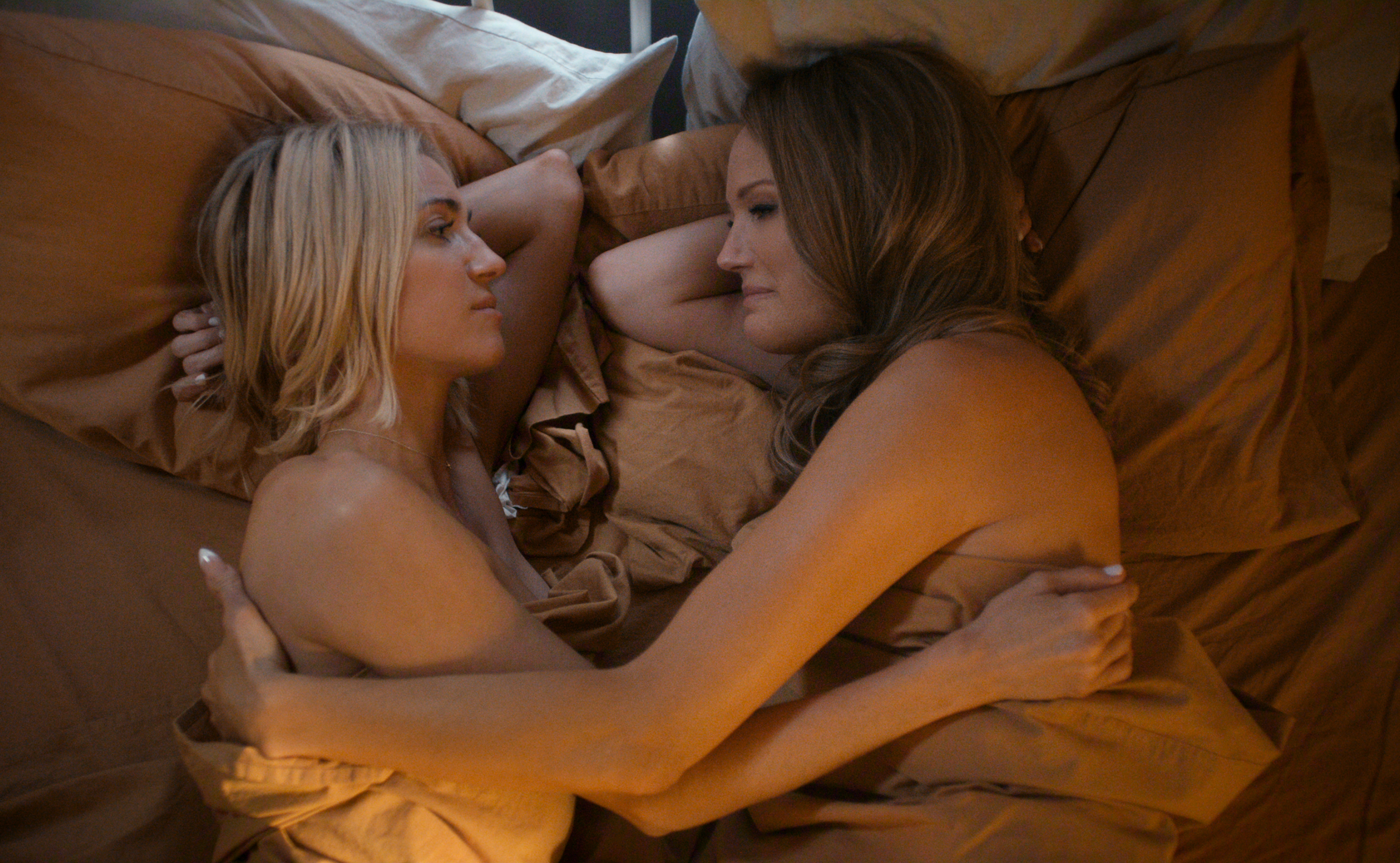
This article discusses the full second season of The Hunting Wives.
The Hunting Wives, whose second season has arrived on Netflix just in time to distract fans from our feasting families, isn’t so different from TV’s dozens of other soapy thrillers on paper. It’s got sex, murder, secrets, cattiness, betrayal, shameless wealth porn. But so do all the rest. It’s neither the smartest nor the silliest series of its kind. Why, then, is this show about an East Coast mom (Brittany Snow’s Sophie) who moves to the fictional town of Maple Brook, Texas and finds herself deep in the thrall of Margo (Malin Akerman), the glamorous wife of an oil tycoon with political ambitions (Dermot Mulroney), so popular that it dominated pop culture for months after its 2025 debut? I have given a lot of thought—quite possibly too much thought—between then and now to what makes it so singularly addictive. Below: a few ideas.
Maximalism is The Hunting Wives’ defining quality. Every character, relationship, plot twist, one-liner, and facial expression is milked dry. When characters share a meaningful glance, we can expect to see them in bed together. When a teenage girl visits her much-older male drug dealer, the song they ever-so-innocently rock out to will be Warrant’s “Cherry Pie.” When the plot requires a terrifying biker-gang matriarch, she will be played by Dale Dickey and go down screaming “ACAB, motherf-cker!” in a shootout with police.
It’s like the show is applying improv’s yes, and… formula to scripted drama. Should Season 2 go meta, casting the women of Maple Brook in a Real-Housewives-style reality soap? Yes, and that show’s producer will be a hot lesbian (Kim Matula’s Nadia) who gets distracted from her secret agenda of figuring out who really killed Season 1 dead girl Abby Jackson (Madison Wolfe) by an affair with Margo’s sometime lover Callie (Jaime Ray Newman). Should the new episodes also follow Abby’s boyfriend and Margo’s ex-side twink Brad (George Ferrier) to college? Yes, and he will be losing his mind the whole time—getting into fights, halfheartedly having a foursome at a party house called the Sh-t Pit with three girls who make good on their claim to “do everything together,” and going viral with a tearful acoustic rendition of (the very apt) Patsy Cline’s “Crazy,” which he used to sing with his murdered mother. And that video will get him discovered by a sleazy music-industry macher played by, why not, John Stamos. And that relationship will deteriorate in tandem with Brad’s sanity, until he becomes a full-on spree killer.
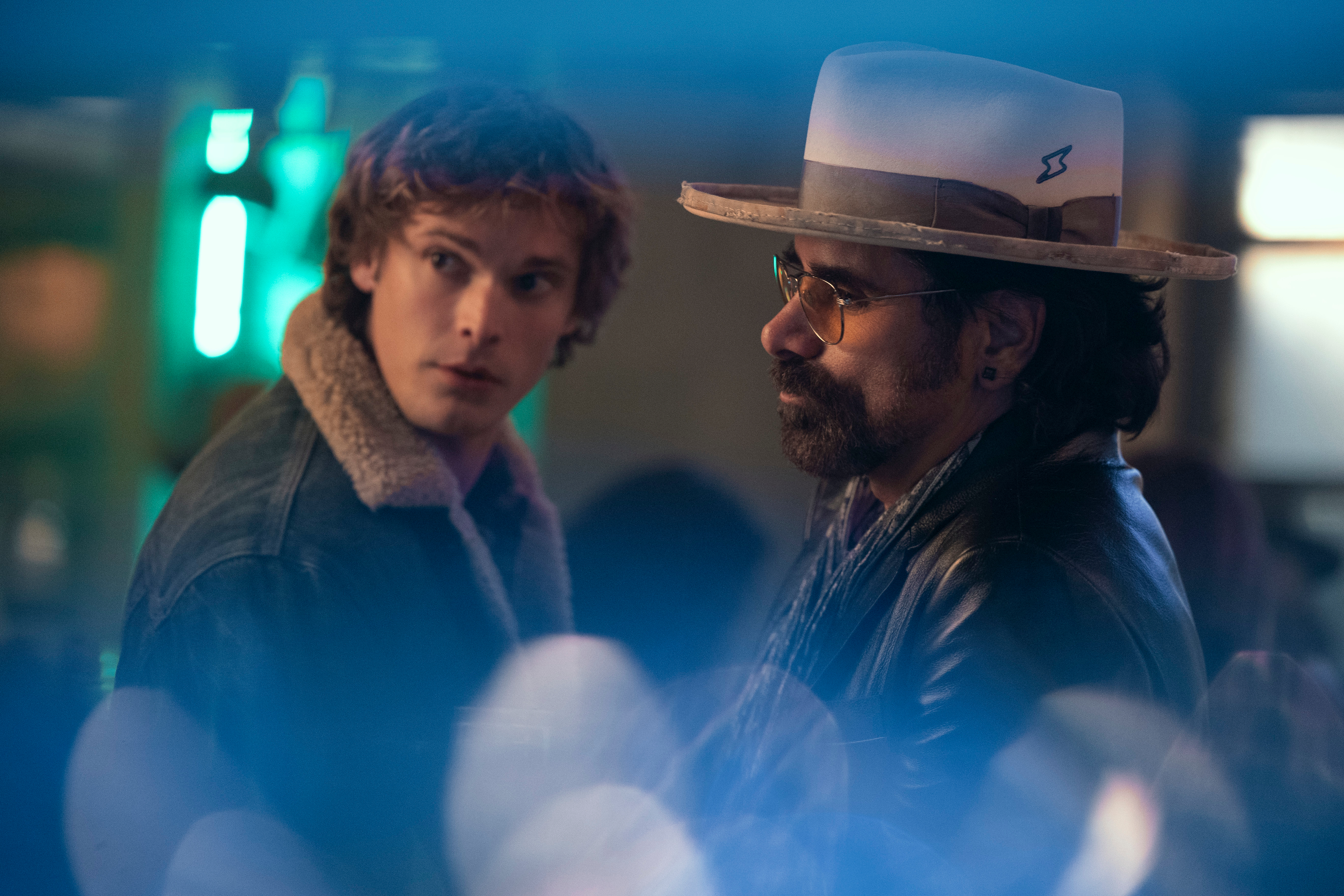
The upshot of all this escalation is, of course, that there’s no time for viewers to get bored. Brad is a secondary character who spends most of Season 2 sidelined at Baylor, yet his plot has more bonkers beats to it than the lead of a typical soap would get across its entire run. And that’s true of just about everyone on the show, from Callie and Nadia to police partners Salazar (Karen Rodriguez) and Flynn (Hunter Emery). For that reason, each episode of The Hunting Wives is a feat of compression. Reality stars can squabble for hours about a whole lot of nothing, and prestige domestic thrillers in the Big Little Lies tradition favor long, moody shots of high-end real estate or roiling seascapes or women with perfect bodies running in expensive athleisure sets. But in this show, the dialogue, action, or both tend to begin immediately after scenes change—and the second each scene has served its purpose, it’s on to the next. That breakneck pace also keeps viewers from dwelling on plot or character inconsistencies.
Is The Hunting Wives a red-state show that glamorizes the lives of wealthy, gun-toting, churchgoing Texans or a blue-state show that satirizes the same characters as hypocrites and sociopaths? As with its yes, and… approach to storytelling (as well as with regard to most of its characters’ sexual orientations), the answer is both of the above and more. As creator Rebecca Cutter, who adapted it from the novel by May Cobb, told the Hollywood Reporter after the first season became a sensation: “I’ve heard some people say that the show is part of this new mandate to make red-state content, and that wasn’t what it was. I mean, it was for horny middle-aged women.” (In the same article, Cutter identifies herself as a “liberal elite” like Sophie.) There is evidence that those women’s male partners are watching, too. Queer people of all genders have embraced the show—albeit not unanimously—for its homoeroticism and camp (both of which have been ratcheted up for Season 2), and the show’s stars love their queer fans back.
I think it appeals to audiences across ideologies because it hardly engages with the divisive issues it touches on, from guns to abortion to LGBTQ rights. The Hunting Wives is interested in the machinations through which cynical characters—particularly GOP gubernatorial candidate Jed, his would-be First Lady Margo, and former Democratic operative Sophie—exploit the signifiers of right and left for personal gain, which they care about far more than justice or ethics or godliness anyway. Hence the series of chess moves we see in the Season 2 finale around Margo going public with her abortion. By giving Jed a truly evil minion, this season, in the brilliantly named Lincoln Trout (Alex Fitzalan), the series takes its depiction of electoral politics as a nihilistic snakepit even further. This all tracks with most Americans’ estimation of politicians. Just because a show is sensationalistic, doesn’t mean it must be controversial.
The only time most characters are unguarded enough to reveal who they really are and what they really need? Between the sheets (or wherever else they happen to be hooking up). Consider the montage of characters going at it that arrives at approximately the midpoint of the second season, early in Episode 5. Sophie and Margo are reunited, and their voracity confirms their mutual obsession, even if what bonds these two psychos isn’t what any person with a full spectrum of human emotions would call love. Callie is on top of Nadia, who is handcuffed to the headboard and has her ankles bound; last season, we watched the future star of Married Justice dominate her enormous husband, and after Margo’s manipulations, she must be desperate to regain a sense of control. Speaking of said enormous husband, Johnny (Branton Box), there he is at work after hours, indulging his own queer desires—the same ones that were so heavily implied in Season 1. Cut to Jed watching a pair of topless female escort types make out at his feet, getting off on the mundane thrills his own money and power can buy. Meanwhile, on a couch at a glamorous industry party, Stamos’ Chase reaches over to massage Brad’s shoulder as both men are being serviced by women whose faces we don’t even glimpse. Which tells us basically everything we need to know about Chase’s interest in the talentless Brad.
Whether they’re domestic dramas or reality soaps, Wife Shows tend to also be Mom Shows. Not so for The Hunting Wives. Margo’s childlessness is a major plot driver. Sophie and her milquetoast husband Graham (Evan Jonigkeit) do have a little boy, Jack (Emmett Moss), but he mostly functions as a bargaining chip in their shambles of a relationship and something of value that she stands to lose by letting Margo suck her in. He may have gotten more screen time in Season 1, but I doubt Jack was present for even 10 minutes of the entire new, eight-episode season. In fact, the only offspring of a Hunting Wife who is an actual character with a personality is Brad—and that’s because he was introduced as a teenager who was, like everyone else in Maple Brook, sleeping with Margo. This all makes sense in light of the show’s tone. There’s no room for qualities like sweetness or cuteness or innocence amid such cynicism, and children would ruin all the cold-blooded fun by raising the emotional stakes of the characters’ misdeeds.
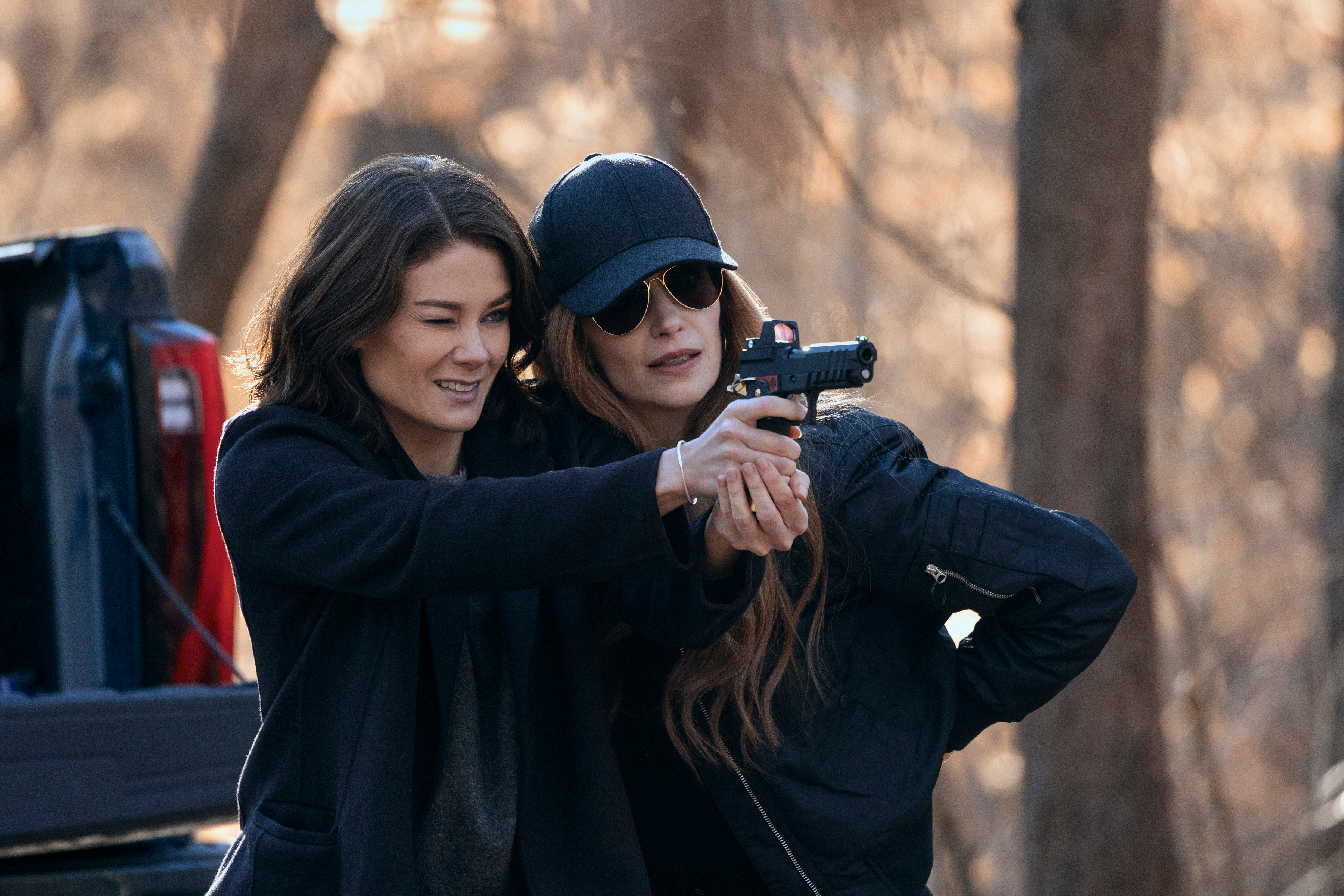
The Hunting WIves makes it easy to cheer on Margo and Sophie—who are both, never forget, actual murderers—because the men trying to control them are pure evil (Jed, Lincoln), or at least extremely annoying (Graham), and also because we want to keep watching two actors with explosive chemistry get into fun, sexy trouble together. Are we emotionally invested in their love? Do we want to see them live happily ever after? I, for one, am not and don’t care. But a show’s stakes shrink considerably if it doesn’t have a single character who moves us. Here, that character is Salazar, a kind, diligent cop who wouldn’t be out of place as a Fargo hero. Yet, try as she may, she has yet to overcome Maple Brook’s corruption. Margo and Sophie may keep us binging, but it is Salazar’s ongoing quest that will give weight to the series’ endgame.