
Automotive video becomes convincing when weight, speed, reflections, suspension, camera movement, and sound all seem to belong to the same physical moment.
Cars are unusually unforgiving subjects. Most viewers may not be able to explain why a generated driving shot feels wrong, but they notice it immediately. A wheel appears to slide rather than roll. The body stays perfectly level while the road changes beneath it. Reflections move in a different direction from the camera. A vehicle enters a corner quickly, yet its mass seems to disappear. Each error may last only a fraction of a second, but together they weaken the entire film.
I think this is why automotive work provides such a useful test for generative video. A car combines rigid geometry, glossy materials, transparent glass, moving mechanical parts, changing light, and rapid interaction with a real environment. The camera is often moving too. Producing an attractive frame is only the beginning; the system has to preserve a believable relationship among all those elements over time.
Seedance 2.0 is relevant here because its capabilities go beyond basic text-to-video generation. It is designed for complex motion, multimodal references, stronger instruction following, audiovisual generation, video extension, and targeted editing. For an automotive team, those abilities can help create concept films, test camera plans, explore locations, and visualize transitions before committing to an expensive production day.
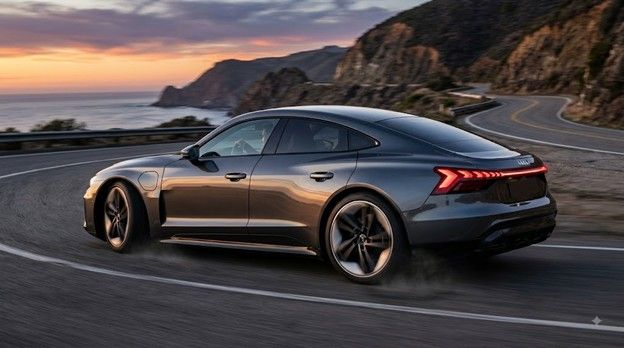
When I review an automotive shot, I start with weight. A compact city car, a large utility vehicle, and a low sports coupe should not respond to the road in the same way. Acceleration shifts the body backward. Braking pushes weight toward the front axle. A bend introduces roll, while an uneven surface produces smaller vertical movements. The tires, suspension, body, and camera should all acknowledge the same forces.
Seedance 2.0 places particular emphasis on motion stability and physical plausibility in complex scenes. That does not remove the need for inspection, but it gives creators a better foundation for shots in which a vehicle must interact with the road rather than float across it. A useful prompt can describe the speed, surface, steering action, body response, and camera behavior as connected events instead of treating them as separate visual decorations.
Small environmental reactions matter as well. Water should leave the tires in a direction consistent with movement. Dust needs time to rise, spread, and settle. Reflections on the body should respond to roadside objects as the car passes them. Even the driver’s posture can reinforce acceleration and cornering. These secondary details are what make the main action feel grounded.
The current Seedance 2.0 interface supports text, image, video, and audio references. In a practical automotive workflow, that means the creative team can supply approved vehicle images, a road or location reference, a camera-motion example, and an audio sample rather than expecting one long prompt to define everything. Each material can answer a different part of the brief.
A car is not merely a category of object. Its silhouette, grille, lighting signature, wheel design, panel lines, glass shape, and proportions are part of a carefully controlled identity. A generated clip can feel generally automotive while still being unusable because the vehicle changes between shots or because a distinctive feature becomes generic.
I would begin with a deliberately limited image set: clean front three-quarter, rear three-quarter, side, and interior views, all representing the same specification. If one reference shows a different wheel package or trim color, the model receives a contradiction that may surface later. Product accuracy starts with reference accuracy.
Seedance 2.0 can use multiple images alongside video and audio materials, allowing the visual brief to retain more product information than a text description alone. The written instruction can then concentrate on what should happen: preserve the vehicle design, move from a low tracking angle to a side profile, let the road curve toward the coast, and keep the late-afternoon lighting consistent.
Even with strong references, I would inspect badges, lamp geometry, door seams, wheel spokes, mirrors, and the relationship between the cabin and exterior. Exact lettering is especially sensitive and may be better added or corrected during conventional post-production. The goal is not to assume perfect continuity, but to detect where the result departs from the approved design.
“Dynamic cinematic camera” is common prompt language, but it does not describe a shot. A director and cinematographer need more specific relationships. Is the camera mounted close to the road, tracking beside the front wheel? Does it lead the car from a fixed distance? Does it begin on a reflection and rise to reveal the full vehicle? Where does the lens appear to be, and why does it move?
Seedance 2.0 offers stronger camera planning and the ability to reference motion from video. That makes it possible to show the desired movement rather than explain every spatial detail in words. A reference clip can communicate speed, height, orbit, timing, and acceleration, while separate images define the car and environment. The prompt tells the model which qualities to borrow and which content to replace.
I still prefer camera movement with a clear purpose. A slow lateral track can emphasize proportion. A controlled push toward the cabin can move the story from exterior design to the driver experience. A rising crane-like reveal may establish landscape and range, while a tightly stabilized chase shot can communicate performance. If every shot circles, dives, and accelerates, the film quickly loses visual hierarchy.
This is where director-level control should be understood as decision-making, not simply more movement. The model can help execute precise instructions, but someone still has to decide what the viewer should notice and when. A quieter camera is often the more confident choice, particularly when the design itself deserves attention.
Suppose the brief is a fifteen-second film introducing an electric crossover. The first shot is a static dawn close-up as the daytime running lights activate. The second follows the vehicle leaving a quiet driveway. The third tracks it along an open road, and the final shot settles into a wide landscape while the car comes to a controlled stop.
For that sequence, I might give Seedance 2.0 several clean vehicle images, a reference for the dawn color and atmosphere, a short tracking clip that demonstrates camera speed, and an approved sound texture. The prompt would assign each reference a role and describe the continuity between shots. It would also specify that body color, wheels, lighting signature, and environmental direction remain consistent.
The resulting film would be a working visual proposal rather than an unquestioned final master. It could help the team evaluate whether the sequence communicates calm confidence or feels too slow, whether the road shot deserves more time, and whether the transition from private space to open landscape supports the positioning. These are useful decisions to make before booking vehicles, roads, rigs, and crew.
Seedance 2.0 also supports extension and editing workflows. If the driving shot works but ends before the camera completes its move, extension may preserve the direction better than rebuilding the whole scene. If one action or visual element is wrong, targeted editing can be explored before discarding an otherwise successful sequence.
Automotive footage is often judged with the eyes, yet much of its physical credibility arrives through sound. Tire texture, suspension movement, airflow, rain, gravel, indicator clicks, door seals, and cabin ambience all help the audience sense material and weight. Even an electric vehicle has a rich acoustic environment; removing the engine does not mean removing sound.
The unified audiovisual approach in Seedance 2.0 can generate or reference audio in relation to the picture. This is useful when a concept needs synchronized road noise, environmental effects, music, or other cues. A wheel crossing from smooth asphalt onto gravel should produce a change at the correct moment. A door closing should feel connected to the visible material and movement.
I would avoid exaggerating every effect. Commercial sound design often works through selection. A single detailed door close can say more about build quality than a dense layer of dramatic impacts. A soft reduction in exterior noise when the camera enters the cabin can communicate insulation without any spoken claim. Restraint can make the experience feel observed rather than advertised.
Every output deserves a frame-by-frame product check. I look at wheel rotation, tire contact, suspension response, steering angle, reflections, window transparency, light direction, road markings, and the consistency of body panels. I also watch for impossible camera paths. A virtual camera may pass through a barrier, occupy the same space as the car, or change lens behavior in the middle of a move.
Brand and legal review remain necessary. Vehicle specifications, performance implications, safety features, and range claims must come from approved information, not from what a generated scene appears to suggest. Roads, driving behavior, logos, people, music, and reference footage also require appropriate rights and permissions. Generation speed should not shorten the approval process that protects the audience and the brand.
Returning users who remember the earlier site can consult the notice explaining that Seedance2.ai has moved to Seevio.ai. Recording that change in internal workflow documents is worthwhile, especially when teams return to old prompts and source materials months after a project has ended.
I would also save the exact prompt, reference set, settings, and review notes for each accepted shot. Without that record, a successful output becomes a visual accident that is difficult to reproduce. Automotive production involves many stakeholders, and a clear trail makes it easier to explain why a particular image, movement, or sound was chosen.
The strongest role for Seedance 2.0 in automotive work may be helping teams decide which ideas deserve full production. A generated previsualization can reveal that a complicated orbit adds little, that the hero angle arrives too late, or that a simpler road sequence communicates the vehicle more honestly. It can also help compare locations, times of day, camera heights, and transitions while those choices are still flexible.
Some generated shots may be suitable for finished digital content after careful review and post-production. Others will remain concept films, storyboards in motion, or references for a live-action crew. Both outcomes are useful. The important point is to decide the role of each shot rather than treating all generated footage as automatically final.
Seedance 2.0 brings together physical motion, multimodal reference control, camera direction, editing, and synchronized sound in a way that suits the interconnected nature of automotive filmmaking. But the model does not replace the eye that notices a false reflection, the director who chooses a restrained reveal, or the product specialist who protects a design detail. Its value is clearest when those people use it to test ideas earlier, communicate them more precisely, and arrive at production with a stronger understanding of the film they actually want to make.
The post How Seedance 2.0 Brings Physical Realism and Director-Level Camera Control to Automotive Videos appeared first on Gauge Magazine.