
Most drivers don’t ignore maintenance because they don’t care. They ignore it because modern vehicles are complicated, symptoms are easy to misread, and advice is everywhere. One forum says a noise is harmless. A video says replace three parts at once. A quick scan tool throws a code that sounds definitive, until it isn’t.
That’s where car manuals earn their keep.
A proper manual does more than tell you how to change oil or reset a warning light. It gives you context: what service is actually required, when it should happen, how systems interact, and what “normal” looks like for a specific vehicle. In practical terms, that means fewer guesses, better decisions, and a lower chance of paying for work the car didn’t need.
A lot of maintenance mistakes begin with a reasonable assumption. The brakes squeak, so the pads must be worn out. The engine runs rough, so it must need spark plugs. The temperature gauge creeps up, so the thermostat is probably bad.
Sometimes those assumptions are right. Often, they’re only part of the story.
A vehicle manual helps narrow the possibilities by tying symptoms to proper inspection steps. Instead of treating every issue as a one-part problem, it shows you the sequence: what to check first, what measurements matter, and what conditions need to be present before a repair is justified. That shift alone can save time and money.
Even experienced car owners tend to rely on habit. If your last vehicle needed a coolant flush every few years, it’s easy to assume your current one does too. If an older car tolerated a certain oil viscosity, you might stick with it out of familiarity.
But maintenance isn’t transferable in that way. Different engines have different tolerances, cooling systems use different fluid formulations, and service intervals can vary widely even within the same brand. A manual replaces memory with model-specific guidance. That matters more than many people realise, especially as engines become smaller, more turbocharged, and less forgiving of small maintenance errors. For a deeper look at keeping those systems in check, see our guide to engine maintenance.
One of the biggest benefits of a manual is timing. Good maintenance is not just about doing the right job; it’s about doing it at the right moment. Too early, and you waste money. Too late, and you risk secondary damage.
This is especially important now that many vehicles use a mix of fixed and condition-based service schedules. Oil life monitors, transmission service recommendations, brake inspections, and timing component intervals are not always intuitive. A manual helps separate items that truly need periodic replacement from those that should be inspected and serviced based on wear.
The Federal Trade Commission’s auto-repair guidance recommends following the manufacturer’s maintenance schedule for your type of driving. It also advises comparing shop-created maintenance schedules with the recommendations in the owner’s manual and asking the shop to explain additional services.
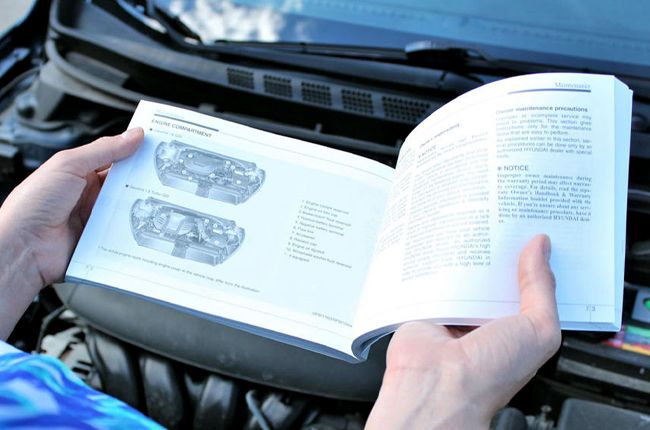
That’s one reason many owners and independent technicians still rely on OEM car service manuals: they lay out torque specs, fluid capacities, diagnostic procedures, and maintenance intervals that more generic resources often summarise too loosely. When the details are specific, the maintenance decision becomes more defensible.
Not every service item lives on the same schedule. Engine oil is one thing. Suspension bushings, accessory belts, and wheel bearings are another. Replacing condition-based parts on autopilot can become expensive quickly, especially on older vehicles where “preventive” repairs sometimes turn into parts swapping.
Manuals help by clarifying what should be monitored, what should be measured, and what should be replaced only after inspection. That distinction is useful whether you do your own maintenance or pay a shop. It helps you ask a better question than, “Is this due?” Instead, you can ask, “What evidence shows this part needs replacement now?”
There’s a common misconception that manuals are mainly for DIY enthusiasts. In reality, they’re just as useful for drivers who never plan to pick up a wrench.
When you understand the manufacturer’s service interval, the correct fluid specification, or the testing process for a warning code, you can have a more productive conversation with a mechanic. You don’t need to challenge every recommendation. You simply have enough context to ask informed follow-up questions.
If a shop recommends replacing a component, you can ask whether it failed an inspection step, whether there’s a manufacturer test procedure behind the diagnosis, or whether there are related parts that should be checked first. That tends to lead to clearer explanations and better outcomes. It also reduces the chance of authorising broad, expensive work based on vague language like “it’s probably that.”
A manual can also help you draw a smarter line between tasks you can handle and jobs better left to a professional.
Simple maintenance such as air filters, battery replacement, wiper blades, and some fluid services may be well within reach if you have the correct procedure. On the other hand, work involving safety systems, precise torque sequences, programming, or complex diagnostics usually demands more than confidence. It requires tools, experience, and often factory-level information. Knowing which of those parts to source yourself versus leave to a shop is easier once the manual has spelled out the job.
That’s the hidden value of a good manual: it doesn’t just make repairs seem possible. It shows what the job actually involves. Sometimes that encourages a capable owner to proceed. Other times, it reveals enough complexity to justify handing the work off. Either way, the decision is better grounded.
Cars rarely become expensive because of one dramatic failure. More often, costs build quietly through delayed service, preventable wear, repeated misdiagnosis, or using the wrong parts and fluids. A manual helps interrupt that pattern.
It gives structure to ownership. You know what to monitor, what to document, and what to prioritise. You stop treating maintenance as a stream of disconnected problems and start seeing it as a system.
That mindset matters whether you keep a car for three years or thirteen. Better information leads to better timing, better questions, and fewer avoidable mistakes. And in an era when vehicle complexity keeps climbing, that may be the most practical advantage a car manual offers: not just instructions, but a steadier basis for decision-making.
The post How Car Manuals Support Better Maintenance Decisions appeared first on Gauge Magazine.