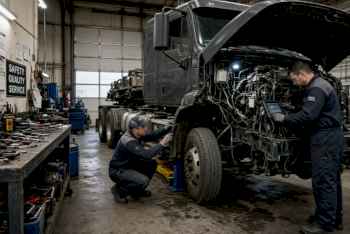

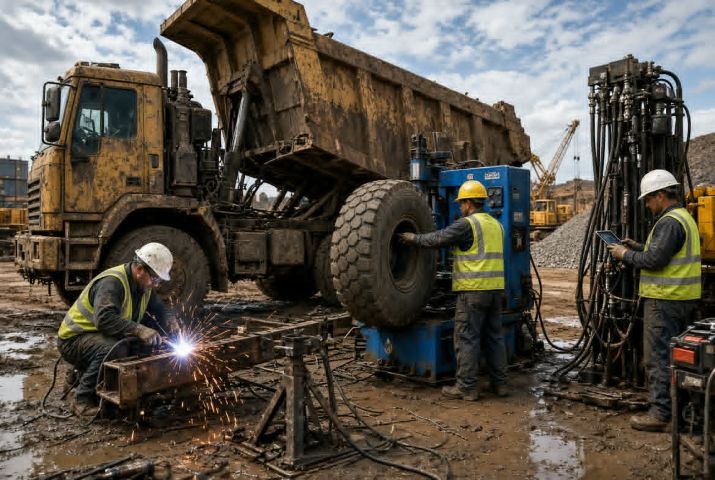
Heavy-duty vehicle maintenance has changed significantly as commercial trucks, buses, trailers, and specialized vehicles have become more complex and demanding. Heavy-duty vehicle repair is no longer limited to mechanical skill and conventional hand tools. Modern workshops increasingly rely on precision measurement, digital alignment systems, advanced frame-repair equipment, induction heating, and electronic calibration technologies to diagnose problems and restore vehicles accurately.
The shift is particularly important for commercial operators, where unnecessary downtime, premature component wear, and inaccurate repairs can quickly increase operating costs. For U.S. fleets, the Federal Motor Carrier Safety Administration requires motor carriers to establish systematic inspection, repair, and maintenance programs, although appropriate service intervals remain fleet- and vehicle-specific. As workshop technology continues to develop, equipment is becoming an essential part of a technician’s ability to deliver consistent, measurable results.
One of the clearest changes in commercial vehicle repair is the growing importance of precise measurement. Wheel and axle alignment, for example, directly influences how a vehicle tracks on the road and how its tires interact with the pavement. Traditional inspection methods may identify obvious problems, but modern alignment systems can provide more detailed measurements across multiple axles and vehicle configurations.
JOSAM has developed heavy-duty alignment systems designed for trucks, buses, trailers, construction equipment, and other large vehicles. Its current systems include camera-based and electronically assisted approaches that can make alignment measurements faster and more repeatable. The company’s I-Track II, for example, is designed for high-volume workshops and can measure a 6×2 truck in a manufacturer-stated five-minute process when installed and operated under the specified conditions.
This type of technology changes maintenance from an assessment based largely on visual inspection to a process supported by measurable data. A technician can identify alignment deviations, determine whether adjustment is necessary, and verify the result after corrective work.
That level of measurement is especially valuable for fleets because small alignment problems can contribute to irregular tire wear and increased rolling resistance over many thousands of miles or kilometers. Gauge Magazine’s explanation of how wheel-alignment machines help prevent steering and suspension problems provides additional information about the connection between alignment, tire wear, handling, and suspension condition.
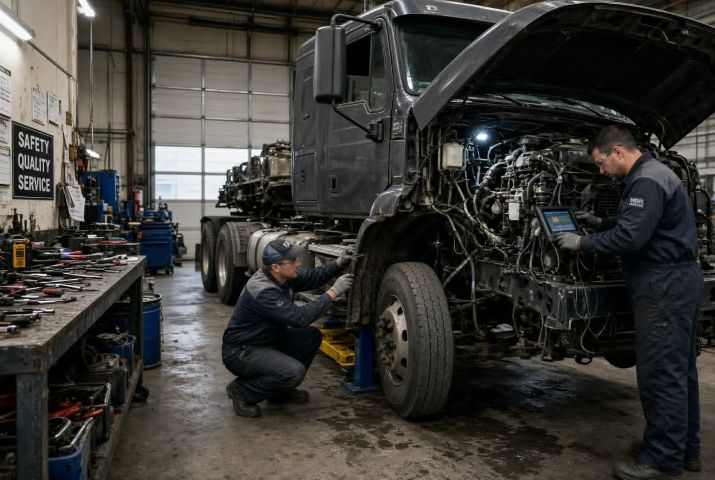
Modern alignment technology is also changing how repair bays are organized. Equipment that requires fewer physical components to be mounted on a vehicle can reduce preparation time and simplify the technician’s workflow. Portable systems can provide additional flexibility, allowing measurements to be carried out in different areas of a workshop rather than requiring every vehicle to remain in one dedicated location.
JOSAM’s Cam-Aligner illustrates this approach. The manufacturer describes it as a compact, mobile system suitable for a broad range of vehicles, including trucks, buses, vans, mobile cranes, and other heavy equipment. Its design allows technicians to perform measurements in different workshop environments or, where appropriate, at a customer’s location.
The broader lesson is that workshop technology should not be judged only by the accuracy of an individual measurement. Workflow matters as well. Faster setup, clear measurement procedures, and digital data can reduce unnecessary technician movement and help workshops handle inspections more systematically. For busy commercial repair facilities, those improvements can make a meaningful difference in daily capacity without compromising the quality of the work.
Several technological developments are particularly important in this transition:
Technology is also reshaping collision repair and chassis restoration. Heavy vehicles involved in collisions can suffer damage to frames, cabs, mounting points, and other structural components. Restoring these areas requires more than applying force until a structure appears straight. Technicians need to understand the original geometry and confirm that corrective work has returned the vehicle to the appropriate dimensions.
Modern frame-repair systems combine controlled hydraulic force with measurement equipment to make structural repairs more systematic. JOSAM’s heavy-duty equipment portfolio, for example, includes frame presses, cab towers, cab benches, and universal repair systems intended for different types of commercial vehicle damage. The company also offers Laser AM, which can be used to measure wheel angles and inspect chassis or frame construction.
This represents an important change in repair philosophy. Instead of relying primarily on experience and visual judgment, technicians can use measurements to establish a baseline, monitor changes during straightening, and verify the final condition. That does not eliminate the importance of skilled technicians. Rather, it gives their expertise better information to work with.
Repair teams using equipment from JOSAM can use measurement data to support technician judgment and verify structural corrections throughout the repair process. Vehicle-manufacturer procedures and structural repair limits must still be followed because not every chassis material or damaged component can be safely heated or straightened.
Another area where workshop technology is making a difference is controlled heating. Certain heavy-duty repair operations involve components that are difficult to straighten or manipulate using mechanical force alone. Induction heating can provide localized heat without requiring the broader application of heat associated with some traditional methods.
Modern induction heating equipment is designed to concentrate heat in a controlled area, which can help technicians perform specific straightening or component-related repair tasks more efficiently. JOSAM’s current equipment range includes induction heaters intended for different levels of heavy-duty repair work.
The value of such technology lies in control. Heavy-vehicle components are substantial, and uncontrolled heating can create unwanted thermal effects, alter material properties, or damage surrounding areas. A properly selected induction system can give technicians greater control over where heat is applied and how the repair process is managed.
However, equipment alone does not guarantee a correct repair. Technicians still need appropriate training, manufacturer-approved procedures, temperature controls, and an understanding of the material and component being repaired.
Commercial vehicles are also becoming increasingly dependent on electronic safety systems. Advanced driver-assistance systems can incorporate cameras, radar units, sensors, and control modules that influence functions such as collision warnings, emergency braking, lane monitoring, and driver support. Consequently, collision repair and maintenance increasingly require attention to electronic calibration as well as mechanical condition.
This development is changing the definition of a complete repair. A vehicle may have its frame or body physically restored, yet affected electronic systems may still require inspection, diagnostic scanning, aiming, or calibration before the vehicle is returned to service.
Calibration is not automatically required after every repair. The correct procedure depends on the vehicle, affected system, work performed, diagnostic results, and manufacturer service information. Repairs involving alignment changes, structural components, sensor mounting points, windshields, cameras, or radar units are among the situations that may trigger manufacturer-specified calibration procedures.
Modern repair facilities must consider the complete vehicle rather than treating each component as an isolated system. Alignment, frame geometry, suspension condition, sensor positioning, and calibration can interact. A disciplined workflow helps technicians identify these relationships and reduces the risk of completing one repair while overlooking another related issue.
Although advanced equipment can improve measurement and repeatability, it does not replace professional judgment. Heavy-duty vehicles vary considerably in configuration, operating conditions, load requirements, and repair history. Technicians must understand what the equipment is measuring, recognize abnormal results, and determine the appropriate corrective procedure.
Training is therefore becoming as important as equipment capability. JOSAM states that technician and service-personnel training is part of its support approach, covering methods for wheel alignment and straightening as well as effective equipment use.
The most effective modern workshop combines three elements: capable technicians, accurate equipment, and documented repair procedures. When those elements work together, technology becomes more than a convenience. It becomes a method for improving consistency, documenting work, and reducing avoidable errors.
Equipment must also operate within a broader preventive-maintenance program. Avoiding common heavy-duty truck maintenance mistakes requires appropriate service schedules, suitable replacement parts, regular tire inspections, accurate records, and properly trained personnel.
Modern heavy-duty repair is moving toward greater precision, measurement, and process control. From wheel alignment and frame straightening to induction heating and electronic calibration, workshop equipment is helping technicians address increasingly complex commercial vehicles with more structured methods. The goal is not to remove human expertise but to strengthen it with better information and greater control.
For fleet operators and repair professionals, this evolution also changes how maintenance quality should be evaluated. A successful repair is not simply one that gets a vehicle back on the road. It should restore the vehicle as accurately as practical, support safe operation, minimize unnecessary wear, and provide confidence that the work has been properly verified.
As commercial vehicle technology continues to advance, workshops that combine skilled people with precise, purpose-built equipment will be better positioned to meet those expectations.
The post Modern Equipment Is Redefining Heavy-Duty Vehicle Repair appeared first on Gauge Magazine.