
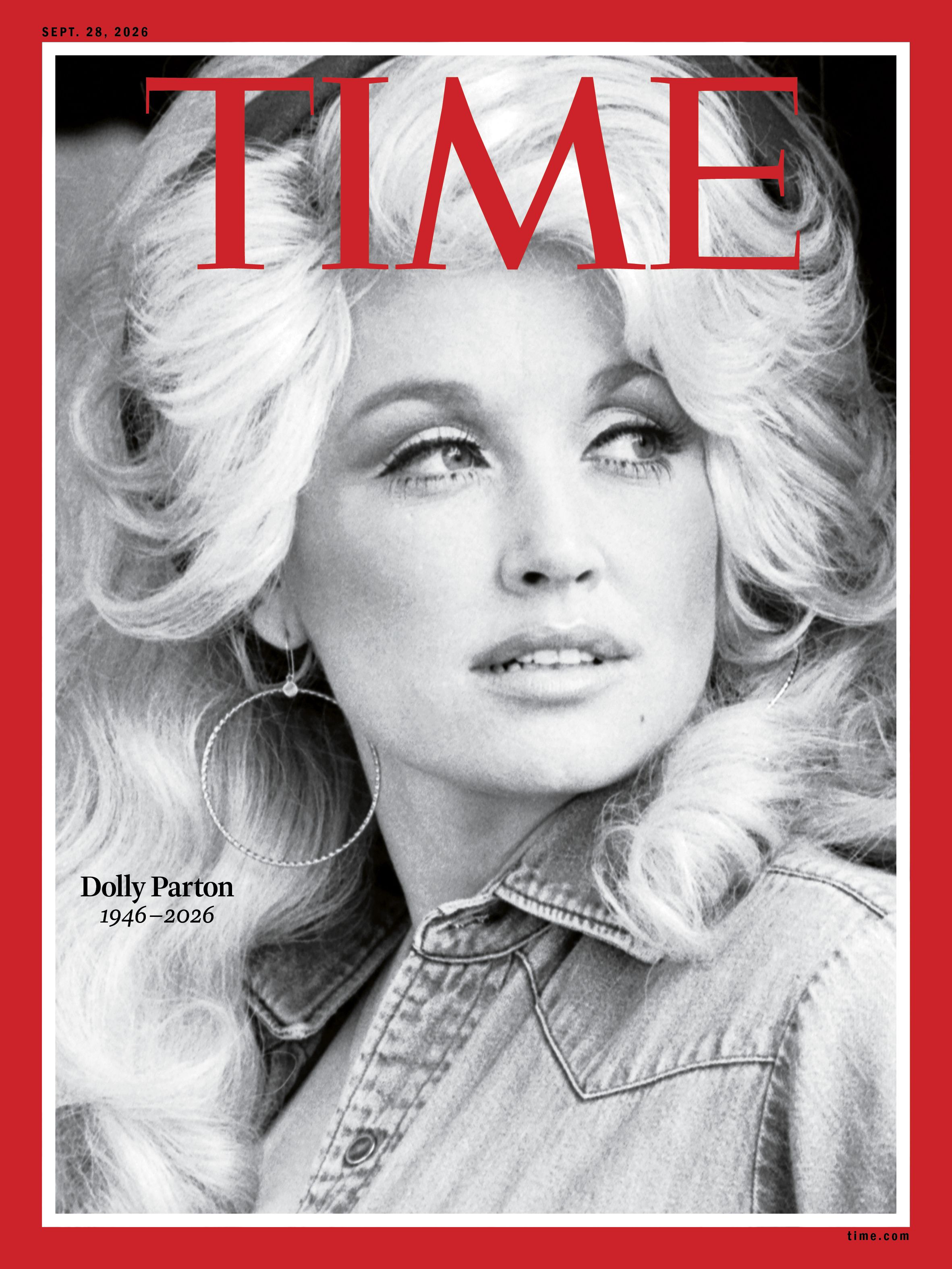
Dolly Parton, the beloved country-music superstar known for writing about the lives of regular people in more than 3,000 songs and, in later years, for giving away more than 300 million books to children around the world, has died in Nashville. She was 80. Parton had recently shared updates about health issues she’d been dealing with since the death of her husband Carl Dean last year, and her representatives told People that her death in Nashville came after a “brief battle with cancer.” Her nephew and bodyguard Bryan Seaver announced her death in an Instagram video posted to her account on Aug. 25, saying, “Dolly has lived in the light and is in the arms of Jesus, surely met by Carl, her parents, and countless others who have watched her and longed for her to meet them in the heavens.”
To her fans around the world, she was Saint Dolly—the American godmother who channeled the sorrows of everyday life into song, wrapping ugly truths in pretty packages. Though she was described by music journalist Robert Oermann as “the Mozart of our times,” Parton’s larger-than-life hair, excess in rhinestones, surgical implants, and cosmetic work concealed the iron will through which she confronted the day’s realities with her craft. Most importantly, she wrote and sang with a woman’s voice and heart about topics that uniquely touched her gender. Her songs include stories of stillborn births (“Down From Dover”), suicide (“The Bridge”), shame (“Just Because I’m a Woman”), abuse (“A Gamble Either Way”), adoption (“Doing This for Your Sake”), isolation (“Two Doors Down”), mental institutions (“Daddy Come and Get Me”), and prostitution (“The Bargain Store”).
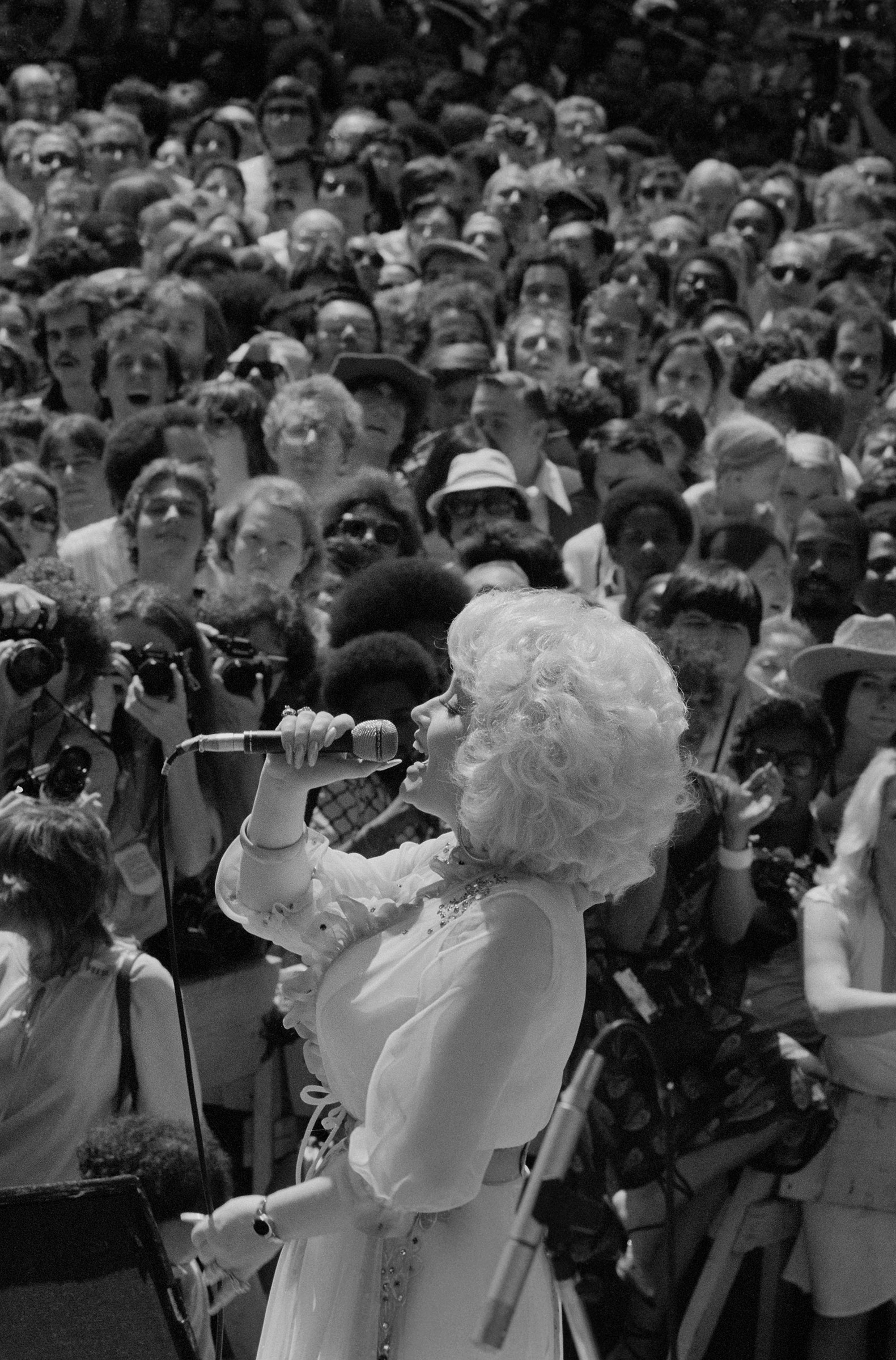
I saw Parton play live in concert during her Pure & Simple Tour in October 2016, a month before the most divisive election in American collective memory, and a year before I began reporting a podcast on her life called Dolly Parton’s America. At the time, I was looking for someone or something to believe in. On the television and in the news, hatred from both sides of the American political aisle had never seemed more grotesque, but at Parton’s show, we all sang together. Parton visited more than 60 cities that summer and fall. Looking back, I can’t help but wonder if she knew it would be something of a healing tour, the last of its kind she would do. When I asked Parton what “Dolly Parton’s America” meant to her, she responded that her perspective wasn’t limited by borders, that it was Dolly Parton’s World: “I just think we need to love one another. I think we need to try a little harder. We need to be a little kinder. We need to be a little smarter. We need to have more love and compassion.” The last time I saw her, she told me she was planning a comedy album. She also said that, unlike other artists of her stature for whom posthumously released music has been a point of contention, she’d recorded many more songs of hope she’d put away in a vault, to be released throughout the hundred years following her death.
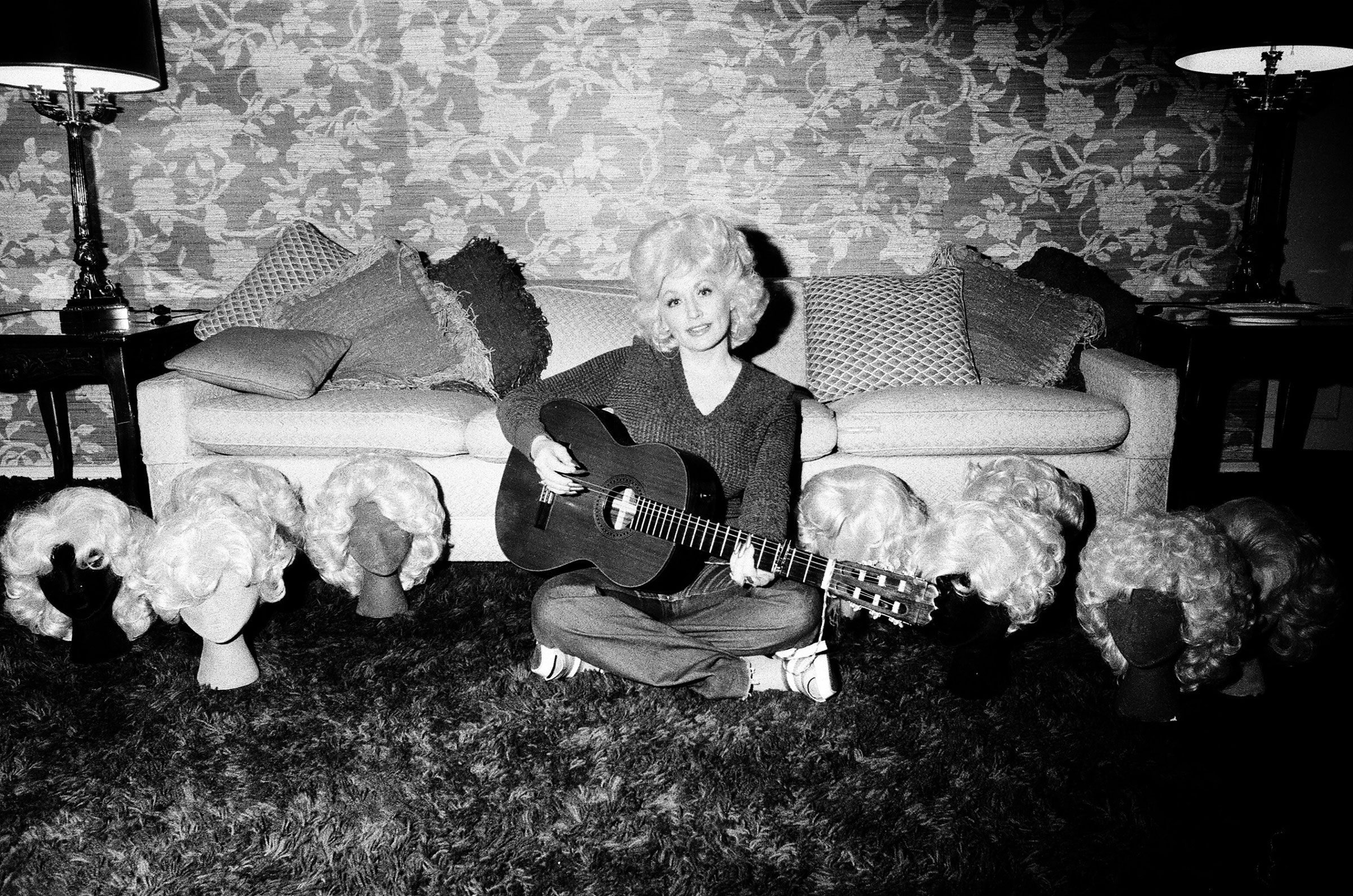
Parton was a genius from humble origins. Because of them, she remained vulnerable, even relatable, in the public eye. Many wealthy folk prefer to be compassionate from on-high, if at all, never getting their feet wet or hands dirty. Parton rolled in the mud. She claimed she modeled her look on “the town trash whore,” whom she thought was “beautiful.” She dressed in a way that was her idea of glamour: yellow hair piled atop her head, bright red lipstick and nails, high-heeled shoes, and a tight skirt. “I thought [that woman] was the prettiest thing I’d ever seen,” she once said on Ellen. “So I grew up to look just like her!”
Once Parton achieved a certain level of fame, her body became a punchline for the late-night circuit. When two male scientists made the world’s first cloned sheep, in 1996, they named it after Parton for its “large mammaries.” Parton laughed the cracks off with quips of her own (“I don’t know if I’m supporting them, or they’re supporting me”). For the Dolly podcast series, I asked Parton once about whether she thought her look stopped journalists, mostly men in the time she was coming up, from taking her work seriously, or viewing her songwriting as equally important to her work as a performer. She shrugged off the question: “Sometimes you have to look like Jezebel in order to get some angelic things done in the world.”
There are countless examples of remarkable women erased by history, but Parton survived her own story long enough to tell it. Her cycle of resurrections, the highs and lows, didn’t seem to change her much over the years, even as the highs garnered her over half a billion dollars.
Dolly Rebecca Parton arrived on Jan. 19, 1946, in an unheated cabin about an hour outside of Knoxville, Tenn., atop the Smoky Mountains. Her parents paid the doctor who trekked to their home to deliver her with a sack of cornmeal. The fourth of 12 children—as she put it, “Mama always had one on her or in her”—the kids slept three or four to a bed. Their only modern convenience was a battery-powered radio. Her childhood home had no indoor plumbing, electricity, or running water. She later compared it to moving from "the Dark Ages into the light ages."
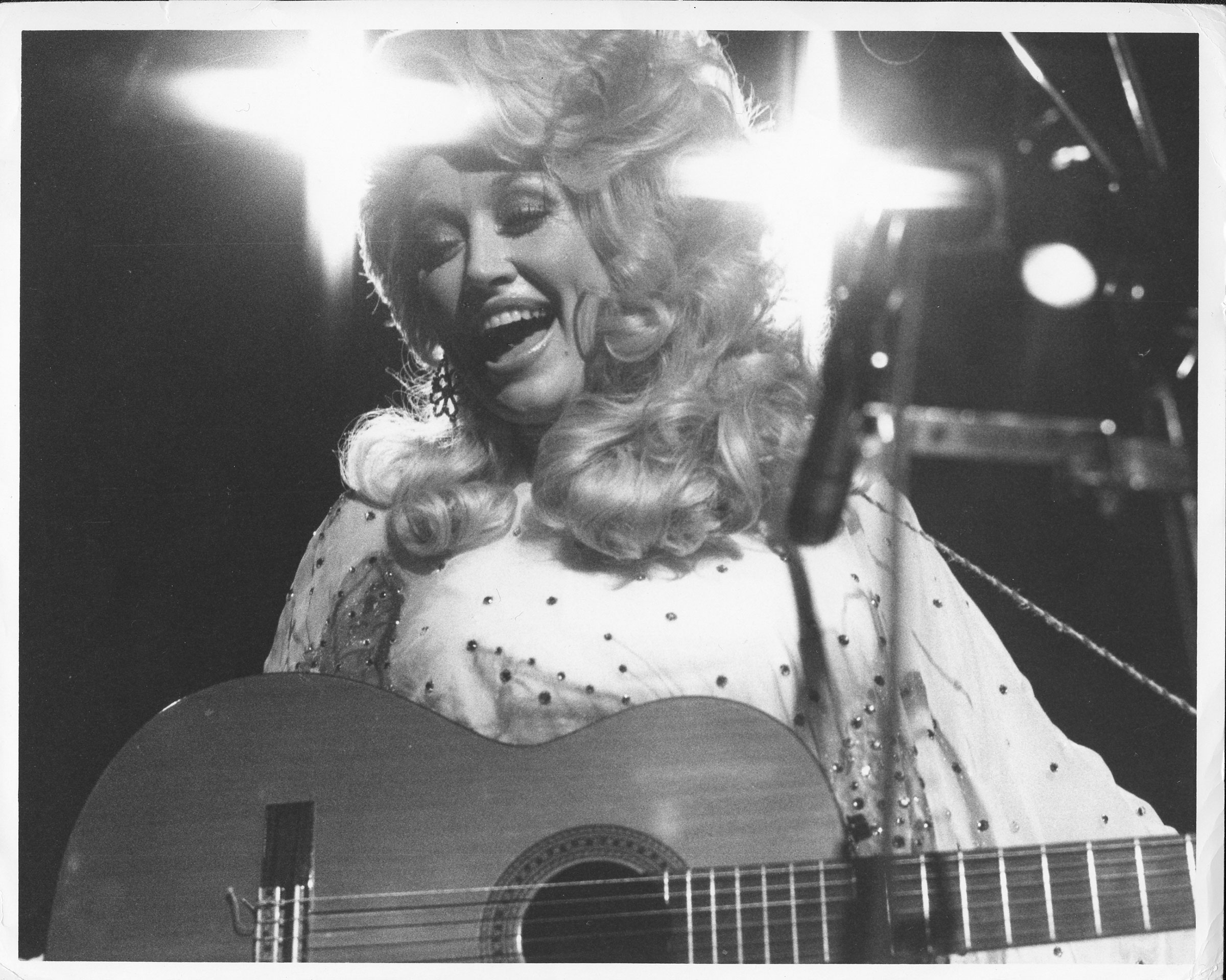
She grew up surrounded by pines, butterflies, creeks, and neon-green moss. As her father worked from sunup to sundown as a farmer, her mother sang the children Irish and Welsh folk songs “from the Old World,” passed down through the generations. One day, Parton fashioned a makeshift microphone by putting a tobacco stick into the ground and placing a tin can on top, performing a show of her own. By the age of 5, she had written her very first song, “Little Tiny Tasseltop,” about a corncob doll. By 8, her Uncle Bill Owens, who wrote songs and performed across East Tennessee billed as “Little Billy Earl with the Split Curl,” began to teach her the guitar. They sang together at supermarket openings, rallies, fairs, and talent contests. By age 10, he arranged for her to appear on the Cas Walker Show.
Walker was a coon hunter who’d started a local radio-cum-television show to promote his grocery stores. This was Parton’s first big break. At 11, Parton got her first recorded song, “Puppy Love,” co-written with Owens, on the radio, and at 13, she told Johnny Cash she wanted to sing at the Grand Ole Opry. So when an older Opry performer gave up his spot one Saturday night in 1959, Parton got her chance to sing at the historic venue. Cash himself introduced her to the crowd of 2,000. “We’ve got a little girl here from up in East Tennessee,” he said. “Her daddy’s listening to the radio at home, and she’s gonna be in real trouble if she doesn’t sing tonight, so let’s bring her out here!” That night she received three encores.
The day after she graduated high school, Parton took a Greyhound 180 miles to Nashville. For weeks she lived off soups made of ketchup and mustard and food left in the halls of hotels. But these scrappy days quickly paid off. She landed a record deal at 19, and soon after, a husband: a handsome, quiet man named Carl Dean, whom she met at the Wishy Washy Laundromat and would remain married to until his death in 2025. When her record company’s president encouraged her to delay marriage in order to keep her broad appeal to a male audience, she married Dean anyway, in secret. It was the early 1960s. There were obstacles to women owning a home, having credit in their own name, and taking out loans, so Parton moved like perfume, wafting through the world of men while always doing things her own way.
When her prophetic single “Dumb Blonde" hit the airwaves in 1966, it captured the attention of a star with the No. 1 syndicated country-music television show in the nation. Porter Wagoner, known for his lavender Nudie suits covered with sequins and rhinestones, had been looking for a new “girl singer.” The pair’s love-hate working relationship kicked off quickly. On her very first stint on the show, Wagoner cut off a shy Parton before she even finished singing. Alternately fighting and writing, they produced hit after hit, and a bolder, louder Parton began to emerge. Wagoner made her a better performer, while she made him a better songwriter. Their partnership also sharpened her already acute sense of humor. She said of her seven years with him, “If I got myself in a spot where it looked like I couldn’t walk my way out of it, or move my way out of it, I would joke my way out of it.”
The Wagoner band worked constantly, and Parton learned how to hold her own onstage and in the studio. Early on in her recording career, she’d been panned as the ditz with “a Minnie Mouse voice,” but she came into a new level of mastery during this phase. While recording “The Mule Skinner Blues” in 1970, Parton took the reins; she sang the first note so long that the band could not begin to play until they followed her lead. The record earned her her first individual Grammy nomination for Best Female Country Vocal Performance in 1970; she received 11 Grammys over the course of her career.
During her partnership with Wagoner, she wrote many of her signature hits, including “The Coat of Many Colors,” “Joshua,” and both “Jolene” and “I Will Always Love You.” When Parton decided it was finally time to leave Wagoner’s show, he sued her for $3 million, claiming she’d breached their contract. Famously, the lyrics to “I Will Always Love You” served as her way of letting him know how much she appreciated him. To avoid a lengthy legal battle, they settled for $1 million. Parton didn’t have the money, so she paid him in installments over the years.
When Elvis’ manager met with Parton to tell her Elvis would record “I Will Always Love You” if she’d just give up half of the publishing rights to the song, she refused. “I said, ‘I’m sorry, but I can’t give you the publishing,’” she told W magazine in 2021. “I wanted to hear Elvis sing it, and it broke my heart—I cried all night.” She attributed this stubbornness to her father’s business sense as a farmer—her songs were like crops, and without owning the harvest, her family would grow hungry.
Parton’s life seemed to play out as a constellation of experiences in sync with American history. She entered the working world around the time the first workplace sex discrimination law was passed. Her decision to leave her creative partnership with Wagoner coincided with women leaving unhappy marriages in droves following the passage of no-fault divorce laws. Despite the affection Parton expressed in her famous song, theirs was a messy divorce.
She starred alongside Jane Fonda and Lily Tomlin in 9 to 5, the 1980 movie based on 9to5, National Association of Working Women, a grassroots movement of female office workers, for which Parton penned an eponymous tune on workplace discrimination. In the film, Dolly plays a secretary who unites with the other women to confront the harassment of their employer Mr. Hart, played by Dabney Coleman. At one point, the women even share fantasies about killing their boss. It was an overwhelming hit. Perhaps Parton’s most countercultural act was her decision not to have children at a time when Reagan’s push for traditional family values took hold of the country.
Over the years, Parton’s music evolved from heart-wrenching “sad ass songs” to female-power anthems like “Light of a Clear Blue Morning” to spiritual tunes like “The Seeker” and “He’s Alive.” In the mid-‘80s, she opened up about her depression and suicidal thoughts following the end of an “affair of the heart,” family issues, and a negative experience filming The Best Little Whorehouse in Texas. She was dealing with a slew of health problems, ultimately undergoing a partial hysterectomy, and as she struggled to lose weight, she put herself on restrictive diets, including a liquid one that made her feel isolated. She documented her loneliness in “Two Doors Down” and started over professionally. She fired her accounting firm, trimmed her band, started her own record label, and founded her amusement park, Dollywood. Over time, she came to embody her moniker, the iron butterfly.
Amid cultural and social upheaval in America, Parton grew accustomed to coming under fire. In 2017, when her Dolly’s Dixie Stampede, a dinner show with teams from the North and South battling, met with protests during a national reckoning regarding monuments glorifying Confederates and racists, Parton dropped the word “Dixie.” Seaver, Parton’s nephew, described Parton’s way of navigating American politics as “dollitics,” noting her habit of evading party-line questions. As she put it, “My daddy was a Republican and my mama was a Democrat, so that makes me a hypocrat.” When she took the stage at the 69th Emmys in 2017 for a 9 to 5 reunion alongside Lily Tomlin and Jane Fonda, she refused to join in their skewering of then-President Donald Trump. Instead, she used her weapon of choice, a tit joke.
If you listen closely, however, her political opinions can be heard in the music. The tracks on her albums include a song based on a tragic true story of a plane filled with deportees crashing into California’s Los Gatos Canyon, one spotlighting the danger of a coal miner’s life and the necessity for workers to unite, and another telling the story of a girl forced into sex work in order to survive. Parton received death threats after contributing the song “Travelin’ Thru” to the soundtrack of the 2005 film Transamerica, which tells the story of a transgender woman. She also got threats from the KKK over “Gay Day,” an annual day of visibility for her gay fanbase. Still, Parton, the self-proclaimed “patron saint of drag queens,” continued to champion the LGBTQ+ community loudly, saying, “If you’re gay, you’re gay; if you’re straight, you’re straight. And you should be allowed to be, you know, how you are and who you are.” She once showed up to an annual drag queen competition, only to lose the Dolly look-alike contest to a man in drag.
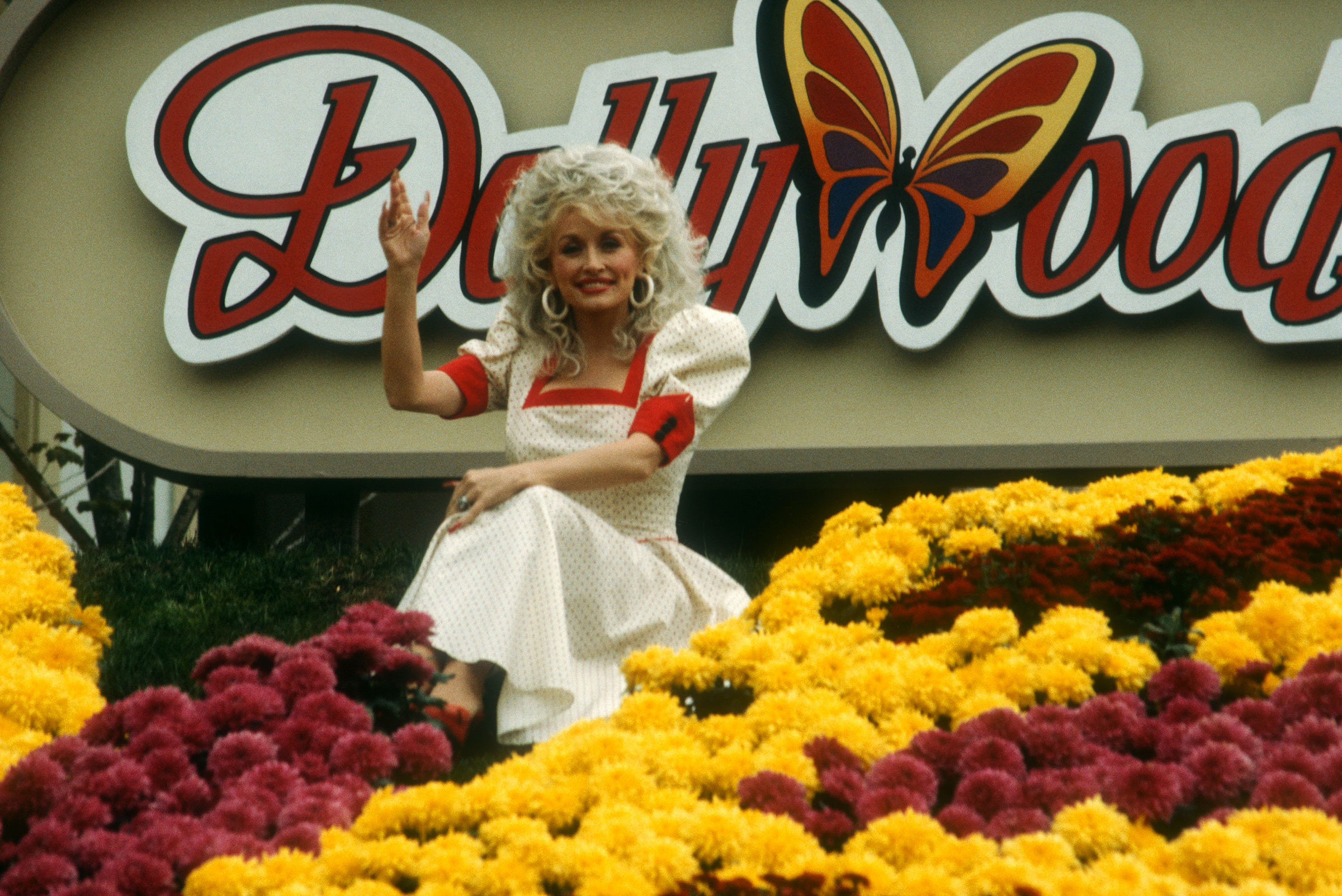
Parton liked standing alone. She never jumped on a bandwagon, nor did she punch down. Though she never openly called herself a feminist, in an interview she explained to me that she just shunned labels outright. Her refusal to cast anyone out and her radical acceptance of all kinds of people–queer people, people of color, her outright idolization of the women others called “trash”–in recent years earned her the nickname of “the Great Unifier.” In one of the last interviews for Dolly Parton’s America, while looking back on her life, she said, “I don’t practice my faith; I live it.”
Parton was a spiritual leader in a world where political leaders failed us time and again. I talked to a Zimbabwean scholar who wrote a piece about how the classical artwork of Zimbabwe was less important to many people than Dolly Parton’s music, especially the song “Just Because I’m a Woman.” It has been on the top of the charts in many countries in Africa for decades now. To get back into her “God space,” Parton would leave Nashville for her Tennessee Mountain home, up in the Smoky Mountains where she was born, to fast and begin to come up with new music. Eventually, her 3 a.m. prayers for songs became prayers for creating hope that would last longer than her lifetime.
Reflecting on how her father never learned to read or write, she provided $15,000 scholarships to high school students, and to improve middle school literacy rates in her home county, she gave each child $500 in cash upon graduation. In 1995 she started the Imagination Library, which donates books to children under 5. She invested proceeds from Whitney Houston’s towering 1992 cover of “I Will Always Love You” into a Black Tennessean community. When the Gatlinburg fires broke out across Appalachia in 2016, she raised millions of dollars and gave everyone who lost a home $1,000 a month for six months with a final surprise $5,000 check as the program wound down. She made another significant donation in 2024 to support the victims of Hurricane Helene. In 2020, she donated $1 million toward finding a vaccine for COVID, and in 2022, she began offering full college scholarships to every Dollywood employee.
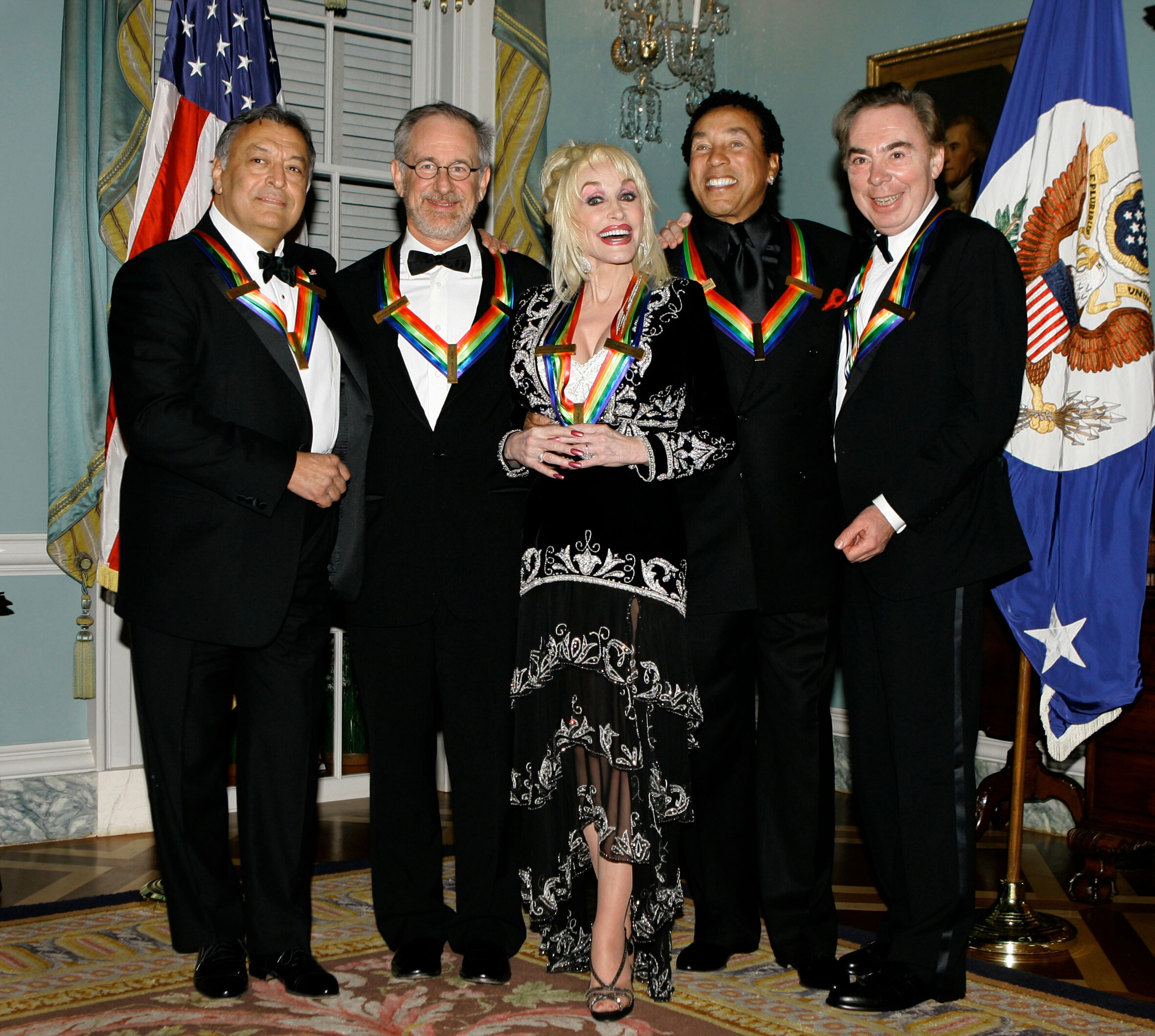
Inducted into the Songwriters Hall of Fame in 2001 and awarded the National Medal of Arts in 2005, an honorary doctorate from the University of Tennessee - Knoxville in 2009, a Grammy Lifetime Achievement Award in 2011, and an honorary Oscar in 2025, Parton piled up accolades as high as the Smoky Mountains themselves. But her greatest feat may have been her devotion to other people, most of them complete strangers. “I just love people,” she said. “When I look at the audience I see my family. I see the God light, the goodness, in everybody, even if they can’t see it.” Perhaps that spirit is how “Jolene” came to be covered more than 400 times—my father first heard it sung by Leila Forouhar in the late 1970s in Iran—or what inspired Nelson Mandela to ask his prison guards at Robben Island to play her music over the loudspeakers. It’s a bit comforting to think of Parton’s life as a fairy tale, not the culmination of what a single person could do. But her story is a testament to how a person of humble origins can accomplish extraordinary feats, when they pray for, write with compassion about, and take action for others.
And she did this without taking higher status: She remained the butt of the joke, the girl in the wig with a bosom, doing what she believed was right, even while making mistakes. She just tried to do better the next time. In the fax she sent me after the first of what would become 11 interviews, after I came to her with four hours of intrusive questions about some of the hardest moments in her life, she ended her note with: “I had a nice time with you. Hope you got everything that you wanted. I look forward to hearing from you or seeing you again somewhere down the road. Love, Dolly.”
What a teacher. I hope we get the lesson.