


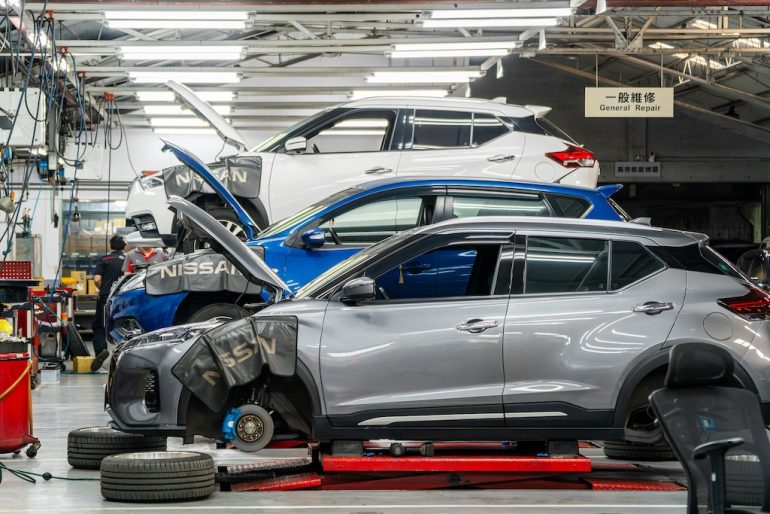
You pull into an auto repair shop or a multi-level beach parking structure, drop off your keys, and head toward the service desk or the pedestrian exit. Seconds later, your shoe slips on an uncleaned oil patch or catches a raised lip in the concrete.
Liability for a fall at an automotive service facility or parking garage turns on who owned or controlled the exact stretch of walkway where you went down, and on whether an unreasonable hazard caused the injury. The responsible party may be the dealership owner, an independent auto shop tenant, a parking management company, or a California public entity managing a municipal garage.
In any commercial setting, including garages, beachfront service hubs, and nearby pedestrian paths, boardwalk premises liability and general property responsibility usually track ownership or control of the specific place where the fall happened. Ownership by itself doesn’t establish negligence, and a short walk from a service bay to a waiting room can cross several legally distinct pieces of ground.
The customer waiting area answers to the shop owner. The vehicle drop-off lane past it may answer to a commercial landlord or a specialized valet service contractor with a lease clause about clearing fluid leaks. Beyond that sits a parking structure apron under different management, while a municipal parking garage operated by a city or county follows strict public entity rules.
Identifying the exact entity that controlled the area where oil, grease, or damaged pavement caused a fall is essential. Name the wrong defendant and the clock against the right one may keep running.
On private commercial property—such as a tire shop, car dealership, or private parking structure—a claimant generally has to prove duty, breach, causation, and damages.
Duty: Comes from California Civil Code section 1714, which makes property owners and business operators responsible for injuries caused by a lack of ordinary care in managing their property.
Breach: Means the auto shop or garage operator failed to inspect, clean, or maintain service bays and walkways the way a reasonable business owner would.
Causation: Ties the specific garage hazard (such as an unaddressed fluid spill or loose equipment) directly to the fall.
Damages: The quantifiable medical costs, lost wages, and personal losses resulting from the injury.
A fall inside an auto shop proves nothing on its own. When a claim involves an owner failing to discover or clean up fluid leaks or dangerous shop conditions, the claimant generally has to show that the owner actually knew about the hazard, or that it sat there long enough for a reasonable inspection to have found it (Ortega v. Kmart Corp., 26 Cal.4th 1200 (2001)).
When an accident occurs in a city-owned parking structure or municipal transit lot, the analysis runs on statute rather than general negligence principles. Government Code section 835 requires a claimant to establish that public property was in a dangerous condition creating a reasonably foreseeable risk of injury, and that the condition caused the fall.
Beyond that, the claimant must show either that a public employee created the hazard or that the public entity had actual or constructive notice under section 835.2 in time to take protective measures.
“Dangerous condition” carries a statutory definition under Government Code section 830, while section 830.2 carves out minor or trivial defects. A dangerous condition in a public garage must be more than a minor pavement crack or tiny fluid drip.
Save evidence that pins down the exact location and captures the shop or garage condition before it is cleaned, swept, or repaired.
Record the Location: Save your auto service receipt, parking garage ticket, or dashcam timestamp. Note the specific bay number, parking level, or aisle marker.
Photograph the Hazard: Take wide shots of the area and close-ups of the hazard—such as slick motor oil, transmission fluid, unhooked shop hoses, or uneven concrete—using a coin or key fob for scale.
Preserve Video: Request that the garage or dealership preserve surrounding security camera or CCTV footage. Save your own vehicle’s dashcam files before they overwrite.
Identify Witnesses and Reports: Obtain contact details from other motorists, service advisors, or technicians. Request a copy or reference number for any written incident report filed with shop management or garage security.
Keep Shoes and Attire: Bag the footwear and clothing worn during the fall without washing or repairing them, as fluid residue on soles can serve as vital evidence.
Document Medical Care: Retain all emergency room summaries, diagnostic imaging, medical bills, and written work restrictions.
Yes, but neither automatically ends a claim. California follows pure comparative negligence (Li v. Yellow Cab Co., 13 Cal.3d 804 (1975)). Your share of responsibility reduces what you can recover rather than barring recovery outright.
Caution Signs: A visible “Caution: Wet Floor” or “Slick Floor” sign in a service bay supports the argument that a customer should have taken extra care, though a sign placed far from the actual hazard carries less weight.
Inappropriate Footwear: Worn or oil-slicked shoes may be raised by defense adjusters to argue shared fault.
Treatment Gaps: Delaying medical care after a garage fall allows insurance companies to argue that the injuries were caused by an unrelated event.
If a fall occurs in a public parking structure or municipal garage, a personal injury claim generally must be presented within six months after the incident under Government Code section 911.2. This administrative claim must precede any formal lawsuit.
If the public entity rejects the claim, Government Code section 945.6 generally allows six months from the date of rejection to file a lawsuit. For claims against private auto repair shops or commercial parking garages, Code of Civil Procedure section 335.1 generally establishes a two-year statute of limitations.
There is no universal average. Most settlements remain private, and recovery amounts depend heavily on the severity of the injury, available commercial liability insurance limits, and whether comparative fault is assigned to the driver or visitor.
Proving fault becomes challenging if the fluid spill or shop hazard is cleaned up before photos are taken, or if no evidence shows the shop owner knew about the dangerous condition prior to the incident.
Yes, if the shop operator or its employees left tools, air hoses, or automotive parts in customer walkways, or if they allowed known fluid hazards to sit unaddressed without warning the public.
Whether a fall occurs on the slick floor of a dealership service bay or in a multi-level municipal parking structure, documenting the exact spot and identifying who controls the property are the essential first steps. Because public property claims run on a strict six-month administrative deadline, acting quickly ensures your rights remain protected.