

Almost nothing in Werner Herzog’s fractured fairytale Bucking Fastards, playing in competition here at the Venice Film Festival, makes literal sense. But it all makes a kind of sideways sense, especially if, before watching, you can will yourself into a Herzogian brainspace, a place where possibly nonexistent elephants roam the Earth, where ancient cave drawings bear witness to the enduring creativity and wonder of humankind, where mad dreamers insist it’s possible to haul a multi-ton ship over a mountain. In that context, two inseparable sisters who speak only in unison, who are crazily lovesick over the man who has spurned them, and who believe they can dig a literal tunnel into a land of freedom, acceptance, and love: in a world where our deepest desires are so seldom met, how nuts does that really sound?
Real-life sisters Rooney Mara and Kate Mara play Joan and Jean Holbrooke, sisters living in Ireland—they are not, they adamantly insist, twins—who share every emotion, every thought, every waking moment as if they were a single entity. They dress exactly alike, in droopy trenchcoats and modest granny-style skirts; they both wear their long, silky hair parted neatly in the middle and tied partially back, like identical waterfalls. They don’t finish each other’s sentences; instead, they form their thoughts and words in unison and speak as one. It’s an eerie effect the first time you hear it. Even more unsettling, it comes to sound completely normal as the movie wears on.
Joan and Jean have fallen for a single man, their handsome rapscallion neighbor Gareth Mulroney (a saucy, salacious Orlando Bloom). It’s love at first sight—or is that sights?—when he bursts into their local church, a tankard of beer in hand, stirring up nothing but trouble. Afterward, they breathlessly wait for him to emerge through the church doors. Their eyes gleaming like double constellations, they proposition him: “I’d love to show you my inner cowgirl!” they tell him, the words tumbling out more like a song than a sentence. He’s charmed, intrigued; he’s horny. The trio land in bed, with Gareth in the middle flanked by his semi-nude cutie cowgirls, who ooh and ahh over him adoringly. They’re Goldilocks and he’s their just-right. This is how a sex scene, as imagined by Herzog, plays out.
But their bliss is short-lived. That meet-cute and its aftermath are relayed in flashback as the sisters huddle together in a courtroom, essentially defending themselves against charges of stalking. Gareth, after dallying with Joan and Jean for a time, has thrown them over and taken a wife. They can’t believe it—in their futile rage, they set the interior of his car on fire. (Their procurement of the gasoline they use to do so is a cracked mini-adventure by itself.) They also set the postbox outside his house aflame. Before the bewigged judge, Gareth’s lawyer tries to argue that the relationship was purely sexual. Joan and Jean justify their actions plaintively. “It was love!” they cry in unison, and later, “I am never going to stop loving him!”
But there’s no hope. Their linked hearts are broken, and the court case has brought them both fame and embarrassment. A kind villager (John Kavanagh) takes pity on them, knowing that the best thing for them is to get away. He offers them the use of a flat he doesn’t need, located in another town. He urges them not to open the door to strangers, people who want only to take advantage of them. From there, Bucking Fastard becomes a set of wriggly vignettes more than a linear story. There’s a sleazy neighbor (Malcolm Adams) who attempts to take, and post on the Internet, pictures of them undressing. (They put their heads together and cook up a giggly-devious plan to outwit him.) A kind social worker, played by Domhnall Gleeson, tries to show them how to collaborate in the task of opening a tin of sardines. But soon even their cozy flat comes to feel like a prison: they strike out on an adventure, going to live with an aunt who loves them (Marion O’Dwyer) and who encourages them to explore a mysterious cave near her country property, one whose twists and turns ignite their two-for-one imaginations. A fox named Cupid, with a perpetually alarmed-looking face, becomes their mascot. Through it all, they continue to mourn their lost love. But perhaps they can find a new one?
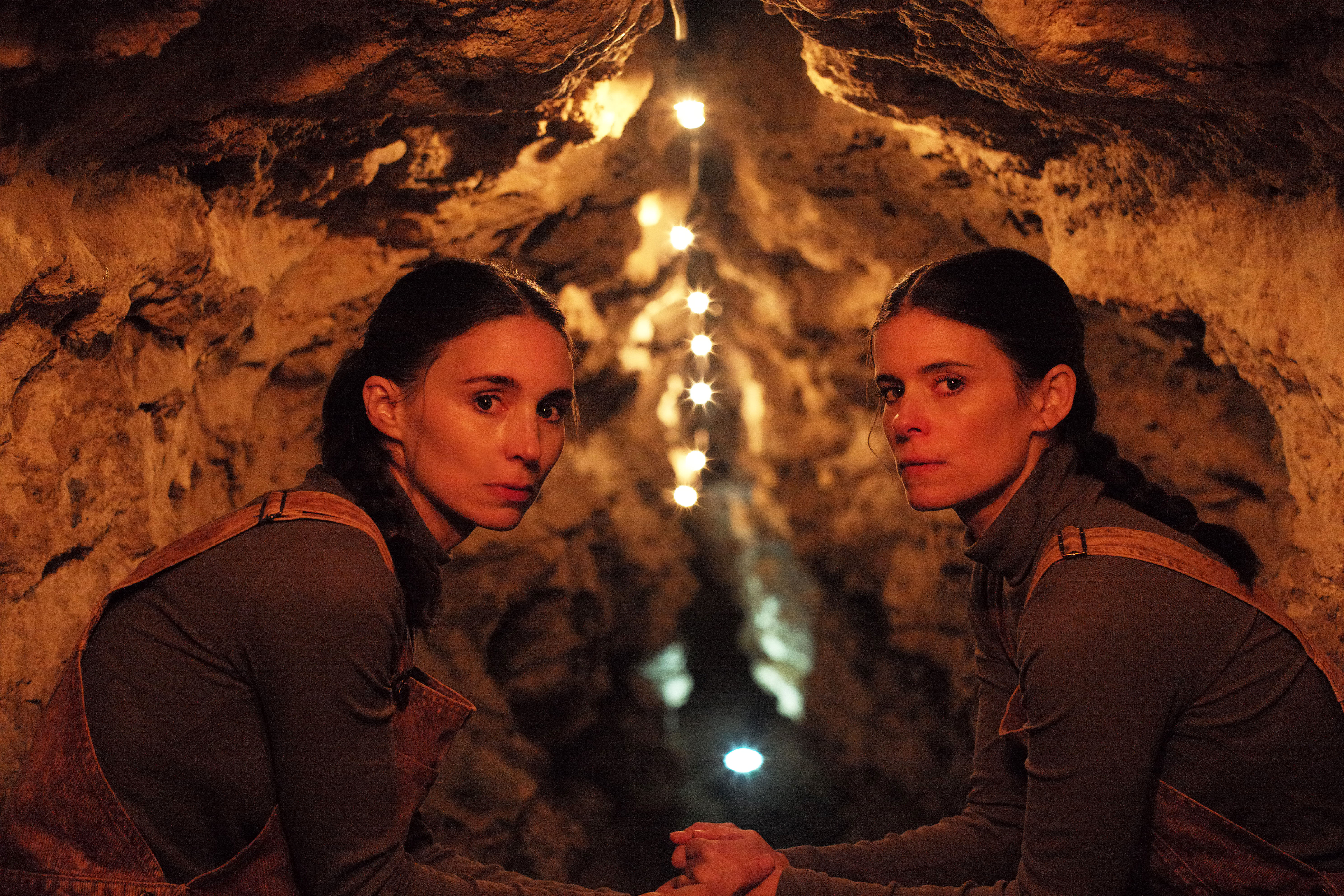
What does any of this mean? Though the story was inspired by real-life twins from York, England, Freda and Greta Chaplin—who spoke in unison and, like Jean and Joan, did everything together—the meandering storyline is pure, sweet, gaga Herzog. The picture’s most radiant sequences take place in the girls' beloved cave, where they toil for years to dig their way, admittedly nonsensically, to a better life. Herzog and his frequent cinematographer Peter Zeitlinger film the two of them, within a halo of light as they dutifully chip through a rocky passageway—their twin images are as luminous as a delicately carved shell cameo.
The Mara sisters are brilliant here, their eyes as hungry and haunted as those of an orphan in a Keane painting. You laugh with them, not at them, when they take revenge on that peeping tom. But there’s also something deeply touching about their refusal to give up on love. There’s a metaphorical idea shimmering beneath the surface of Bucking Fastard: it’s as if, through this strange and somewhat simple story, Herzog were trying to explore the things women want but don’t dare demand. Here, those longings are voiced in stereo. And yes, men can sometimes drive you crazy. What can you do?
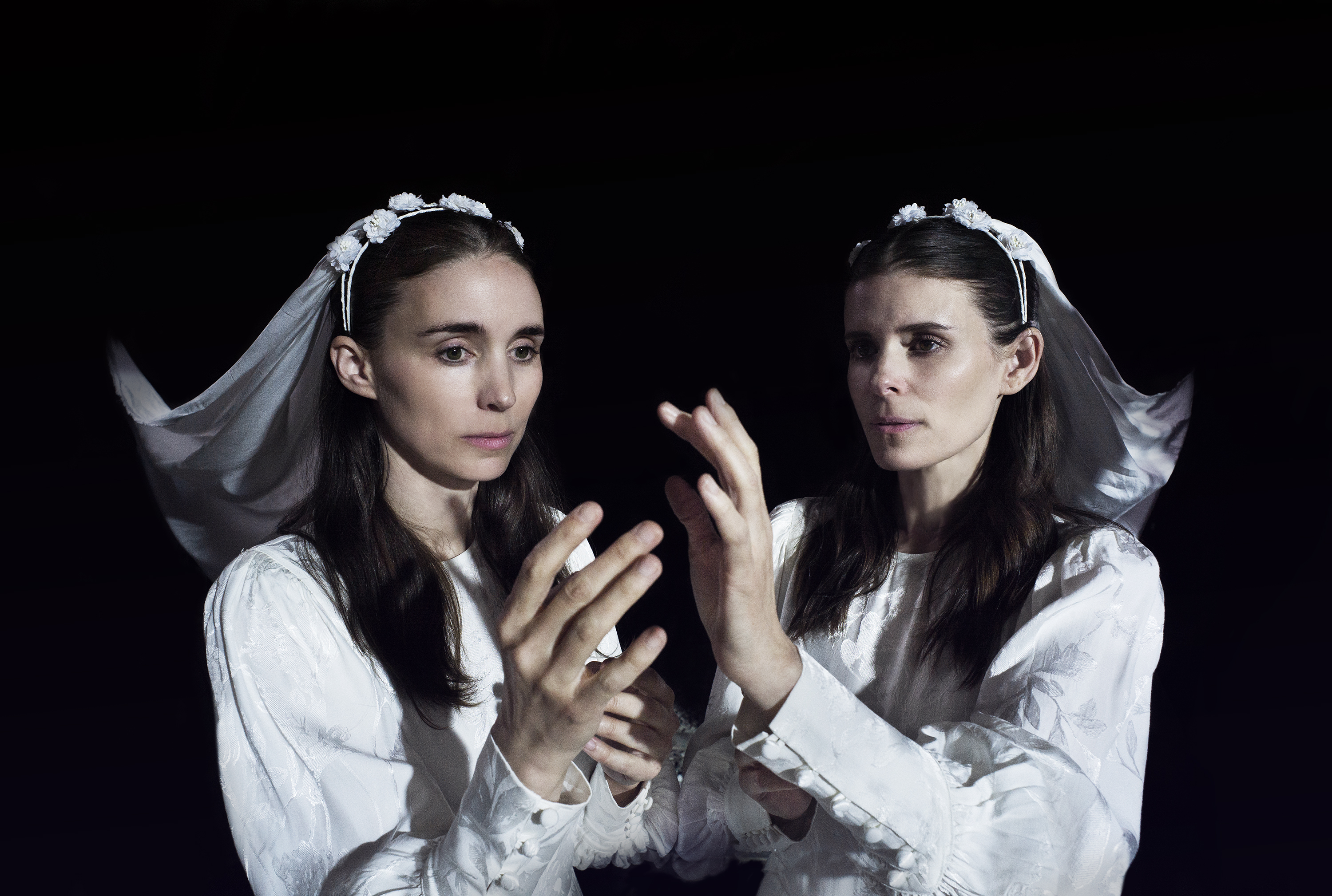
The ending of Bucking Fastard might be considered a flaw; it’s hard to know exactly what has happened, or what it means. But then, an ambiguous ending is one we’re free to write ourselves. How can you not want the best for these dreamy, heartbroken girls, who at one point race through their cave in matching gauzy white gowns, like freedom-loving butterflies? You’ll want to believe that their hearts have at last found a home—a cave not of forgotten dreams, but of remembered ones, made sweeter with every recounting.