
Showing up at a funeral matters everywhere, but especially in the Arab world and the wider Middle East. When Iran’s Supreme Leader, Ali Khamenei, was buried on July 9,just over four months after he was killed in a joint American-Israeli military strike. Saudi Arabia, Qatar, and Oman sent official delegations to the funeral. The United Arab Emirates, Kuwait, and Bahrain did not. To many analysts, the absence was more telling than any official statement.
Before the war, the Gulf states were diversifying their economies beyond oil, betting on remaining islands of stability in a turbulent Middle East. President Donald Trump’s decision to wage war on Iran, despite their opposition, exposed the fragility of that bet. War-risk insurance costs soared, and Iranian attacks followed.
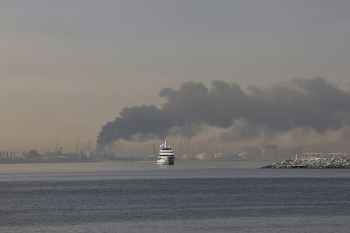
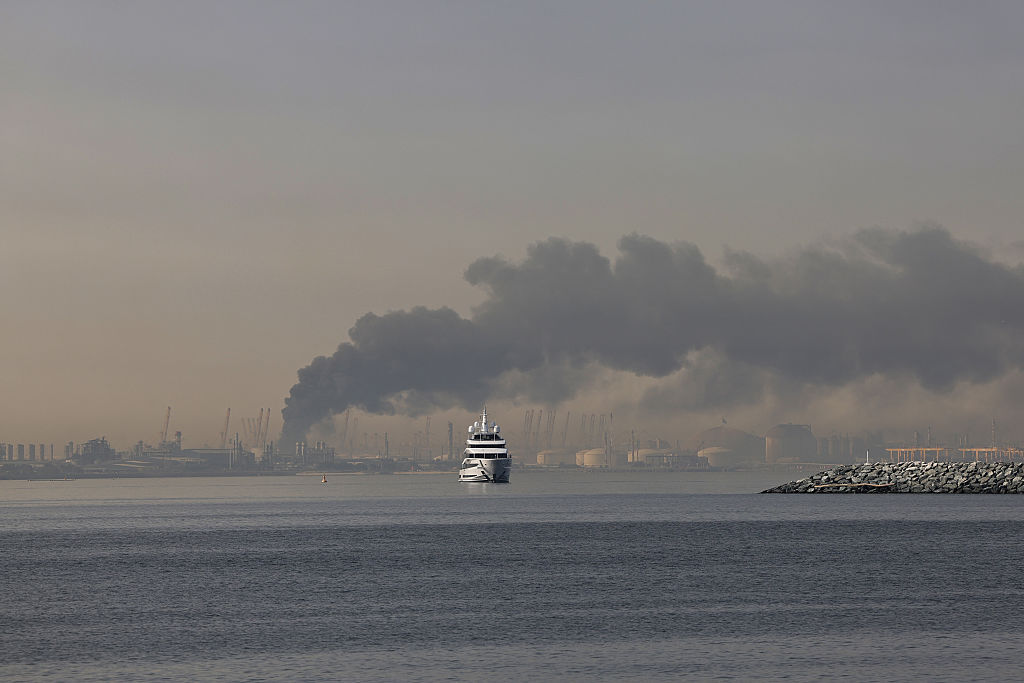
Saudi facilities at Abqaiq and Qatar’s Ras Laffan gas complex were hit; the UAE intercepted barrages for weeks; Bahrain and Kuwait weren’t spared either. Though it wasn’t widely reported, Saudi Arabia and the UAE struck Iran, as, according to some accounts, did Qatar—though Doha denies it. In private, Gulf officials confirm that most Gulf Arab states retaliated.
The war produced unusual strategic convergence among the Gulf monarchies. There is now widespread recognition that the region’s existing security framework has failed. Though coordination behind the scenes may run deeper, the Gulf Cooperation Council (GCC), created in 1981, has invoked its collective-defense clause only once.
Officials broadly agree on three points: Iran remains a long-term threat; the U.S. security umbrella is no longer dependable; and regional stability has become an existential priority. They also see two clear challenges. One is an Iranian regime that continues to pursue its vision of an “Iranian Axis” across the region. The other is an Israel bent on “regional paramountcy,” the presumption that it alone sets the terms of force while the region adjusts. Yet consensus on diagnosis only sharpened disagreement over the prescription.
Competition among the Gulf states, particularly Saudi Arabia and the UAE, means that convergence remains a trend rather than a settled fact. But such rivalry is hardly unique to the region. Russia’s invasion of Ukraine forced a fractious Europe into greater cohesion without resolving disagreements over how forcefully to confront Moscow. Iran and Israel are now subjecting the Gulf Arab states to a comparable test.
The war altered the Gulf’s calculus on two fronts at once. Iran proved to be at least as dangerous as the most hawkish Gulf capitals had warned. The other shock was less expected: Washington was willing to start a regional war alongside Israel, despite Gulf objections, and then prove unable or unwilling to manage what followed.
The Gulf states had long since stopped assuming that Washington had a coherent and effective Iran strategy; the war added a new extreme. Objectives shifted by the week, and an administration in a hurry to exit, even as Iran closed the Strait of Hormuz, left the Gulf Arab states feeling that they had been taken to war without being warned, consulted, or protected.
Even so, overwhelmingly, Gulf Arab states managed to intercept the overwhelming majority of what Iran fired at them. “Restraint backed by functioning defenses,” Rashid Al-Mohanadi, a Qatari analyst, argued, “is not the same as restraint born of vulnerability.” Privately, Gulf officials also say that they engaged in genuine, if discreet, quiet coordination.
Researchers at the Carnegie Endowment recommended that GCC states could share air-defense stockpiles with each other during the attacks. The GCC’s own mutual-defense clause was never formally invoked, but member states reaffirmed their commitment to it as the war ground on. None of that erases the economic toll of war-risk premiums or the failure of the collective-defense mechanism to activate, but it complicates the picture.
Most Gulf states have reverted to a previous preference: containing and de-escalating rather than confronting Iran. Qatar and Oman pressed Washington toward a memorandum of understanding with Tehran; Saudi Arabia backed the Pakistan-brokered track that produced it; the UAE, Kuwait and Bahrain wanted to fight on but came on board within weeks. Even that agreement highlighted the Gulf’s limited influence; it raised the possibility of a $300 billion reconstruction fund for Iran financed by “regional partners” who were not consulted.
For more than a decade, the Gulf states have been working on a diversification strategy to insure against an unreliable Washington and a threatening Tehran at once. This tack gained momentum after the 2015 nuclear deal eased Tehran’s isolation even as Syria and Yemen deepened fears of Iranian regional reach. At the same time, Washington emphasized a pivot to Asia, though the Gulf capitals never quite believed in it. The strategy hardened into doctrine after Trump pulled out of the deal in 2018.
Not every Gulf state draws the same conclusion about how to navigate a region that will see less American dominance over time, a debate that remains unresolved. But all of them expect a new regional security architecture eventually, and the harder question is where diversification stops being hedging and starts being an architecture in its own right.
The strategic alignments within the GCC have shifted repeatedly. The Saudi-UAE-Bahrain blockade of Qatar, imposed in 2017, has largely given way to a different configuration, with Riyadh now closer to Doha and Muscat than to Abu Dhabi. But beneath these differences, a growing Gulf consensus is taking shape: a rejection of both an Iranian-led axis and Israeli regional paramountcy, coupled with a willingness to engage pragmatically with both countries.
Israel’s pursuit of “regional paramountcy” has revealed a fundamental divergence over the shape of postwar regional order and helped stall wider normalization in the absence of meaningful progress on Palestinian statehood. Qatar and Oman have maintained channels to Tehran throughout, while Saudi Arabia has adopted a similar posture of strategic restraint, refusing to let its territory be used against Iran and sending a delegation to Khamenei’s funeral.
Every Gulf state is now pursuing some version of the same wager: no single external guarantor can be trusted on its own, so the safer course is to pursue several policies at once rather than commit to a single tack.
The UAE just does it most visibly: striking Iran directly while also trading with it when convenient and walking out of OPEC without consulting Riyadh. Saudi Arabia finds exasperating the UAE’s preference for early, unilateral action rather than waiting to see whether a deteriorating situation might resolve itself. The gap between Riyadh and Abu Dhabi is the clearest sign that the Gulf states remain a considerable distance from genuine strategic cohesion.
Geography constrains every strategy the Gulf has tried. Iran and the Gulf share the Strait of Hormuz, through which a fifth of the world’s oil flows. Decades of mutual suspicion have never severed their economic interdependence; Qatar and Iran still jointly exploit the world’s largest gas field. None of that produces trust, but it hasn’t produced pure passivity either: escalation was available to every Gulf Arab capital here, and each chose restraint and diplomacy instead.
Tehran has learned a new kind of leverage from this war—chokepoints, not proxies—and demonstrated how much strategic leverage control over Hormuz can provide. It has also survived the attempt at regime change, emerging with an economy contracted by 6.1% and inflation near 69%. It cannot sustain an open-ended war against most of its neighbors, and it knows it. That argues for a bargain, unless Tehran’s new leadership judges ending the war on Washington’s terms the greater risk.
Iran cannot be wished away. Increasingly, neither can Israel, which supplies the other side of the problem. The ceasefire that paused the direct U.S.-Iran fighting, brokered largely by Pakistan, never bound Israel at all. Tel Aviv wasn’t a signatory; it kept striking Hezbollah in Lebanon throughout the negotiations and treated the deal’s promise to end hostilities on every front as somebody else’s commitment. Washington backed Israel’s argument. The ceasefire itself came apart on its own terms: talks in Islamabad over access to Hormuz collapsed, and by July, Iranian strikes on commercial vessels that had bypassed Tehran’s approved shipping lane brought the fighting back in earnest.
Iran built the missile and proxy networks that gave the region reason to fear it long before February, and nothing here excuses that record. But Gulf governments are not choosing between two threats. They are managing both at once, and Israel’s demonstrated readiness to ignore arrangements even Washington negotiates makes it just as pressing a strategic problem as Iran, if not more so, depending on the Gulf government in question.
None of this amounts to reconciliation with Iran, and no serious figure in Riyadh, Doha or Abu Dhabi calls it that. What is emerging is an uneasy accommodation among adversaries that distrust one another but have run out of cheaper alternatives: an Iran too weakened to sustain war but unable to walk away from it unbeaten, and Gulf states too exposed to keep outsourcing their security to a Washington whose steadfastness in their defense has proved limited.
Tehran’s leverage over Hormuz, perhaps its only tangible gain, will last, and it leaves the Gulf states with a long-deferred choice: credible collective defense, or continued diversification. Oman is still negotiating to restore navigation through the strait and a meeting on the subject between Gulf Arab states and Iran was postponed on Sunday.
The challenges for Saudi Arabia have increased after the Houthis in Yemen took control of the Perim Island in the Bab El-Mandeb strait that would allow them to disrupt maritime traffic through the Red Sea and weaponize it as a chokepoint. Saudi Arabia has signed the Mecca Pact, a mutual defense agreement with Turkey and Pakistan, though its strength remains untested.
These initiatives suggest the emergence of not one alliance, but overlapping partnerships: a diminished but enduring American partnership; Turkish and Pakistani security ties; bilateral arrangements among Gulf states; and channels of engagement with both Iran and Israel.
The Gulf Arab states are not trying to replace Washington but are layering a series of relationships to prevent domination by a single power. Yet coordination is not collective security. The Gulf needs standing mechanisms for integrated air and missile defense, intelligence-sharing, maritime security and mutual assistance, and a credible collective defense commitment. The GCC already has much of the institutional skeleton; what it has lacked is the political trust and strategic consensus to make it work.
The Gulf monarchies can keep stacking insurance policies, or begin turning those relationships into a genuine regional security system. The war has shown that the Gulf states can coordinate more effectively than many expected, and the foundations for something more durable may already be there.