

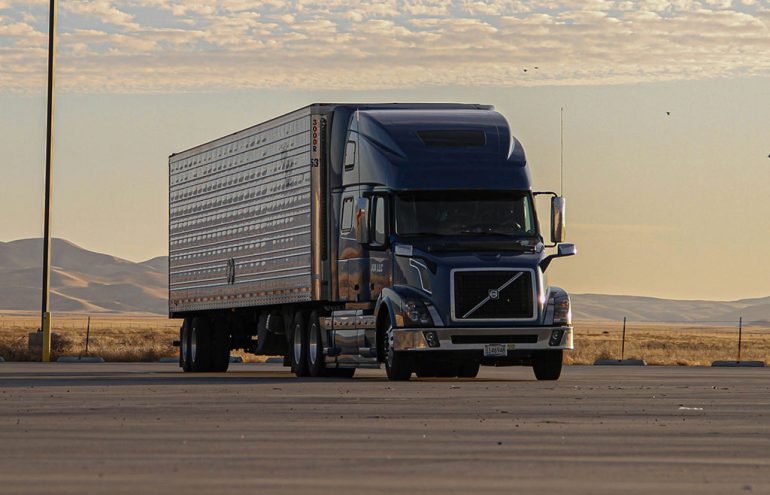
A new car’s window sticker can read like alphabet soup. Forward collision warning. Lane keeping assistance. Blind spot warning. Adaptive cruise control with lane centering. What the badge does not tell you is how that particular system behaves when traffic slows behind a tractor-trailer and the gap starts closing faster than you expected. Large trucks make the difference between knowing a feature’s name and understanding its job especially hard to ignore. The car’s equipment matters, but so does the space you choose to leave around it.
Warning and intervention are two different jobs
NHTSA sorts these features into two jobs. Some warn you about a crash that is developing. Others take action. Forward collision warning, by NHTSA’s own description, only warns the driver and does not act to avoid a crash. Automatic emergency braking applies the brakes. Lane departure warning beeps or flashes at you; lane keeping assistance corrects the steering or brakes a wheel to bring the car back. Blind spot warning alerts you; blind spot intervention adds light braking or steering input if you move over anyway.
Similar names, different assignments. Do not assume a warning feature also intervenes. NHTSA notes that manufacturers use different names for these technologies, so a feature list alone is a poor guide to behavior. The owner’s manual is the guide. Look up the equipment fitted to your particular car, not just the name on a brochure.
What adaptive cruise control is measuring
NHTSA describes adaptive cruise control as adjusting your speed to maintain a preset distance from the vehicle ahead. That following function is not a substitute for your decision about when to pass or when there is enough room to return to the lane. Do not treat a comfortable gap in front of your car as proof that the truck behind will have enough space after you merge.
That judgment is yours, and federal guidance spells it out. FMCSA tells passenger vehicle drivers to make sure the truck or bus is visible in the rearview mirror before merging in front, and to leave extra space. Do not use a glimpse of the cab as your signal to cut back in. Large trucks and buses have long stopping distances; the gap you leave must account for their needs, not just yours.
Your blind spot warning does not watch the truck’s blind spots
A blind spot warning alerts you to nearby vehicles you may not see when changing lanes. Do not read the absence of a warning as proof that a truck driver can see your car. FMCSA’s rule of thumb is about the other driver’s face: if you cannot see a truck or bus driver’s face in their mirror, they cannot see you. Avoid lingering in those blind spots.
The rest of FMCSA’s passing guidance is worth keeping in your head as a sequence:
See the full truck or bus in your rearview mirror before you move back over, then leave extra space on top of that.
Avoid passing from the right lane.
Avoid passing on a downgrade, where heavy vehicles tend to pick up speed.
When a truck is passing you or merging from an on-ramp, give it room to complete the move.
Expect wind gusts near large vehicles and hold your lane through them.
Trucks and buses need extra room to turn, and a truck setting up for a right turn may initially move left to create that room. The opening on the right side is not an invitation; it is the turn in progress. Wait for the vehicle to finish. Patience is half of passing anyway, since trucks run at a speed chosen for their weight and cargo, and the fix for a slow pass is not more throttle.
Learn the controls while parked
NHTSA’s advice is to review your owner’s manual, and this is where it pays. With the car safely parked, use the manual and any available menu descriptions to answer these questions. Follow the manufacturer’s instructions for accessing the settings:
Find the following-gap control and read what the manufacturer says each setting means.
Read the descriptions of alerts, so you can distinguish a collision warning from an unrelated chime.
Find which features can be switched off, and whether they switch back on at the next start.
Check the manual’s description of whether the lane feature warns, steers, or does both.
Read the section on conditions where the manual says detection may fall short.
FMCSA’s advice for anything that takes your attention away from driving is blunt: get off the road and stop. Do not try to learn the menus beside a trailer at highway speed, or deliberately provoke a warning or braking intervention to see what happens.
If something happens anyway
After a crash involving a large truck, safety and medical needs come first. Once safe, write down what you remember: whether adaptive cruise was engaged, which gap setting you had, whether an alert sounded, whether you felt the car brake. Mark anything you are unsure about rather than filling in gaps. Later, from safety, preserve any dashcam or phone media you already have. Keep your recollection separate from verified vehicle records; do not assume every car records the same information or that a sensation proves which system acted.
For a crash in Texas, Texas Truck Accident Lawyer describes other records that may matter, including driver logs, maintenance and inspection records, and cargo loading documents. Those are a different subject from your car’s warning lights. Ask what records may be relevant and how they can be obtained; do not assume your own account, or one camera clip, explains everything that happened.
None of this argues against the technology. NHTSA credits driver assistance with the potential to reduce crashes. Know which of your features warn and which act, read their limitations, and leave yourself room to make a safe decision. A good assistance system is welcome equipment. It does not make the truck smaller or remove your responsibility for the space around it.