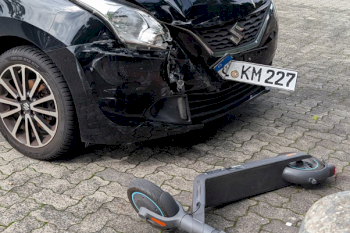

Car accidents can be stressful, and many drivers fear what comes next: increased car insurance rates. How much does car insurance go up after an accident? The answer depends on several factors, including fault, the severity and cost of the accident, your driving history, state insurance rules, and your insurer’s rating practices.
For more helpful information about vehicles, ownership, and driving, readers can also explore CarSpotty.com, an automotive information blog.
It helps to understand how much car insurance commonly increases after an incident and the factors that influence that percentage.
Image source: Pexels
When an at-fault car accident involves injuries, the resulting insurance claim can be more expensive. Injury claims may include medical bills, rehabilitation expenses, lost income, and liability payments.
Even injuries that initially appear minor can increase the overall value of a claim. Because insurers consider claim history, fault, driving history, and the amount paid, an at-fault injury accident may result in a larger premium increase than a minor property-damage claim.
The injury itself does not automatically determine the surcharge. The insurer will consider who was at fault, which coverages paid the claim, the amount paid, state law, and the company’s rating rules.
Common estimates suggest that car insurance premiums may increase by approximately 20% to 50% or more following an at-fault accident. A 2026 national analysis found an average increase of about 45% after an at-fault accident involving at least $2,000 in property damage. However, no single percentage applies to every driver or policy.
For example, if you were paying $1,500 per year, an increase of 20% to 50% would raise the annual premium to approximately $1,800 to $2,250.
Major accidents involving injuries, extensive vehicle damage, or large liability payments may produce a higher increase. A small accident involving limited repair costs may result in a smaller increase or none at all, particularly when accident forgiveness applies.
The Insurance Information Institute explains that the amount and percentage of a premium increase vary from one insurance company to another.
Fault is one of the main factors insurers consider after an accident.
If you are found responsible for an accident, your premium may increase because the insurer can view the event as an indication of additional future risk. Whether the rate changes depends on the claim, your driving record, state regulations, accident-forgiveness benefits, and the insurer’s rules.
A not-at-fault accident may have less effect on your premium, and some states restrict when an insurer can surcharge a driver for an accident that was not the driver’s fault. However, protections and rating rules vary by state.
An insurer may also consider the type of claim filed, previous claims, and other permitted rating factors. Drivers should ask their insurer or state insurance department how a particular not-at-fault claim can affect renewal pricing.
Accidents are not all treated the same. Insurance companies consider the severity of the incident and the amount paid under the policy.
Generally, a larger at-fault claim creates a greater possibility of a premium increase, although the relationship is not identical among all insurers.
Many insurers consider chargeable accidents when calculating rates for approximately three to five years, although the exact rating period varies by state and insurance company. An accident may remain on a state driving record or claims-history report for a different amount of time than it affects the premium.
The effect may decrease over time if you avoid additional accidents and violations. Once the accident is outside the insurer’s rating period, the accident-related surcharge may end. That does not guarantee the total premium will return to its previous amount because repair expenses, local claim trends, coverage changes, and general rate increases can still affect the price.
Several insurance companies offer accident forgiveness, which may prevent a qualifying first at-fault accident from causing an accident-related premium surcharge. These programs may be included as a loyalty benefit or offered as optional coverage.
Eligibility commonly depends on factors such as:
Accident forgiveness can reduce the financial effect of a qualifying accident, but it does not erase the accident from claims or driving records. It also may not prevent other changes affecting the policy or its renewal.
Several steps may help reduce your insurance costs after an accident:
Gauge Magazine’s guide to lowering everyday vehicle expenses includes additional ways to compare insurance and control ownership costs.
If the accident also involves a disputed or unresolved claim, understanding how car insurance claim negotiations work can help you review the available information before accepting a decision or settlement.
How much car insurance goes up after an accident depends on fault, claim severity, driving history, location, accident-forgiveness eligibility, and the insurer’s rating practices. A 20% to 50% increase is a useful general range for many at-fault accidents, but an individual driver may see a smaller increase, a larger one, or no accident-related surcharge.
Although an accident can increase insurance expenses, the higher rate may not last permanently. Safe driving, comparing equivalent policies, reviewing available discounts, and making careful coverage decisions can help control costs over time.
The post How Much Does Car Insurance Go Up After an Accident? appeared first on Gauge Magazine.