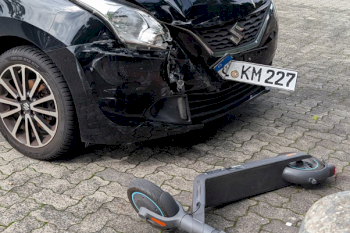

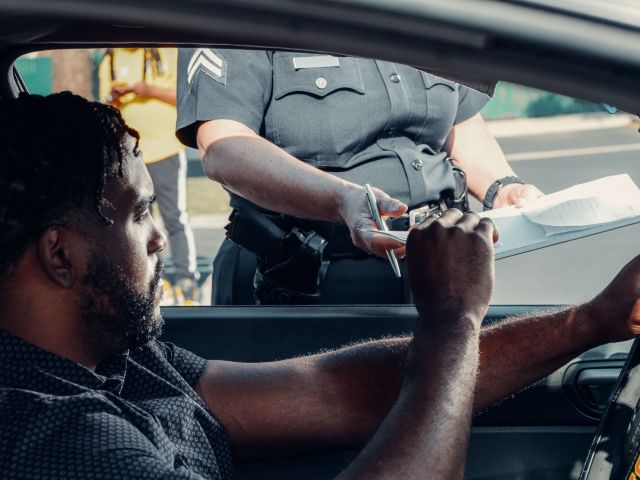
Somebody gets a ticket after a crash, and everyone nearby breathes a little sigh of relief, as though the case is basically closed. Ticket issued, fault decided, end of story. It is a natural assumption to make. It is also not quite how any of this actually works.
A traffic citation and a full determination of legal fault are related, but they are not the same thing. One is a relatively narrow decision made by an officer about whether a traffic violation may have occurred. The other involves a considerably broader look at everything that actually happened.
That gap is exactly what makes understanding a traffic citation after a car accident so important. Assuming the ticket settles everything can lead to mistaken conclusions about who is legally responsible.
When an officer issues a citation at the scene of a crash, the officer is typically responding to something specific identified during the investigation, such as speeding, running a light, or failing to yield. That is different from conducting a complete civil review of every contributing factor.
That citation reflects the officer’s assessment of a possible traffic violation, often based on the information available in the moments after a crash. Unless the officer personally witnessed the collision, the decision may rely on driver statements, witness accounts, physical evidence, or other observations gathered at the scene.
Understanding this narrower scope matters considerably, since a citation for one specific violation does not automatically account for every other factor that might have contributed to how the crash unfolded.
Determining who is responsible for a crash in the fuller legal sense usually requires looking beyond whatever prompted a citation. Witness accounts can add context that was not available during the first hectic minutes at the scene.
Photographs and video can reveal details that were not immediately obvious, while vehicle damage patterns may provide information about the angle and sequence of impact. Road conditions, traffic signals, vehicle data, driver behavior, and other details may also matter.
This broader evidentiary picture can reveal a more complete, and sometimes more complicated, version of events than a single citation could capture on its own. Gauge Magazine’s guide to gathering evidence after a car accident explains why photographs, witness details, vehicle damage, and roadway conditions can become important.
None of this means a citation is irrelevant. It may become a meaningful part of the overall factual picture, depending on the jurisdiction, the type of citation, what happened in traffic court, and the rules governing evidence in a later civil case.
The citation itself should not automatically be treated as a final verdict on fault. A guilty plea, conviction, dismissal, or not-guilty plea may be treated differently depending on state law. Other evidence can support what the citation suggests or, in some cases, complicate or contradict it.
For example, Georgia courts have held that a guilty plea to a traffic violation may be considered as an admission in a civil case, but it does not conclusively establish negligence by itself. The plea is considered with the other evidence. Other states may apply different rules.
Thinking of a traffic citation after a car accident as one potentially relevant part of the case, rather than the final decision, is usually the more accurate way to understand its role.
Just as a citation does not automatically prove fault, the absence of one does not automatically clear someone. Officers may choose not to issue a citation for reasons that have little to do with whether someone was negligent under civil law.
The situation may have appeared ambiguous at the scene, the officer may not have witnessed the collision, or additional evidence may surface later. Whatever the reason, the absence of a ticket does not prevent an insurer, attorney, judge, or jury from examining the evidence and reaching a conclusion about fault.
This works in both directions, which is why relying entirely on whether a ticket was issued can create an incomplete and sometimes misleading picture of what happened.
An insurance company does not have to accept a police officer’s citation as the complete answer to liability. Adjusters commonly review photographs, statements, reports, vehicle damage, applicable traffic laws, and other available evidence before deciding whether to accept or dispute a claim.
That decision can also change as additional evidence becomes available. Gauge Magazine’s overview of car insurance claim negotiations explains why claimants should preserve evidence and review the full circumstances before treating an insurer’s initial position as final.
A citation can be relevant to understanding a crash, but it was not designed to be the final answer about who is legally responsible. It is a piece of the puzzle, not the whole picture, no matter how official it might look.
Recognizing that distinction helps set more realistic expectations about what a ticket—or the lack of one—actually establishes. Fault typically depends on a considerably broader review than what happens during the first few minutes at the scene.
Understanding this difference matters for anyone trying to make sense of a crash’s aftermath. Assuming the paperwork settles everything can lead to conclusions that do not hold up once the full picture comes into view.
This article provides general information and is not legal advice. The effect and admissibility of a citation, plea, or conviction depend on the jurisdiction and the facts of the case.
The post The Piece of Paper That Looks More Powerful Than It Really Is appeared first on Gauge Magazine.